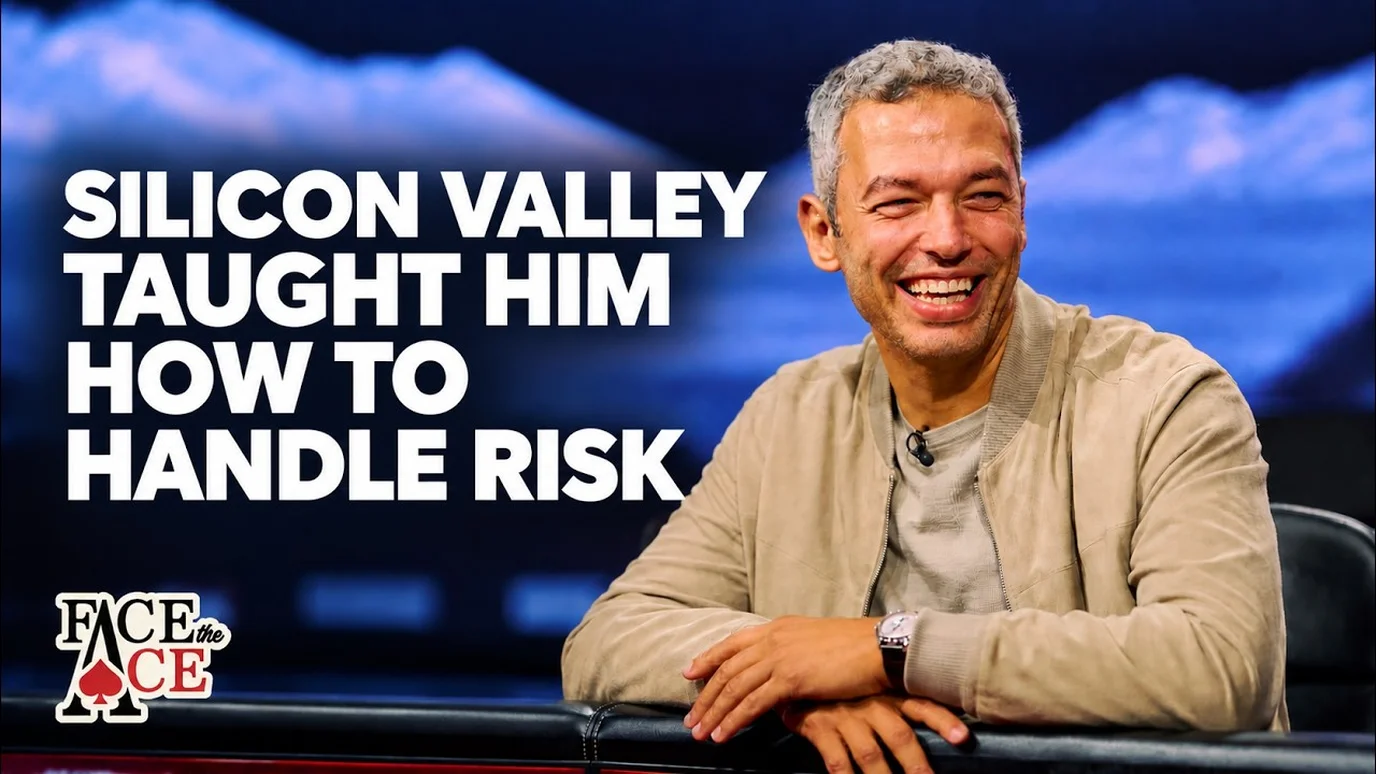
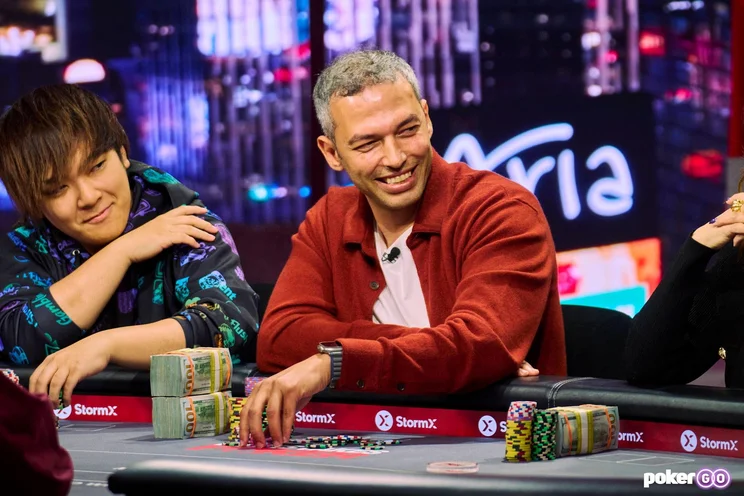
Sameh Elamawy captured the attention of poker enthusiasts primarily through High Stakes Poker, where he quickly became known for his fearless play, charm, and at least one hand getting out of control. However, poker was never his main profession. Growing up in Egypt, he studied computer science, attended Stanford, worked at Pinterest and Dropbox, and eventually founded his own fintech company. This diverse background gives him a unique perspective on high stakes compared to professional players.
From $1/$1 in Silicon Valley Offices to the Biggest Cash Games
Elamawy recalls playing small $1/$1 games with Stanley Tang and other colleagues in the offices of Pinterest and Dropbox around 2012 and 2013. Fast forward a few years, and his poker world looks completely different. Through private games and connections like Andrew Robl, the stakes gradually increased to the point where sums that once seemed outrageous started feeling normal. Elamawy even claims that he played the biggest cash game of his life last summer—bigger than anything seen on High Stakes Poker.
Unlike professional high stakes players, Elamawy doesn't rely on poker for a living, allowing him to redefine EV as "entertainment value." As long as the game is fun, he’s comfortable continuing. But if the atmosphere changes, someone starts losing visibly significant amounts, or the table becomes too pressured, the entertainment value, as he sees it, vanishes.
Elamawy says that's when he can simply walk away. He doesn't want to add more losses to someone already uncomfortable, nor is he interested in a game that turns from a friendly gathering into an unpleasant environment. This is also why there are certain stakes he would rather not play in front of cameras. When extreme sums are involved, he believes streaming can have negative effects, and thus, some of the biggest games will likely never be televised.
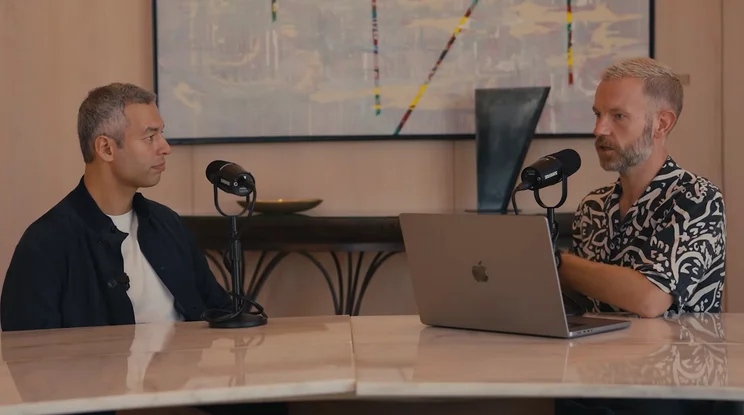
The Company Had Six to Eight Weeks. Then Came the Last Bullet
The strongest story from the interview isn’t about poker, but about Scratch, the company Elamawy built in financial services. At the beginning of 2020, the firm was growing, preparing for another investment round, and aggressively hiring new people. Then COVID hit.
Investors who had practically finalized new funding halted all further investments. With the headcount nearly at 100, Elamawy calculated the company only had six to eight weeks left. Before deciding whether to invest his own money into the firm, he sat down with his then-fiancée.
She reminded him of the people the firm had persuaded to leave secure jobs to join the team. Ultimately, Elamawy invested his own money. The company gained some time, but something more substantial was still needed, which came through unexpectedly with a PPP loan. After two and a half weeks of uncertainty and sleepless nights, banks signed contracts, and the company reached profitability.
Business Pressure Shows Why the River Doesn’t Rattle Him
Elamawy describes this period as one of the toughest in his life. He broke down during the first meeting, and personal issues compounded the stress. His stepfather died of COVID, and Elamawy was acutely aware that company decisions affected dozens who relied on him.
That’s why he smiles today when people ask how he stays calm in huge poker pots. After experiencing mornings unsure whether the company would exist in weeks, a river card seems relatively harmless.
He also doesn’t like overly long decision-making at the poker table. He often quickly reviews the most crucial 80 percent of the information and makes a decision—because the longer he thinks, the more reasons he finds to talk himself out of the right move.
His Son Changed His View on Success
After surviving the pandemic, Scratch moved to a completely different position, but the way of working hardly changed. Elamawy talks of 80- to 100-hour work weeks and a life where the startup takes up virtually all available space. When his son was born, he quickly realized he was heading toward the life he’d always feared—working all day, coming home late, and only seeing his child asleep.
He decided to gradually close this chapter. With his wife and son, he began traveling the world. At the time of the interview, their three-year-old son had visited around 41 or 42 countries, and the family was expecting a second child. Elamawy remained active in investing but, for the first time in years, had significantly more free time.
It was during this period he started playing more poker—not because he needed a new career, but because poker provided the competitiveness, stimulation, and socialization without turning into another startup. Perhaps this is why he can sit in a million-dollar pot more serenely than most.
Do the Stakes Always Have to Be Higher?
Elamawy expects televised high stakes games to grow. If players get used to today’s level and it becomes the new standard, someone will inevitably propose another step up. But he also poses a more interesting question—why do the stakes ever need to be higher?
For a player's enjoyment, it would be ideal to get the same thrill from $1/$1 as from thousand-dollar blinds. Constantly raising stakes only pushes one to move the boundary to achieve the same feeling.
Even at a professional level, there doesn’t have to be a strategic difference between a million-dollar and a ten-million-dollar pot. A player should approach both with the same effort to make the right decision.
Elamawy doesn’t want high stakes poker to turn into baccarat with cards. He loves chaos, he loves action. He’d even bluff Andrew Robl’s six-year-old son, who already calls him a “bluff machine.” Yet he insists that poker should remain poker. Above all, it should remain fun.
More from Face the Ace
Chino Rheem: Addiction, debts, fatherhood, and a life where everything was at stake
Lucas Jumalon: Considered a regular job, then won 10 million dollars
Josh Arieh: Gambling, Fame, Inner Turmoil, and a Comeback Sparked by a Life-Altering Change
Sources – YouTube, WSOP, PokerNews