

From Bowling to Poker
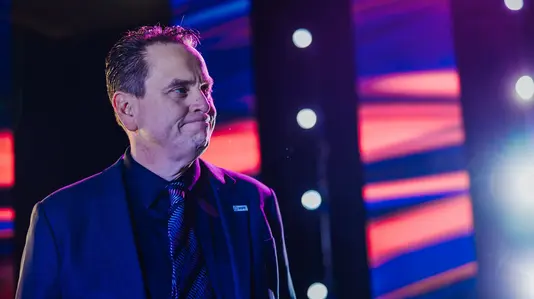
Savage grew up in San Jose, Northern California, where his first major world wasn't poker, but bowling. He was a bowler from the age of twelve, playing amateur professional circuits and immersing himself in an environment where sports competition, side bets, and gambling naturally intertwined. It was the bowling leagues that introduced him to gaming circles, dice, and later, poker.
After a brief time away from school, he worked as an alarm technician, admitting he knew little about electronics. During breaks, he’d play at the Garden City Casino in San Jose and quickly noticed people in the poker room were making more money than he was. He started as a chip runner, carrying racks of chips in an apron, exchanging money for players, and learning the inner workings of the room. Later, he moved on to dealing, which he enjoyed so much that he might have continued if not for carpal tunnel syndrome.
The Birth of a Tournament Director
In the nineties, the poker world was far from standardized like it is today. Savage played tournaments in various Bay Area casinos and noticed a critical issue: rules varied from room to room. What was standard in one casino might be completely different elsewhere, creating chaos for players and allowing room for inconsistent decisions by tournament directors. Savage saw this as a problem that needed solving.
His tournament career took off at Lucky Chances in Colma, south of San Francisco. It was there that big no-limit games were played, while much of the country was still engaged with limit poker. Savage recalls that Lucky Chances was where players like Phil Laak, Antonio Esfandiari, and the next generation of young no-limit players emerged. Games like 25/50 were massive for the time, and the Bay Area became a significant point on the poker map.
TDA and the Attempt to Change Poker Rules Worldwide
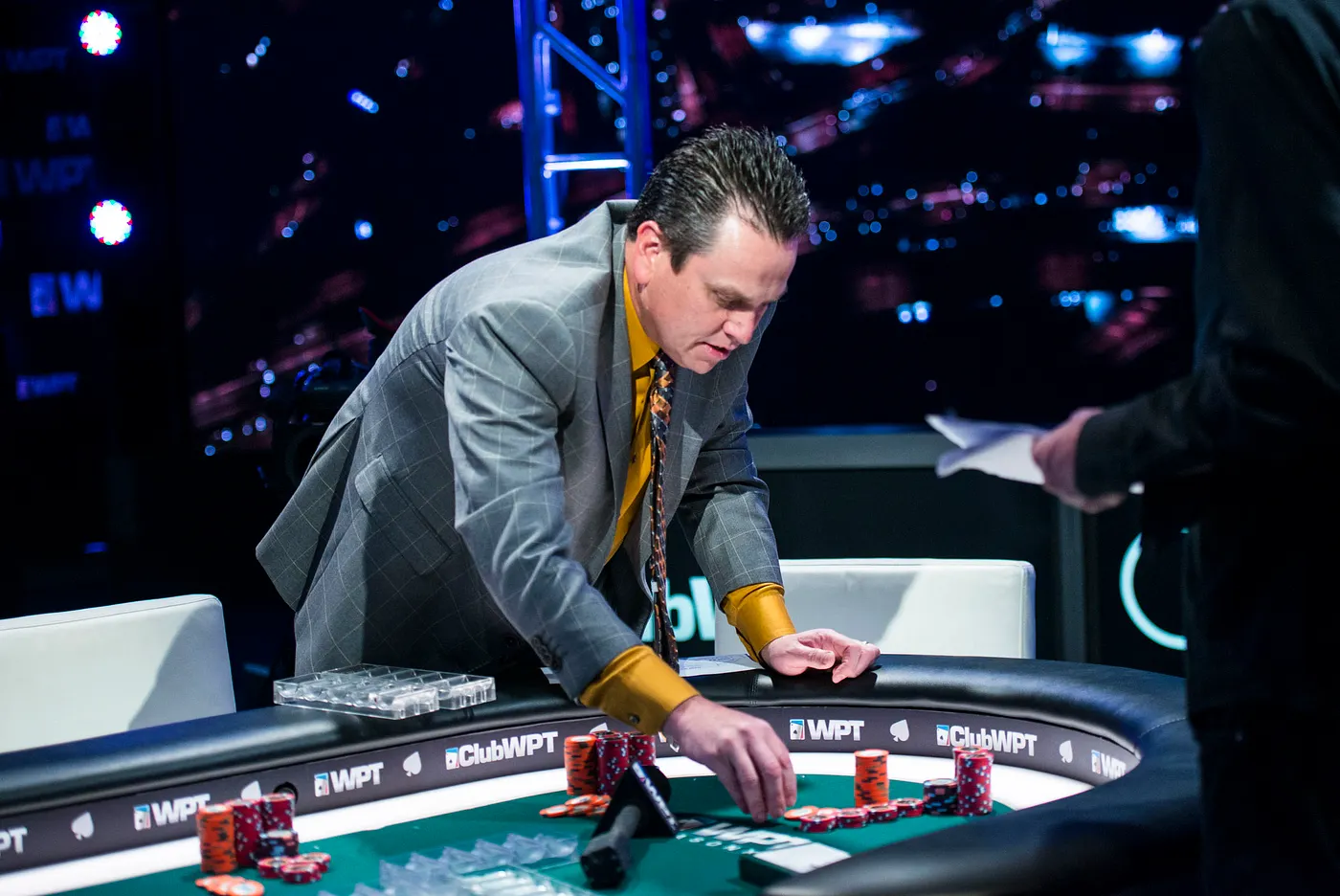
Savage's most significant legacy is linked to the Tournament Directors Association. In 2001, he arrived at the WSOP with the idea that poker needed unified tournament rules. Initially, he faced resistance — the older generation of organizers didn’t want to hear from a younger person telling them how to do their jobs. The way opened only through Linda Johnson, who helped attach the first meeting of tournament directors to the World Poker Industry Conference. Twenty-four people attended, and from this foundation, the TDA was formed.
In the interview, he explains why this was crucial. It wasn't about ego or controlling everything. It was about a player entering a tournament anywhere in the world and knowing what to expect. One chip, verbal action, card showing, all-in situations, penalties, technology, tanking — these are all things that, at a critical moment, can cost a player significant money. Savage emphasizes that those unfamiliar with TDA rules are doing themselves a disservice. In a game where one ruling can change the outcome of a tournament, rules aren't just details. They are part of every player's toolkit.
WSOP 2003 and the Hand That Could Have Altered the Poker Boom
One of the most intriguing parts of the episode naturally revolves around WSOP 2003. Savage was the tournament director the year Chris Moneymaker won the Main Event and ignited the biggest boom in poker history. He notes it wasn’t just the “Moneymaker effect” in isolation. It was a perfect storm of factors: online poker, televised broadcasts, and an amateur entering the Main Event via an online satellite. Poker was ready to explode, and Moneymaker became the face of the moment.
Savage was also present at one of poker’s most iconic hands — the bluff against Sammy Farha. He admits to almost botching the call at a critical moment by announcing Moneymaker’s call instead of the raise. Moneymaker immediately corrected him, saying he was raising. Savage acknowledges that if this confusion had caused Farha to react differently, poker history might have taken a different path. This attention to detail encapsulates his career: a man so close to poker history that even one wrong word could have a massive impact.
Binion’s: Romance, Grit, and the Grind That Won't Return
Savage’s memories of Binion’s Horseshoe are full of nostalgia, albeit unvarnished. He describes the small, overcrowded space with 40 tables, old bathrooms, disintegrating soap, and hotels that wouldn’t meet today’s standards. Despite this, he loved that era. He worked from morning till night, staying directly at the hotel, feeling he was in the heart of something big. Today, WSOP runs on an entirely different scale, but this raw era created a myth that fans still see as the romantic core of poker.
There are also interesting details about registration. The late reg culture didn’t exist back then. If you weren't in the tournament before it started, you simply didn’t play. Player names from satellites were written on a board, and people would come to check them out. Savage recalls wanting his first WSOP events to start on time because it was customary to start as much as an hour late before. Todd Brunson came late to an event once, expecting the usual delay, but Savage didn't let him in.
WPT vs. WSOP: A Rivalry That Seems Absurd Today
Another compelling theme of the conversation is the relationship between the World Poker Tour and WSOP in the early years of the poker boom. Savage was working for WSOP at the time while also involved with Lucky Chances, which featured in WPT's first season. He explains that Steve Lipscomb didn’t want WPT to be associated or compared with WSOP.
However, both Savage and Mike Sexton understood that the success of one major poker brand helped the entire industry. If WSOP grew, interest in WPT did too. And if WPT brought TV quality, characters, and a regular schedule, it helped the entire game. Today, this rivalry seems almost comical, but back then, it was a hard-fought battle for identity. WPT didn’t want to be just another version of WSOP. It wanted to be its own league. Savage stood between both worlds during this period and discusses how the poker business was learning to understand its value.
All-In Buttons, One Chip Behind, and Fighting Angle Shooting
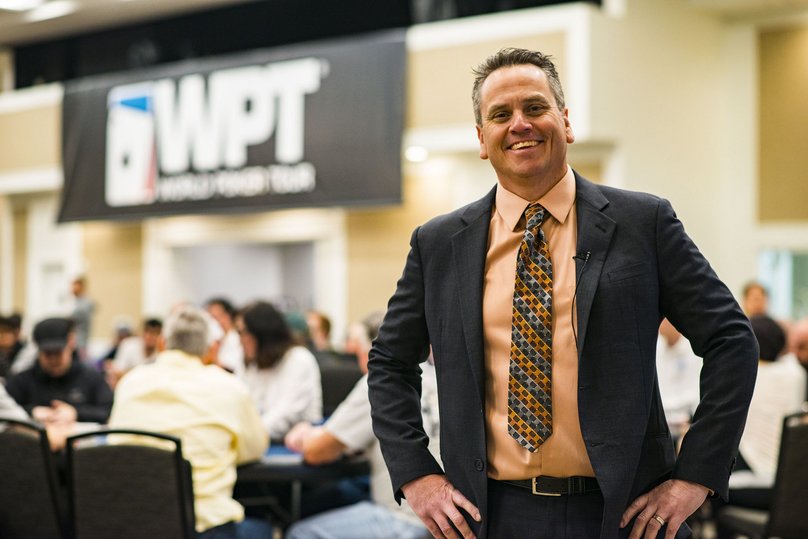
The podcast delves into modern rules. Savage discusses all-in buttons, which were originally introduced because players with headphones often didn’t hear verbal action. However, this seemingly good idea quickly became an issue when players found ways to use the button as an angle. He states this is typical for poker: every new rule is immediately tested by someone. That’s why it was better to give the all-in buttons back to dealers.
The topic of “one chip behind” also gets significant spotlight. Players leave one chip behind the line to technically not be all-in, often during the bubble or in pay jump situations. Savage admits this move is unpleasant but also acknowledges it has strategic reasons and doesn't want to simply ban it. Instead, he sees solutions in action clocks and clearer time management.
Technology, Meta Glasses, and a Future Without Phones?
One of the most up-to-date parts of the conversation focuses on technologies. Savage openly states that electronics are becoming an increasing problem for tournament poker. Headphones, voice-to-text, meta glasses, cameras in objects, and card protectors with technology — these all create new risks that the TDA must address. According to Savage, poker is approaching a point where it will have to seriously consider banning certain devices at the table. Not to ruin players’ comfort, but because the game must remain trustworthy.
In this context, he mentions his own no-tech tournaments: without phones, headphones, glasses, hoods, and other elements that isolate players from the table. Interestingly, players enjoyed them more than expected. They played poker, conversed, watched the action, and the tournament had a livelier atmosphere. Savage doesn’t claim every event will be like this, but he clearly indicates poker must find a balance. When everyone is sitting with headphones and phones, the game is not only slower but less social, less fun, and potentially more vulnerable.
Re-entry, Late Reg, and Recreational Players as the Ecosystem's Foundation
Savage doesn’t shy away from a topic where he admits his own change of mind. He helped promote re-entry tournaments with the aim of creating larger guarantees and bigger prize pools in smaller buy-ins. However, today he says this concept has become a standard in many places that harms cash games, satellites, and recreational players. When every tournament allows for extensive late registration and multiple re-entries, pros look for the optimal mathematical window to enter, and recreational players often sit at half-empty tables at the start.
Here, the episode hits a crucial point. Poker professionals naturally seek an edge, but if everything is maximized for edge, it could harm the product itself. Savage supports shorter registration, a greater focus on satellite players at the start, and formats that encourage people to play from the beginning. He also mentions his “Savage Average” concept, where there is no traditional clock, and blinds increase based on eliminations to avoid the final table ending as a mere “shootout.”
In this episode, poker doesn’t look like a game held together by just big names, TV tables, and million-dollar prize pools. It appears as an ecosystem where every detail — from late reg rules to one chip behind and even a phone in hand — can decide whether a player feels fair, safe, and wants to return. Savage doesn’t offer simple solutions, but that’s what makes the conversation interesting. It talks about poker as a living game that must constantly adjust if it doesn’t want to lose the people it’s played for.
More from Table One Podcast
Mike Matusow: Million-Dollar Falls, Old-School Charm, and a Comeback of a Player Who Never Gave Up
Justin Saliba: Moved to Vegas, Wanted to Win Millions, and Quickly Hated It
John Bornstein: Underground Clubs, Robberies, Total Collapse, and a Poker Miracle
Nikki Limo: From YouTube and Stand-Up to a $130,000 Poker Run
Joe McKeehen: He Stopped Looking at His Cards and Won the WSOP Main Event
Andrew Moreno: From $3 Sit & Go to High Roller Champion
Yukon Brad Booth: Return to High Stakes Poker and the Ultimate Bluff Against Phil Ivey
Landon Tice: When Talent Outpaces Maturity and Poker Forces You to Grow Up
Jeremy Ausmus: From Dusty Poker Games in Colorado to the Pinnacle of World Poker
Cary Katz: Why High Stakes Attract Extremely Analytical Personalities
Sources – X, PokerNews, YouTube, Flickr, DaytonFlyers