

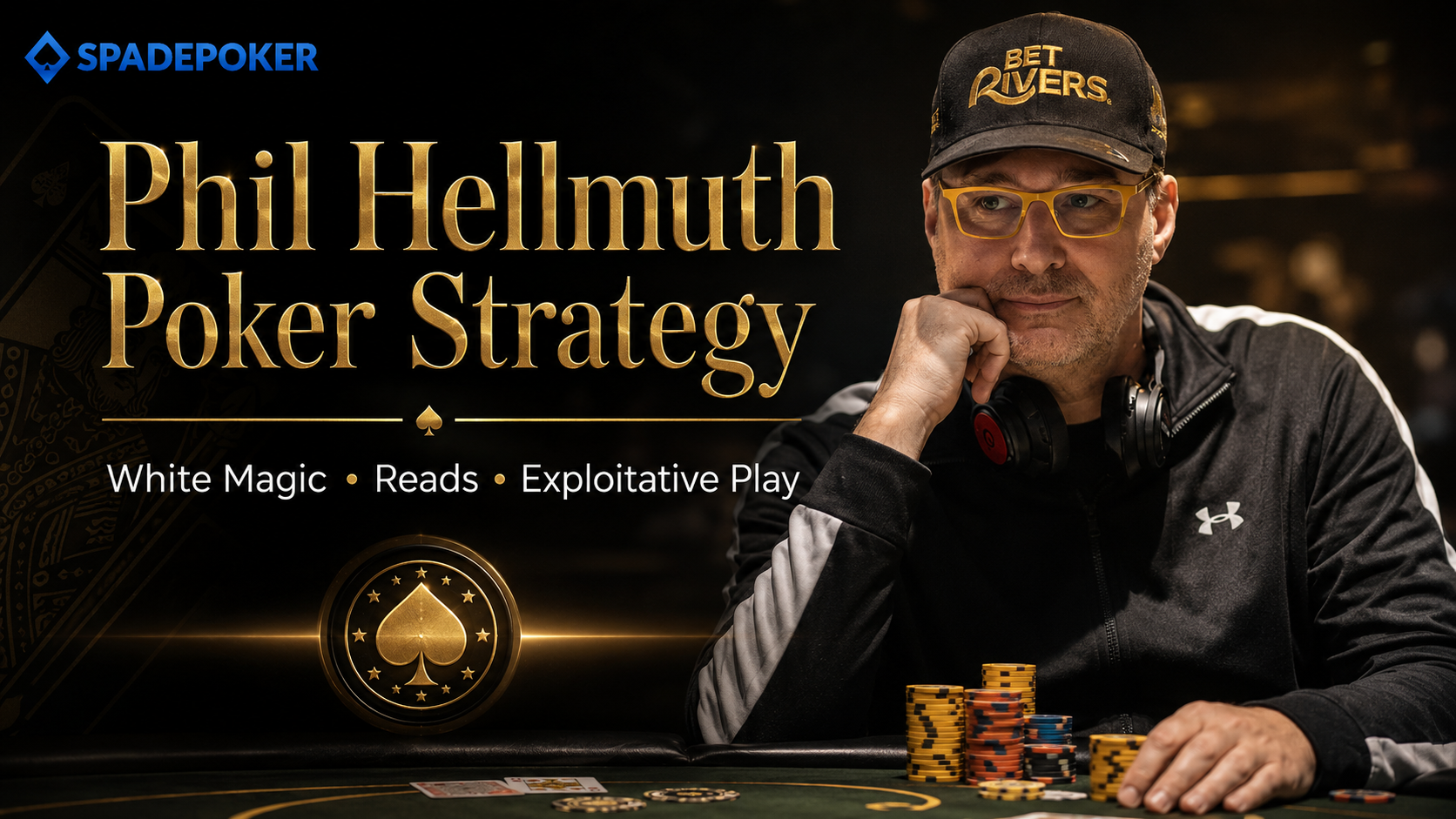
Phil Hellmuth’s poker strategy is one of the most debated topics in the game.
To his supporters, Hellmuth is one of the greatest tournament players ever: a 17-time WSOP bracelet winner, 1989 WSOP Main Event champion, WSOP Europe Main Event champion and a player who has kept winning across several poker eras.
To his critics, his style can look outdated, emotional and too dependent on instinct. Modern poker is full of solvers, balanced ranges, GTO discussion and aggressive high-level theory. Hellmuth often speaks a different language.
He calls it “white magic.”
That phrase has become central to how fans understand Phil Hellmuth’s poker style. It refers to his live reads, instinct, emotional awareness, pattern recognition and confidence that he can understand what opponents are doing without always explaining it in modern technical terms.
But is “white magic” real strategy, branding, ego or something in between?
The answer is more interesting than simply saying Hellmuth is old-school or lucky. His results show that there is real substance behind the style, even if the way he talks about poker is very different from the language used by many modern elite players.
For the full picture of his career, records, net worth, family life and controversies, start with our complete Phil Hellmuth profile.
What Is Phil Hellmuth’s “White Magic”?
Phil Hellmuth’s “white magic” is his name for the instinctive side of his poker game.
It usually refers to live reads, timing, emotional information, table presence, opponent tendencies and the feeling that he can sense when something is wrong in a hand.
Hellmuth does not describe poker only through ranges and solver outputs. He often talks about reading people, trusting his instincts and making decisions based on information that is difficult to express in purely mathematical language.
That is why the phrase divides poker fans.
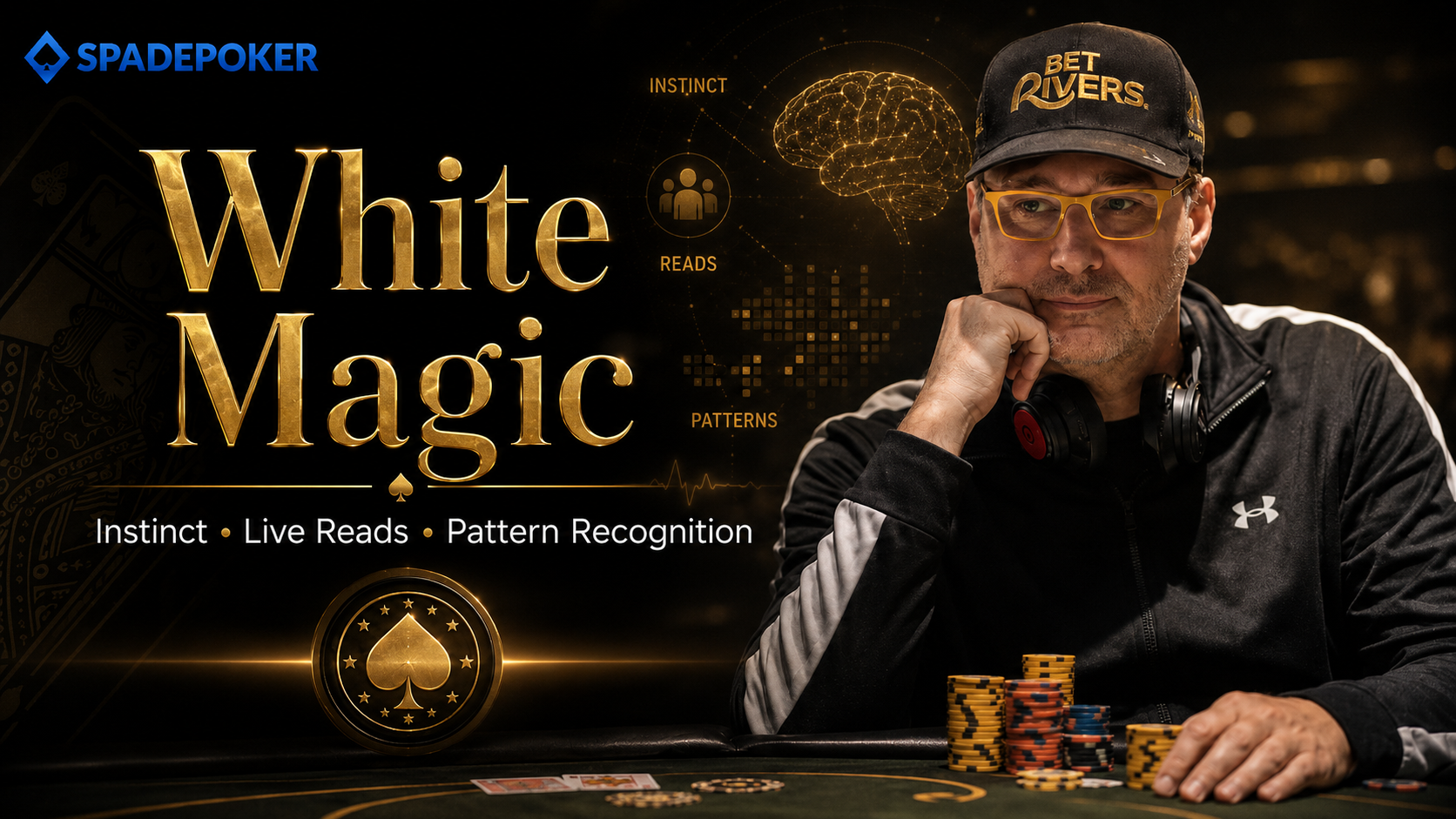
Some players see “white magic” as a real edge in live poker. Others see it as vague branding from a player who does not always explain his thought process in modern technical terms.
Both interpretations can be true at the same time.
“White magic” is partly a brand. It is also a shorthand for a real set of skills that matter in live tournament poker: observation, patience, discipline, experience and the ability to exploit opponents who make visible mistakes.
Phil Hellmuth’s Poker Style in Simple Terms
Phil Hellmuth’s poker style is best understood as patient, exploitative and heavily based on live information.
He is not known as a reckless action player. He is not a modern solver-machine type who tries to win every marginal spot through relentless aggression. His most famous tournament success has often come from waiting, controlling risk, choosing good spots and trusting that weaker opponents will eventually make mistakes.
That approach can look passive compared with some modern styles.
But tournament poker is not only about winning the most chips in theory. It is also about survival, pressure, stack preservation, table dynamics and choosing when to risk your tournament life.
Hellmuth’s style is built around those ideas.
He wants to stay alive. He wants opponents to overplay hands. He wants to identify who is uncomfortable, who is impatient and who is emotionally tilted. Then he wants to use those reads to make decisions that look unusual to players who are thinking only in technical terms.
The strongest statistical proof behind that style is his all-time bracelet record, covered in our Phil Hellmuth WSOP bracelets guide.
Why Hellmuth’s Strategy Is Called Exploitative
Phil Hellmuth’s strategy is often described as exploitative because it focuses on how specific opponents actually play, not only on what a theoretically balanced strategy would recommend.
In simple terms, an exploitative player asks:
What is this opponent doing wrong, and how can I punish it?

If an opponent calls too much, Hellmuth can value bet stronger and bluff less. If an opponent is too aggressive, he can trap. If an opponent is scared of busting, he can pressure them. If an opponent is emotional, he can wait for a mistake.
This is different from a purely balanced approach, where a player tries to protect their own strategy from being exploited by strong opponents.
Hellmuth’s best poker often appears when he believes he understands the person across the table better than they understand themselves.
That is where “white magic” and exploitative poker meet.
Live Reads Are the Core of Hellmuth’s Game
Live reads are central to Phil Hellmuth’s poker identity.
A live read can come from body language, timing, speech, breathing, posture, bet-sizing patterns, eye contact, hand movement or emotional energy. Not every live read is reliable, and great players know that physical tells can be misleading.
But in live poker, information is everywhere.
Hellmuth has spent decades watching opponents under pressure. That experience gives him a huge library of patterns. When he says he “knows” something in a hand, he may not always explain it clearly, but the decision often comes from thousands of hours of live tournament observation.
This is one reason his style is hard to evaluate from the outside.
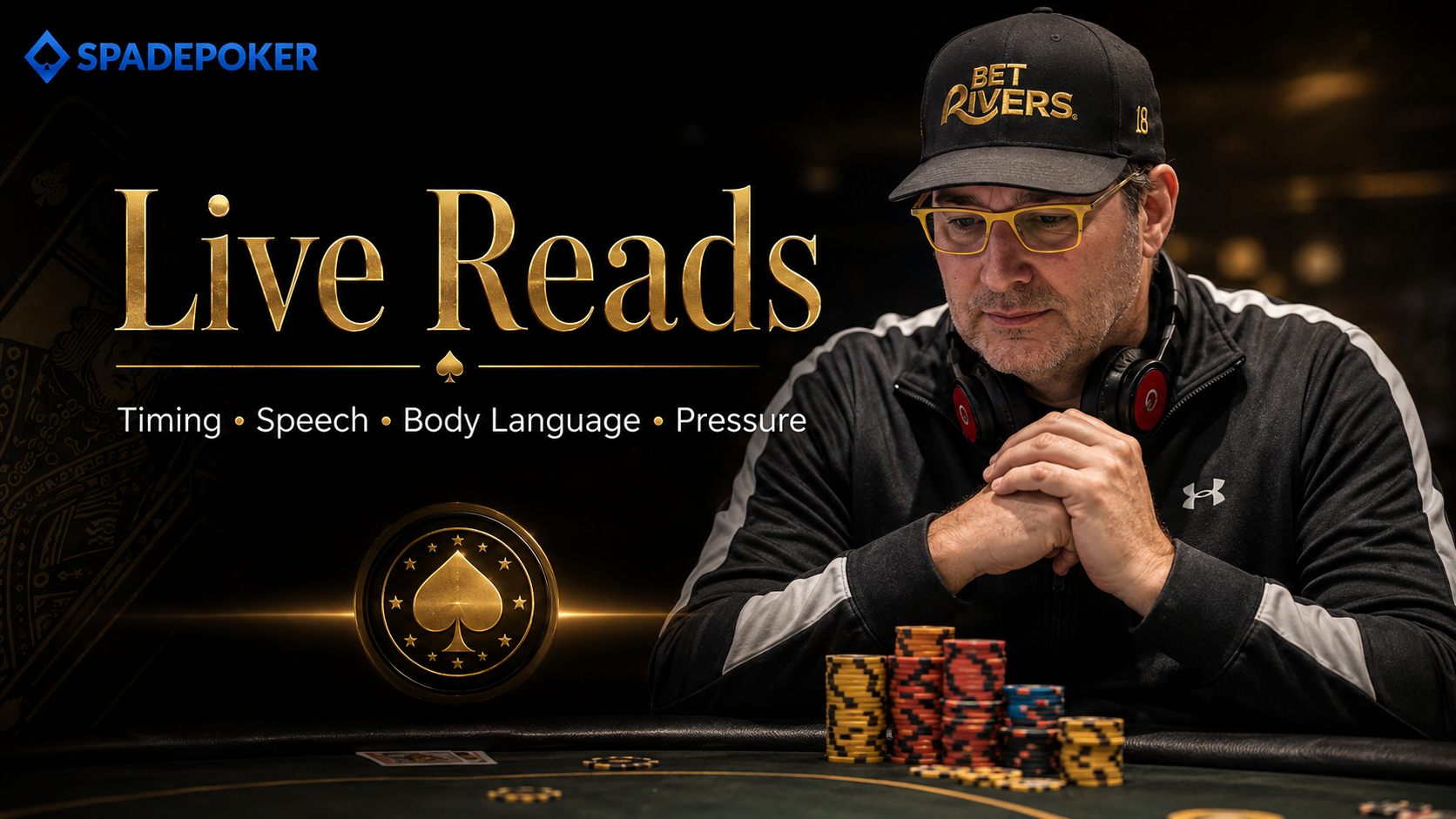
A solver can analyze a spot after the fact. A viewer can criticize a fold or call based on cards and equities. But at the table, Hellmuth may be reacting to details that never appear in a hand history.
That does not mean every instinct is correct. It means his strategy cannot be judged only by theory language.
Patience and Tournament Survival
One of the most important parts of Phil Hellmuth’s strategy is patience.
Hellmuth has built much of his career in tournament poker, where survival has real value. Unlike cash games, tournaments punish elimination permanently. One mistake can end the entire event.
That is why Hellmuth often appears more willing than some modern players to pass on thin edges, avoid unnecessary variance and wait for clearer opportunities.
This can frustrate critics.
Modern players may argue that passing on profitable spots gives away value. They may say that elite tournament poker requires more aggression, more pressure and more willingness to take close edges.
But Hellmuth’s counterargument is written in results.
He has reached an enormous number of WSOP final tables and won more bracelets than anyone else. His style may not look optimal in every isolated hand, but it has repeatedly put him in position to win tournaments.
His tournament results and biggest scores are broken down in our article on Phil Hellmuth’s biggest poker wins and career earnings.
Table Image as a Strategic Weapon
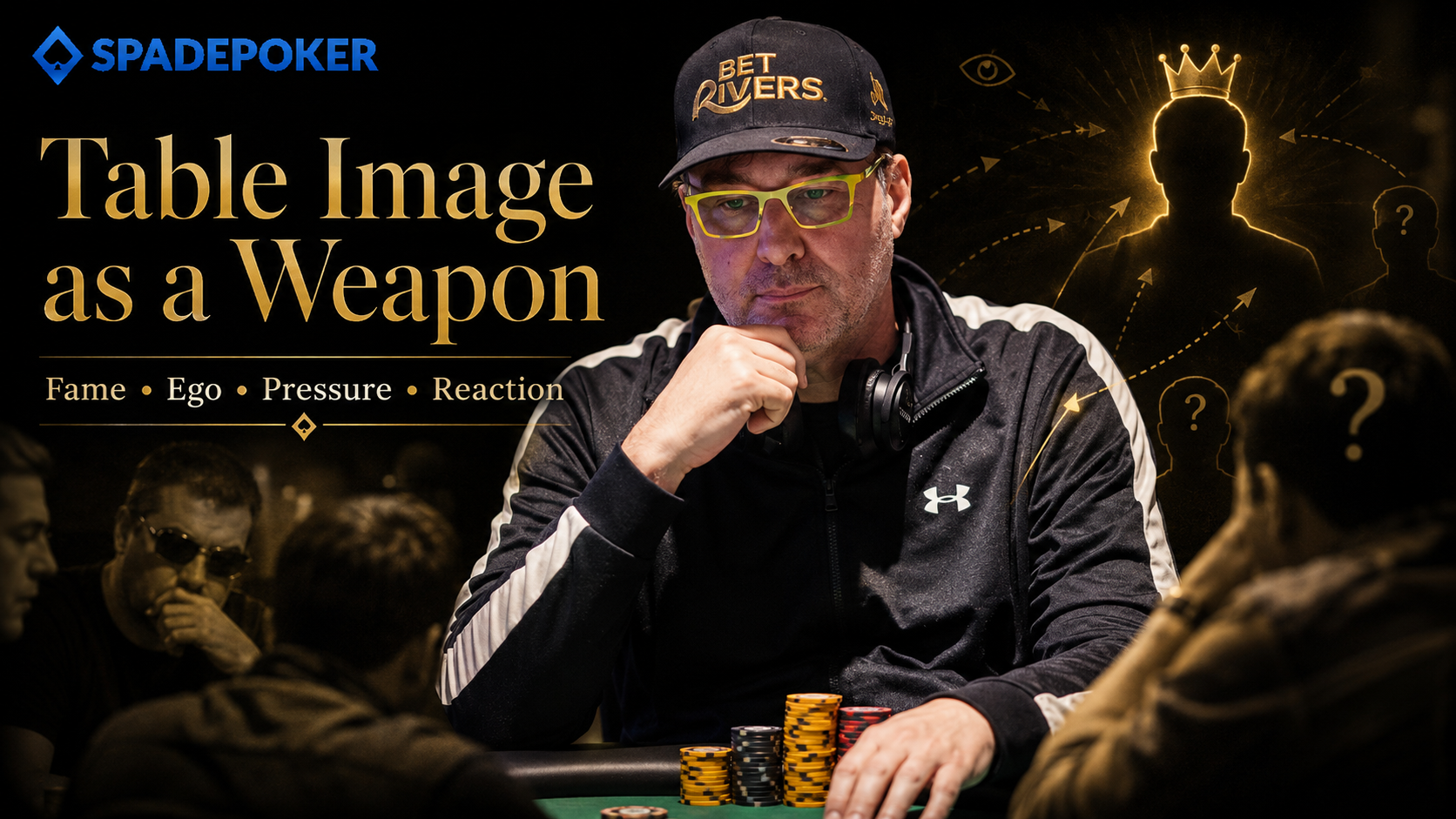
Phil Hellmuth’s table image is not separate from his strategy. It is part of it.
Everyone at the table knows who he is. They know the bracelets. They know the rants. They know the Poker Brat nickname. They know that if they beat him in a strange hand, the reaction might become part of the story.
That creates pressure.
Some opponents want to beat him badly. Some want to bluff him. Some want to avoid being embarrassed by him. Some want to become the player who made the Poker Brat explode.
All of that changes the table dynamic.
Hellmuth’s fame can make opponents play differently. That is valuable. A strong table image does not win pots by itself, but it can push opponents away from their normal decisions.
His ego, reputation and emotional reactions may create controversy, but they also create information. When opponents change their behaviour because Phil Hellmuth is in the hand, Hellmuth has something to exploit.
Why Modern Players Criticize Hellmuth’s Strategy
Modern players often criticize Hellmuth’s strategy because it does not always match the language of contemporary poker theory.
Today’s top players regularly discuss range construction, blockers, minimum defense frequency, ICM, node-locking, mixed strategies and solver outputs. Hellmuth is more likely to talk about instinct, reads, patience and white magic.
That difference can make his strategy sound less precise.
Some critics argue that Hellmuth gives up too much value, plays too cautiously in certain spots or relies too heavily on weak opponents making mistakes. They may also point to hands where his emotional reaction appears stronger than his technical explanation.
Those criticisms are not meaningless.
Poker has evolved. The average level is much higher than it was during the early parts of Hellmuth’s career. Players study more, understand more and make fewer obvious mistakes.
But the criticism also has limits.
If Hellmuth’s strategy were only outdated, he would not still be reaching major final tables and adding WSOP results decades after his first bracelet.
Why Hellmuth’s Strategy Still Works
Phil Hellmuth’s strategy still works because tournament poker is played by humans, not by solvers.
Players get tired. They get nervous. They become impatient. They overreact to famous opponents. They make emotional decisions. They misunderstand pressure. They want to win pots against legends. They fear busting before pay jumps or final tables.
Hellmuth is extremely good at noticing those things.
His style is not designed to beat a perfect theoretical opponent in every possible node. It is designed to beat real tournament players under real tournament pressure.
That is a crucial distinction.
Against elite modern professionals, Hellmuth’s edge may be smaller and more contested. Against mixed tournament fields with amateurs, qualifiers, emotional players and overconfident opponents, his patience and live-read approach can still be very powerful.
That is why he remains dangerous.
The same confidence that fuels his reads also feeds the Poker Brat persona, especially when opponents make plays he believes are wrong.
Phil Hellmuth’s Strengths as a Poker Player
Hellmuth’s biggest strategic strengths are easy to identify.
First, he has elite tournament experience. Few players have been in more high-pressure WSOP spots.
Second, he has strong live instincts. Whether fans call it white magic or pattern recognition, Hellmuth has repeatedly shown an ability to make big reads in live settings.
Third, he understands weaker opponents. He is often at his best when playing against players who make emotional or unbalanced decisions.
Fourth, he has unusual self-belief. That confidence can become arrogance, but it also helps him survive downswings, criticism and the constant pressure of public expectation.
Finally, he understands entertainment. Even when that does not directly win chips, it keeps him relevant, creates pressure and makes opponents aware that every hand against him can become part of a larger story.
Phil Hellmuth’s Strategic Weaknesses
Hellmuth’s style also has weaknesses.
His emotional reactions can hurt him. Frustration may affect decision-making, especially when he feels that an opponent made a bad play and got rewarded.
His confidence can also become a problem. A player who trusts their reads too much may sometimes dismiss technical information that should matter.
Against elite modern opponents, exploitative instincts alone may not be enough. Strong players can hide information, balance their ranges and avoid the obvious mistakes that Hellmuth is so good at punishing.
There is also a table image risk.
The Poker Brat persona can intimidate some opponents, but it can motivate others. Some players want to beat him more because of the rants. Others may deliberately make uncomfortable plays just to test his patience.
That is the trade-off of being Phil Hellmuth.
His personality creates power, but it also creates targets.
White Magic vs GTO
The debate between Hellmuth’s “white magic” and modern GTO poker is one of the clearest ways to understand his place in the game.
GTO thinking tries to build strategies that are difficult to exploit. It focuses on balanced ranges, correct frequencies and mathematically sound decision-making.
White magic, at least in Hellmuth’s language, focuses more on the human layer: what this opponent is doing, what they are feeling, what their timing means and whether the story they are telling makes sense.
The best answer is not that one side is always right.
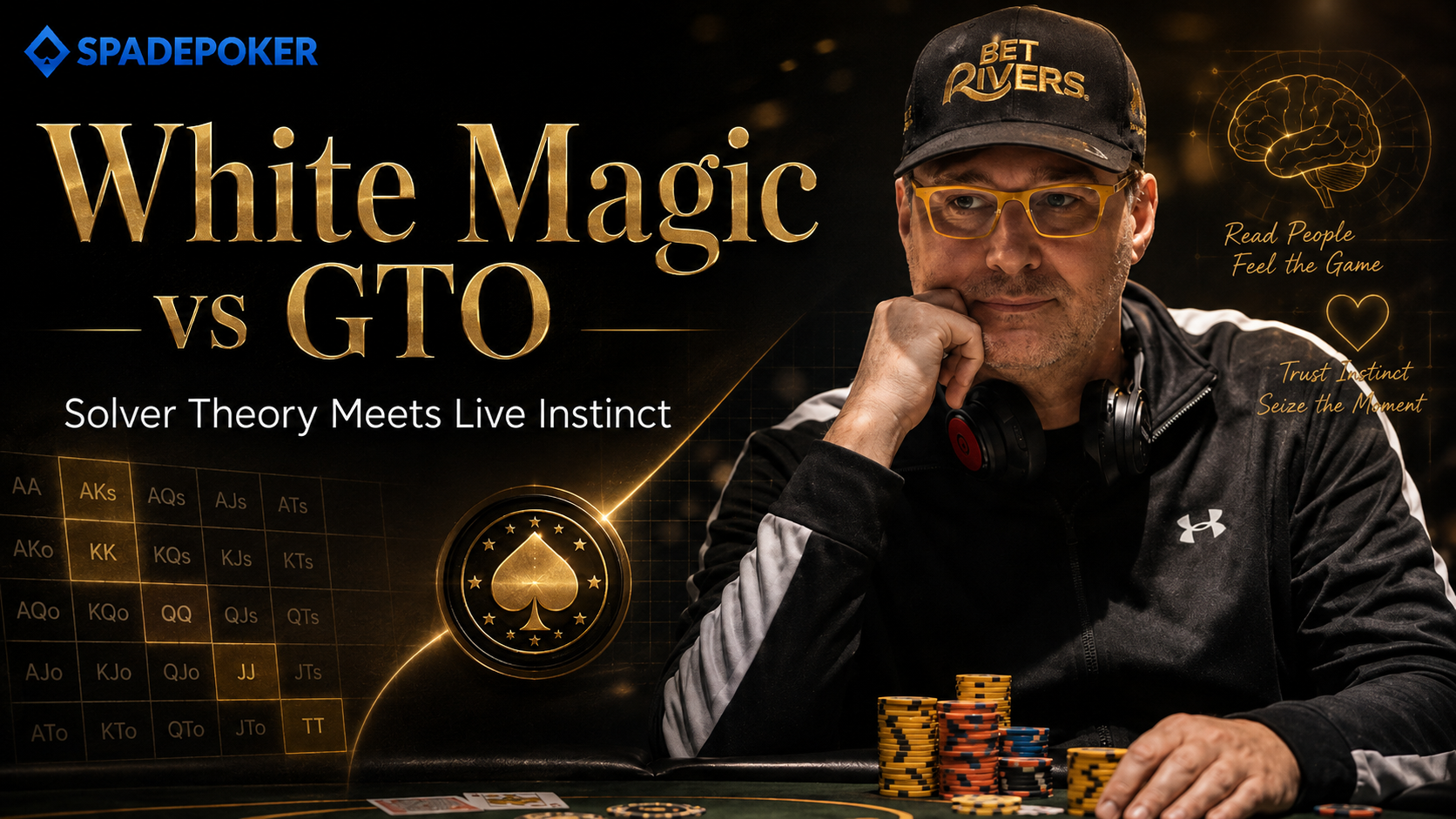
Modern poker theory is essential. Players who ignore it completely will struggle against strong opposition. But live reads and exploitative adjustments still matter, especially in tournaments with mixed fields.
Hellmuth’s career exists in the tension between those two worlds.
He may not sound like a solver-era player, but he has found ways to win in a game increasingly shaped by solver-era players.
What Players Can Learn From Phil Hellmuth
Most players should not try to copy Phil Hellmuth’s table behaviour.
The rants, ego and emotional reactions are not a strategy blueprint. They work as part of Hellmuth’s brand because he is Phil Hellmuth. For most players, that behaviour would simply create unnecessary conflict.
But there are real lessons in his poker approach.
Players can learn patience. They can learn to observe opponents more carefully. They can learn that tournament survival has value. They can learn that weaker opponents often reveal more information than they realize.
They can also learn that poker is not only about memorizing charts.
Charts, solvers and theory matter. But the person across the table matters too. Hellmuth’s best poker is a reminder that live tournament success often comes from combining technical knowledge with emotional intelligence and practical experience.
His belief in his own tournament instincts traces back to the win that started everything: the 1989 WSOP Main Event victory over Johnny Chan.
Final Verdict: Is Phil Hellmuth’s Poker Strategy Still Relevant?
Phil Hellmuth’s poker strategy is still relevant because his results are still relevant.
His style is not perfect. It is not universally loved. It does not always fit neatly into modern poker theory. His emotional reactions can create legitimate criticism, and his confidence can sometimes look like arrogance.
But Hellmuth’s tournament record cannot be dismissed.
Seventeen WSOP bracelets, a 1989 Main Event title, a WSOP Europe Main Event title and decades of final-table appearances show that his approach has worked across multiple eras.
“White magic” may sound mysterious, but the foundation is not magic at all.
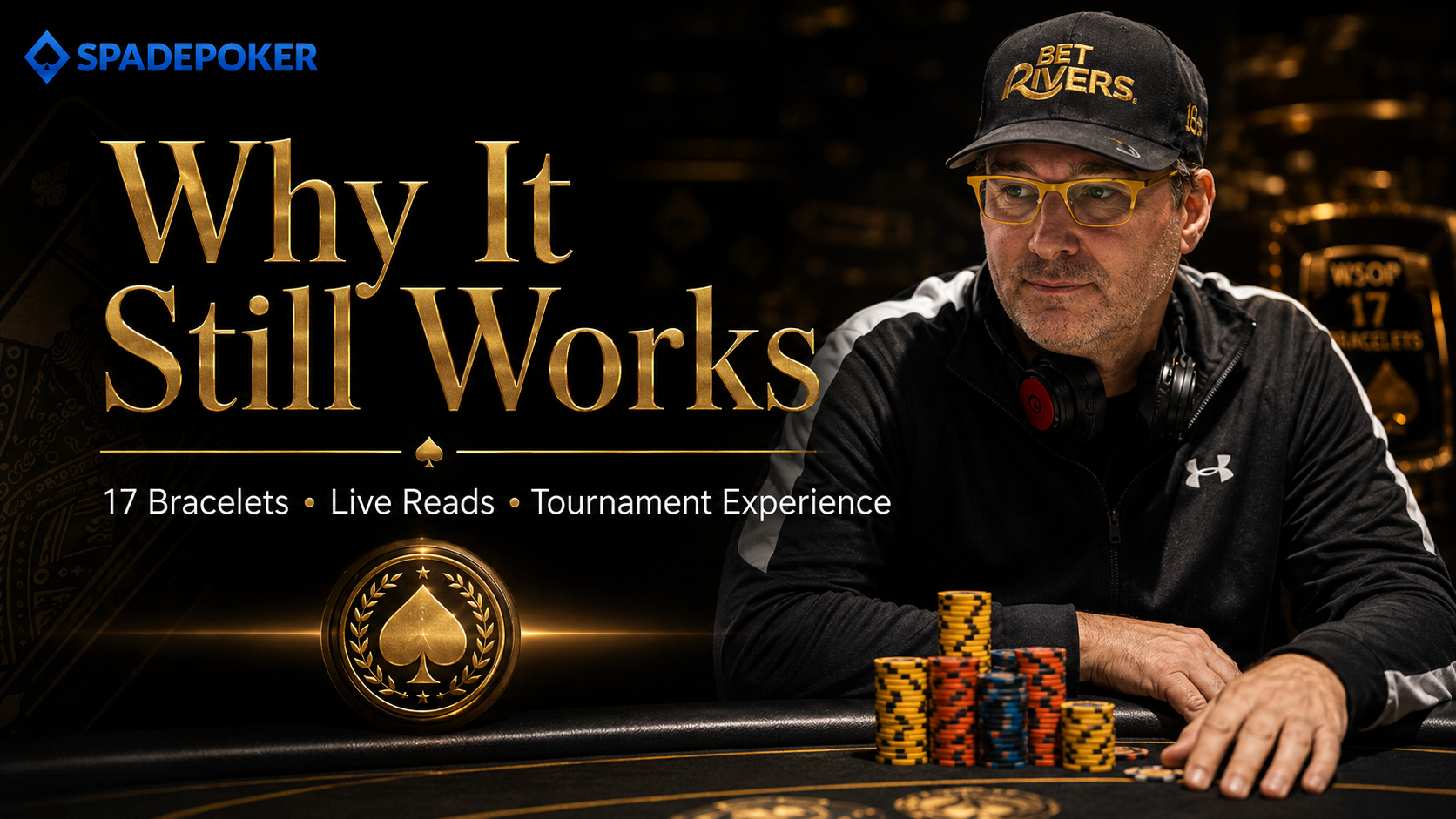
It is experience, observation, patience, live reads, table image and the ability to exploit real people under pressure.
That is why Phil Hellmuth remains such a fascinating poker player.
He is not just a relic of the old game. He is a bridge between old-school instinct and modern tournament reality.
Phil Hellmuth Poker Strategy FAQ
What is Phil Hellmuth’s poker strategy?
Phil Hellmuth’s poker strategy is based on patience, live reads, exploitative adjustments, tournament survival and what he calls “white magic.”
What does Phil Hellmuth mean by white magic?
White magic is Hellmuth’s term for his instinctive reading ability, live feel and capacity to understand opponents beyond purely mathematical analysis.
Is Phil Hellmuth a GTO player?
Hellmuth is not usually described as a classic GTO-style player. His public strategy identity is more strongly connected to live reads, exploitative poker and old-school tournament instincts.
Why do modern players criticize Phil Hellmuth’s strategy?
Modern players sometimes criticize Hellmuth because his style does not always match solver-era theory, and because he often explains decisions through instinct rather than technical poker language.
Why does Phil Hellmuth still win?
Hellmuth still wins because he has enormous tournament experience, strong live instincts, patience and the ability to exploit real opponents under pressure.
Is Phil Hellmuth good at poker?
Yes. Whatever fans think of his behaviour or strategy language, Hellmuth’s 17 WSOP bracelets and long tournament record make it impossible to deny his poker success.
What are Phil Hellmuth’s biggest strengths?
His biggest strengths are live reads, tournament patience, experience, self-belief, table image and exploitative decision-making against opponents who make visible mistakes.
What are Phil Hellmuth’s weaknesses?
His weaknesses include emotional reactions, possible overconfidence in reads and a style that can be challenged by elite modern players with strong theoretical foundations.
Should beginners copy Phil Hellmuth’s style?
Beginners should learn from Hellmuth’s patience and observation skills, but they should not copy his emotional outbursts or rely only on instinct without studying modern poker fundamentals.
More Phil Hellmuth Guides
- Phil Hellmuth: Age, WSOP Bracelets, Net Worth, Wife, Poker Career and Controversies
- Phil Hellmuth WSOP Bracelets: All 17 Wins, Bracelet List and the Chase for Number 18
- Phil Hellmuth’s Biggest Poker Wins, Career Earnings and Tournament Results
- Why Is Phil Hellmuth Called the Poker Brat?
- Phil Hellmuth Poker Strategy Explained

