

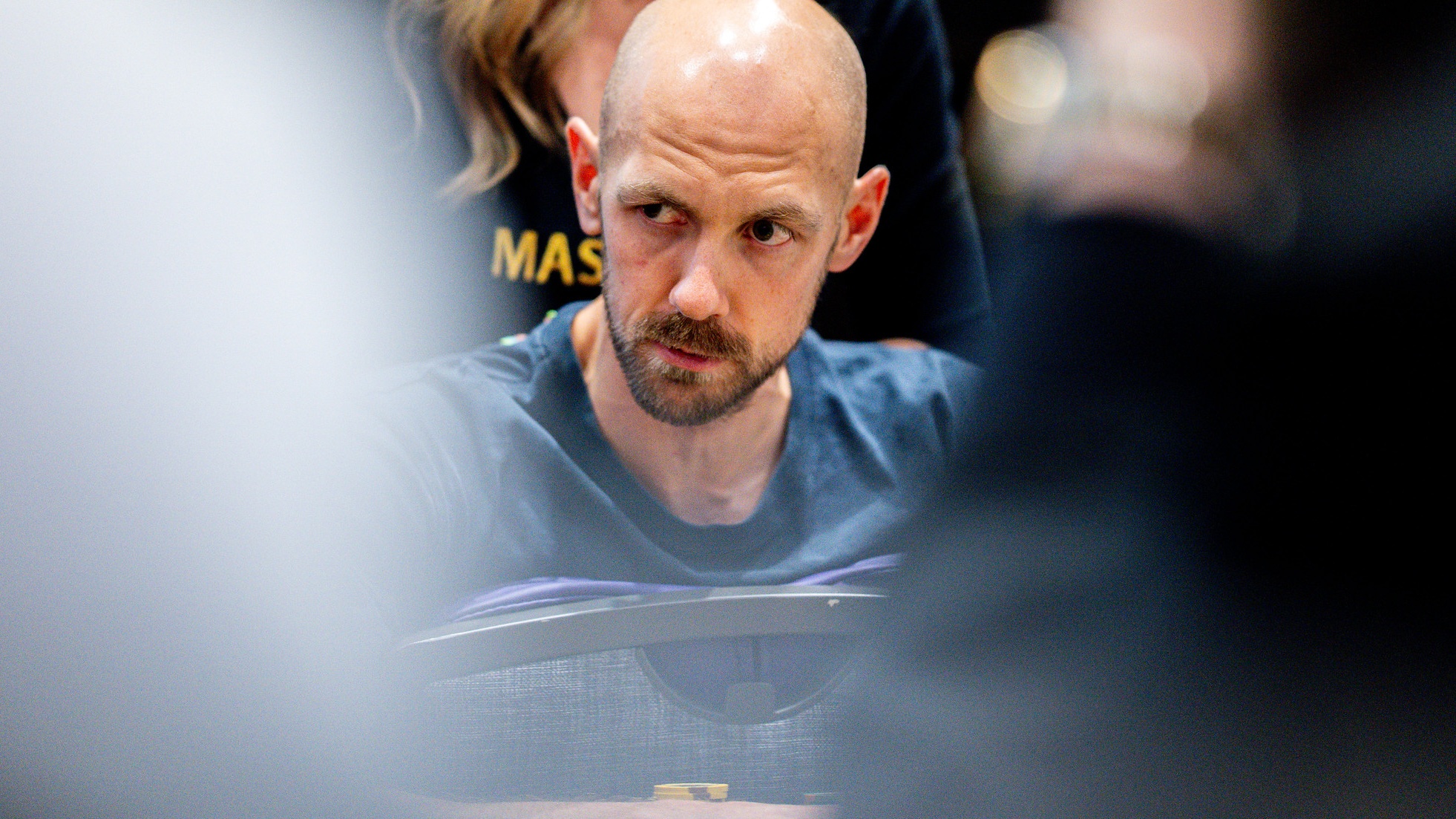
Stephen Chidwick is among the most respected tournament players of the last decade. In the GTO Lab podcast interview, he doesn't present himself as a "poker robot," but as an introvert who had to learn to work with his mind as precisely as he works with ranges and frequencies.
At the beginning of the interview, Chidwick describes a period when he kept detailed records of his focus during tournaments. After each break, he assessed how engaged he was in the game, how he reacted emotionally, and whether he was sufficiently present in every decision. Initially, this system helped him improve his performance, but over time, it became restrictive.
The constant self-assessment created pressure that prevented him from being natural. When he allowed himself to stop micromanaging everything and trust the process more, he began to find himself in a flow state more frequently. According to him, this is where the best decisions are made.
Why Results Are Deceptive and Decisions Matter More
One of the central ideas of the interview is separating the quality of a decision from its outcome. Chidwick openly discusses how, for many years, he struggled to handle bustouts, especially when he felt he had made a mistake. A loss could ruin his entire day, with thoughts returning to the hands repeatedly. The turning point came with the help of a mental coach, as he began to notice his internal dialogue. He replaced the phrase “I should have” with more constructive language like “next time I want to.” This change allowed him to learn from mistakes without self-destructive criticism and to move forward more quickly.
A significant part of the podcast discusses working with solvers and training tools. Chidwick points out a common mistake among players who blindly follow the most frequent solutions just to get a "green check mark." He believes it's important to understand the implications of decisions across the streets. If a player never opts for low-frequency lines, they'll eventually pay the price with imbalanced situations. A solver should be a tool for understanding the game, not an unquestionable authority.
Chaos as a Natural Part of the Game
An interesting aspect of the interview is Chidwick's relationship with chaos and uncertainty. Poker has taught him that not everything needs a clear answer. It’s precisely this ambiguity, the human factor, and psychology that make the game intriguing and alive. He admits that he used to cling stubbornly to theory. Playing theoretically correct gave him a sense of security. But over time, he learned to trust his reads more and accept the fact that not every decision can be definitively judged as right or wrong.
The conversation also touches on games outside of poker, especially StarCraft. Chidwick explains how real-time strategy games helped him understand working with limited attention. At any given moment, there are many things he could address, but only some are truly relevant. He’s transferred this principle to poker and life, learning to recognize where his energy should be directed at any given moment. According to him, it's one of the most crucial skills for long-term success.
This episode of the GTO Lab podcast isn’t about specific hands or quick tips on how to win more tournaments. It’s about mindset, dealing with pressure, and how one’s perspective on the game changes when shifting from chasing perfection to maintaining sustainable performance. Stephen Chidwick shows that even at the pinnacle of poker, the greatest challenge is working with oneself.
More from the GTO Lab Podcast
Ike Haxton: Precise Sizing Doesn’t Matter, the Real Edge is a Calm Mind
Alex Kulev: What You Need to Change in Your Mindset to Make the Leap to High Stakes
Leon Sturm: Independent Thinking in the High Roller Scene
Orpen Kisacikoglu: Solvers Provide Quick Answers, But Take Away the Thinking Process
Alex Ponakovs: Why Independent Thinking is More Important Than Blindly Following Solvers
Nick Petrangelo: In $100k Events There Aren't Weak Players Anymore, So There's More Work to Do
Daniel Negreanu: Being at the Top of Poker for Years is Hard Work, Not Luck
Fedor Holz: I Used to Want Wins, Titles, and Money. Today I Want Happiness
Sources – Podcast GTO Lab, Flickr (WorldPokerTour, Poker Red)
