


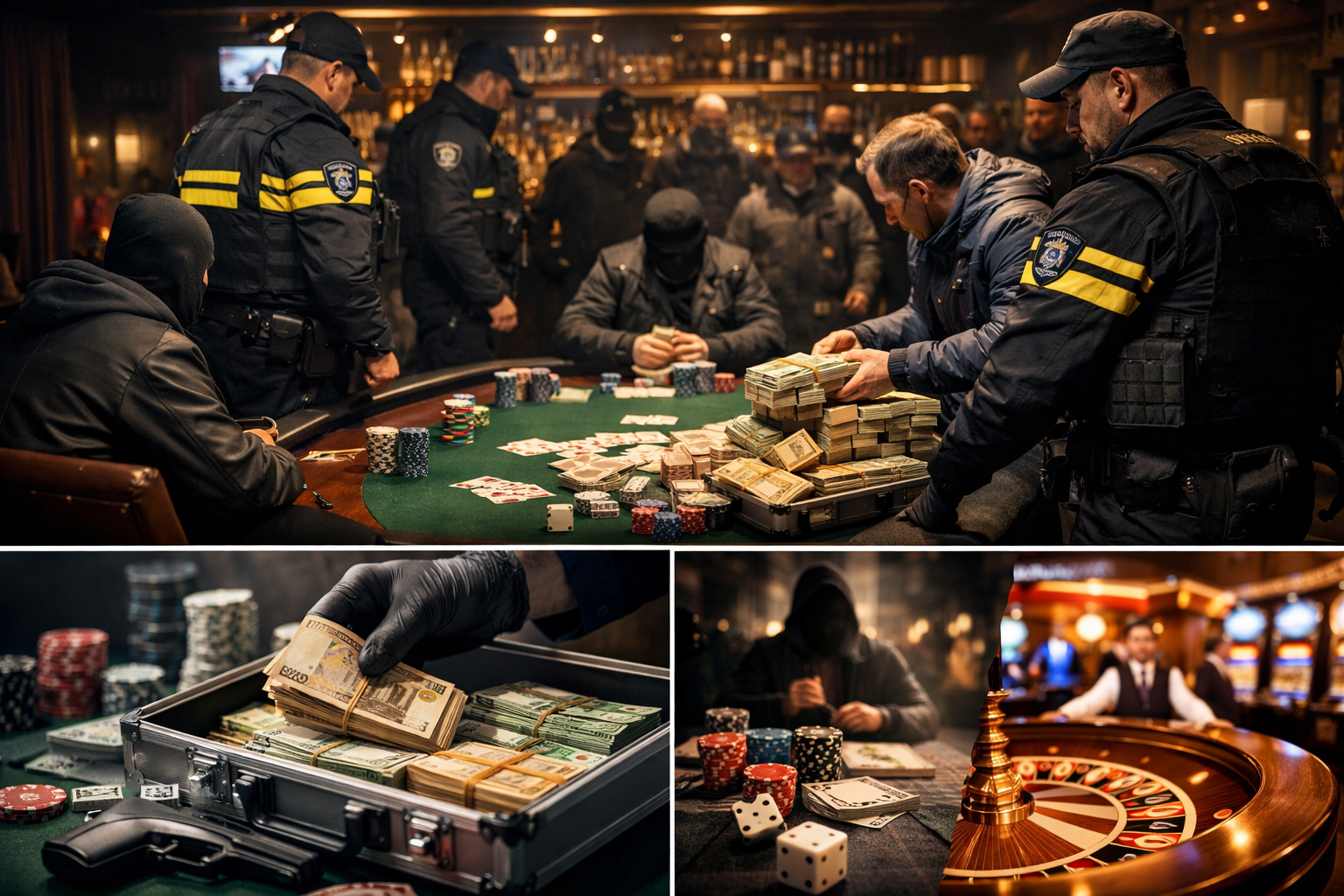
During the raid, the authorities collected significant amounts of money from different establishments. Actually, in one of the illegal establishments, they managed to collect at least €40,000 in hard cash. This just shows how much money exchanges hands in the unregulated sector. The crackdown happened in The Hague, Amsterdam, Aspen, Tilburg and Rotterdam.
The KSA has linked the illegal poker tournaments with organised crime as well as money laundering. It is not a pretty sight since they are also a major cause of gambling addiction.
The race between licensed and unlicensed gambling
The crackdown is just a shadow of the effort by Dutch authorities to capture the attention of players and lead them towards legal gambling. You see, regulations are mainly done for the safety of the players. Therefore, operators have no option but to comply with the strict rules set. For instance, promos are tightly controlled, which is why many platforms emphasise no deposit bonuses on registration in The Netherlands that comply with local guidelines.
By enforcing such standards and shutting down illegal platforms, the KSA’s aim is to ensure that Dutch players work with platforms that value their safety.
However, the black market is growing at an unprecedented rate. In fact, the KSA stated that in the first six months of 2025, more money was spent on illegal gambling sites than on legal ones. It’s interesting to note that while the number of gamblers using legal platforms rose to 839,000, their combined losses fell by 14% during the year.
What is even more alarming is the fact that the KSA estimated that even though 94% of gamblers stick to licensed operators, 53% of all the money spent on online gambling is taken to illegal sites. This means that a small group of people is responsible for a large share of illegal website income. And that’s worrying since players in those illegal circuits have less protection from the regulator.
The war continues
The war against illegal casinos has gone well into 2026. In January, the KSA published its primary aims for 2026, which emphasised the “intensifying” of the efforts to fight the black market.
In the country, there is only one land-based casino that is allowed to run money-winning tournaments, and that is the state-run Holland Casino. Outside of this, poker is only allowed in closed circles, i.e., among friends, family or association members.
Well, the KSA imposed a fine of €110,000 to one of the raided organisers of the unlicensed poker tournaments. This decision by the regulator was aimed at stopping others from starting their own operations. No operator would imagine losing such a huge sum of money!
Hitting where it hurts the most
In January 2025, the KSA fined Winning Poker Network (WPN) €1.3 million for running unlicensed poker in the Netherlands. You see, WPN had been on KSA’s radar since September 2022. And according to the regulator, poker players were accessing the WPN-run website, which had a range of poker tournaments, games and promotions.
The KSA chairman, Michel Groothuizen, said that imposing penalty payments was one of the best ways to deal with illegal sites. With this, the regulations could hit them in the place where it hurts most: their wallets.
The KSA has continued a proactive approach, working with payment service providers, hosting companies and social media companies to completely scramble illegal operations. For a further blow, the regulator introduced a new policy in 2025 that allowed fines of up to €2 million for the more serious offences.
Targeting an increase in channelisation
The focus of the KSA is to reduce the revenue flowing into unauthorised platforms. Considering that the GGR channelisation fell below 50% for the first time in 2025 H1, the aim is to make illegal platforms harder to access. As a result, players will slowly but steadily turn to legal sites.
The enforcement will target various places, including:
- Internet infrastructure
- Marketing
- Affiliates
- Social media content
- Payment channels
For the online market, the goal is having 90% of players using licensed operators. For land-based gambling, the regulator will be working with the government and focusing on slot machines to determine how they fall into the hands of illegal operators.
Cutting down adverts
When it comes to advertising, the Netherlands already implements some of the tightest measures in Europe. However, the KSA has been tightening the noose year after year. For instance, in 2023, gambling ads on different media channels were banned. In 2025, that knot was tightened with gambling sponsorships for sports clubs and competitions being completely outlawed.
The KSA stated that its main focus was to bring down operators who use influencers and celebrities in gambling ads. Operators should already know that featuring famous people in gambling ads is not allowed in the Netherlands.
A message to the illegal operators
The government is doing all it can to ensure that the country's gambling ecosystem comes under regulation. The KSA is sending a clear message to the black market that unregulated gambling is not welcome in the country. This is clear through the crackdowns and imposition of serious fines on the perpetrators.
In addition to these efforts, it is also clear that enforcement alone is not enough. The regulator must also ensure that it balances its strong regulations with a competitive legal market that not only attracts but also retains players. If they can hack that, the gambling ecosystem will be much safer and more transparent.