

The legendary singer Kenny Rogers added to the special atmosphere at the Horseshoe by personally performing his hit 'The Gambler,' which became the unofficial anthem for an entire generation of poker players.
Clash of Legends and a Historic Double
Before the Main Event, 11 side events took place at Binion's Horseshoe, bringing captivating stories. Gary 'Bones' Berland achieved an incredible feat by winning two bracelets for the second year in a row, both in Seven Card Stud variants. This performance momentarily matched Doyle Brunson's collection of five bracelets.
Lakewood Louie also claimed two titles, dominating the A-5 Draw and Draw High disciplines. Both managed this in two consecutive tournaments.
A significant novelty was the first official mixed doubles event, won by the star duo Doyle Brunson and Starla Brodie. Starla, just 24 years old then, and Brunson defeated the couple Wayne and Pat Eister. The year 1979 was also historically the first year when two women left with WSOP bracelets: besides Brodie, Barbara Freer triumphed in the popular women's tournament.
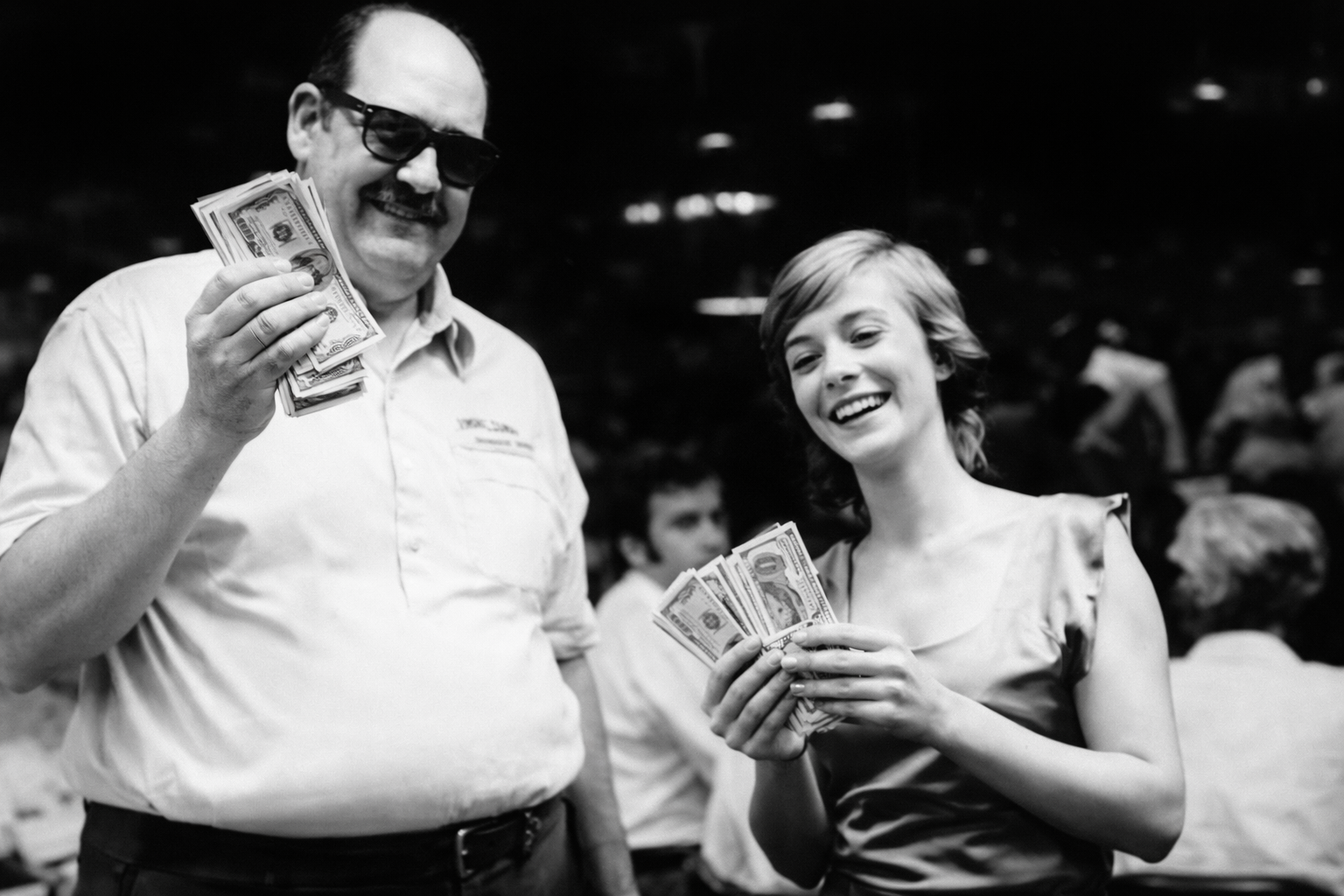
For Brunson, it was his sixth WSOP title, but Johnny Moss left no doubt about who the top player of the first decade was. Just days later, he won the $5K Seven Card Stud event and became the first player in history to reach seven WSOP gold bracelets.
|
Event |
Entries |
Winner |
Prize |
|
Event #1: $10,000 No Limit 2-7 Draw Lowball |
15 |
Bobby Baldwin |
$90,000 |
|
Event #2: $500 Limit Seven Card Stud |
80 |
Gary Berland |
$24,000 |
|
Event #3: $1,000 Limit Seven Card Stud Hi-Lo |
34 |
Gary Berland |
$20,400 |
|
Event #4: $600 Mixed Doubles Seven Card Stud |
25 |
Doyle Brunson Starla Brodie |
$4,500 each |
|
Event #5: $400 Ladies Limit Seven Card Stud |
53 |
Barbara Freer |
$12,720 |
|
Event #6: $1,500 NL Hold'em (Non-Pro) |
85 |
Perry Green |
$76,500 |
|
Event #7: $1,000 Limit A-5 Draw Lowball |
37 |
Lakewood Louie |
$22,200 |
|
Event #8: $2,000 Limit Draw High |
19 |
Lakewood Louie |
$24,000 |
|
Event #9: $1,000 Limit Razz |
37 |
Sam Mastrogiannis |
$22,200 |
|
Event #10: $5,000 Limit Seven Card Stud |
16 |
Johnny Moss |
$48,000 |
|
Event #11: $1,000 No-Limit Hold'em |
97 |
Dewey Tomko |
$48,000 |
|
Event #12: $10,000 NLH Main Event |
54 |
Hal Fowler |
$270,000 |
Inception of the Hall of Fame
Before the Main Event started, Benny Binion ceremoniously opened the Poker Hall of Fame to honor the legends of the game and attract more tourists to his casino. The first seven members were Johnny Moss, Nick 'The Greek' Dandolas, Felton McCorquodale, Red Winn, Sid Wyman, Wild Bill Hickok, and Edmond Hoyle. Today, the Poker Hall of Fame has 65 members, and its significance likely exceeded all expectations Benny Binion had when it was founded.
Main Event Brought the 'Fowler Effect'
The Main Event drew a record number of eight amateurs, among whom comedian Gabe Kaplan stood out. He created one of the biggest highlights by registering as a 'marine biologist' from Manila, Philippines (though he was from Brooklyn) just to confuse his opponents.
Participation reached a record 54 players, and the final table was packed with professionals like Johnny Moss, Chip Reese, Crandell Addington, and Bobby Hoff. Bobby Hoff, known as 'The Wizard,' knocked out Johnny Moss in fifth place and was considered a strong favorite for the title.
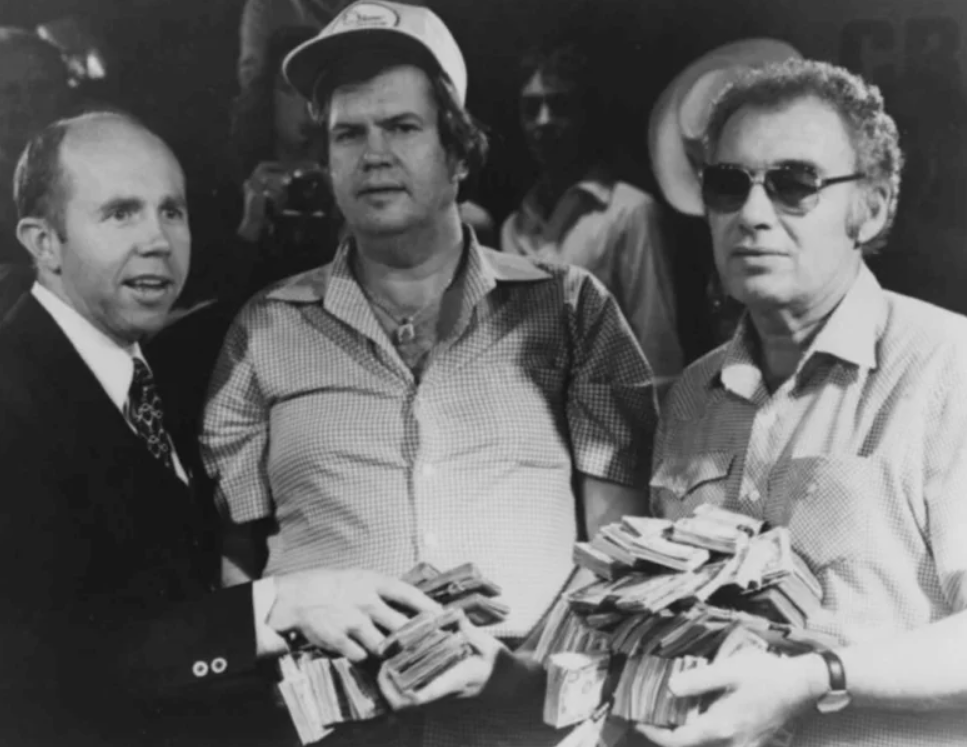
However, standing against Hoff was 52-year-old amateur Hal Fowler, a California-based advertising manager who even borrowed money from Benny Binion to enter the tournament. Fowler played unpredictably and aggressively, confusing the professionals. In a heads-up match that reportedly lasted an exhausting 11 hours, Fowler survived multiple close calls, thanks to a mix of luck and courage.
His wild play is best exemplified by a crucial hand when Fowler, holding a 5-2, applied so much pressure after the turn that he forced Hoff to fold two pairs, A-T. Hoff later admitted that he could have won the whole championship at that moment.
The final drama concluded around 3 a.m. on the 160th hand of the heads-up. Hoff had pocket A c A h and after a flop of 5 h 3 c J s bet 40,000 chips (about half his stack). Fowler, holding a 7 s 6 d, decided to call. The turn, 4 s, completed Fowler's straight. Hoff then pushed the rest of his chips, with Fowler calling immediately.
At the time, cards were not shown right away after an all-in, so Hoff waited for the river, T d, which changed nothing. Hal Fowler became the first amateur to win the WSOP Main Event.
This victory was dubbed the 'Fowler Effect' in the poker community. It was a precursor to the later Moneymaker Effect, proving to every 'recreational player' that even an amateur could beat the world's best professionals.
The Bet with Doyle
After his victory, Hal Fowler highly praised Doyle Brunson's book 'Super/System,' calling it his best investment. He even bet Brunson $5,000 that he would sell 10,000 copies of the book within a year. A year later, Brunson brought a $5,000 check in an envelope as Fowler won the bet.
Though Fowler planned to travel the world as a poker ambassador, he never wanted to become a professional, considering the pro life too stressful. As he put it, "One day chicken, the next day feathers." He attempted to defend his title in 1980 and participated in the Main Event in 1981 and 1982 but gradually withdrew from the poker scene.
The year 1979 was for poker what an underdog victory at the last second is for a sports film. Hal Fowler's win shattered the myth of the invincibility of professionals and turned the World Series of Poker into an event that everyone around the world could begin to dream of.
More from the History of WSOP
The History of WSOP: 1978 – The End of the 'Winner Takes All' Era
The History of WSOP: 1977 – The Miracle of 10-2 Repeats Itself
The History of WSOP: 1976 – Texas Dolly's First Triumph and the Birth of the Legendary Hand 10-2
The History of WSOP: 1974 – Johnny Moss's Return to the Throne and the Birth of Iconic Bracelets
The History of WSOP: 1973 – Puggy Pearson's Triumph and the Dawn of the Television Era
The History of WSOP: 1972 – Amarillo Slim's Controversial Win
The History of WSOP: 1971 – The First Freezeout Tournaments
The History of WSOP: 1970 - The First World Champion Elected by Vote
Sources: WSOP, Wikipedia, YouTube, PokerListings
