

The Satellite Miracle: From Concept to Historic Victory
The satellite concept, as we know it today, was born just a year before in the mind of tournament director Eric Drache. In 1982, he noticed a group of cash game players and suggested they play a mini-tournament for a $10,000 Main Event entry instead of their usual game.
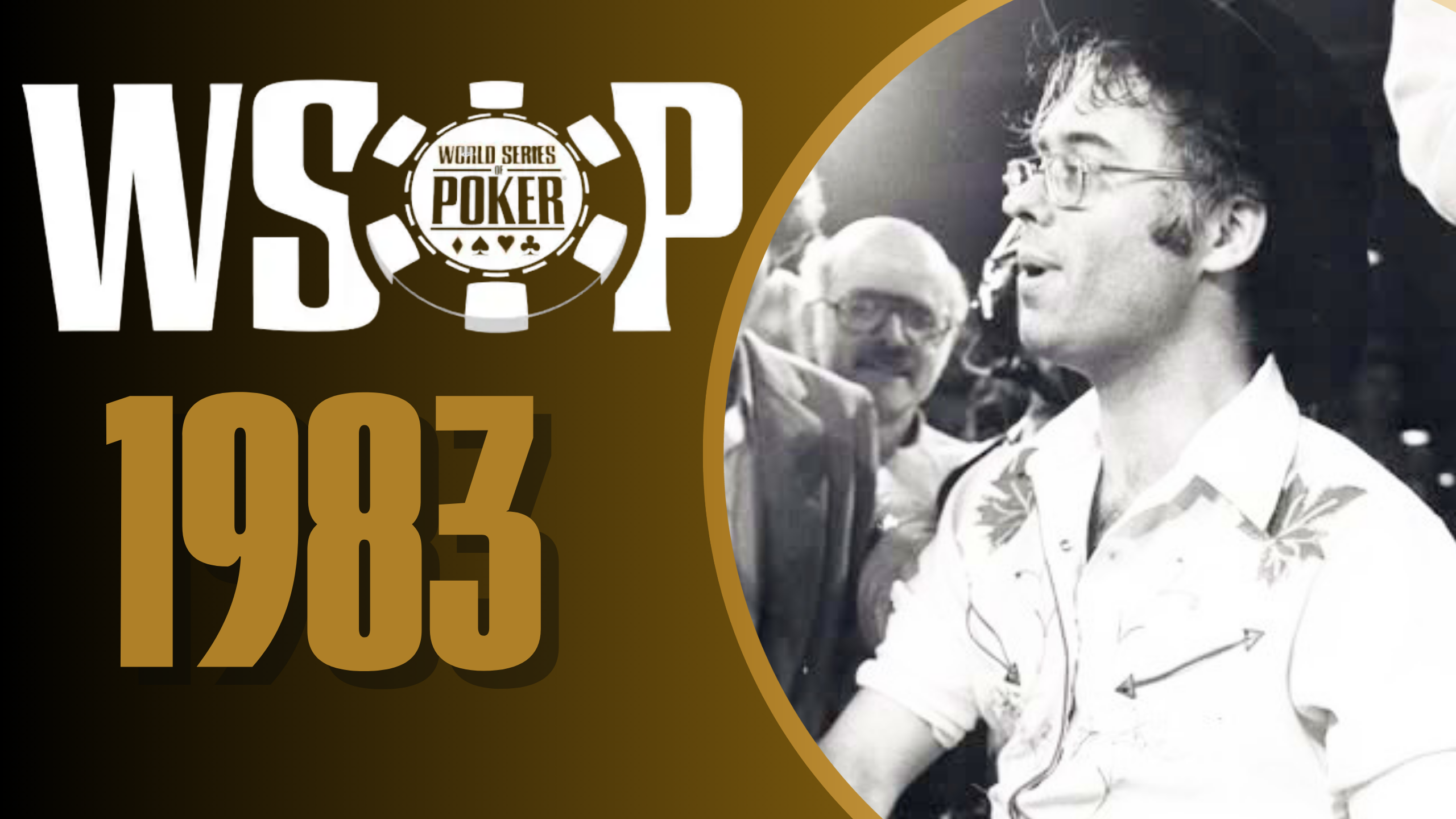
By 1983, this system was fully utilized by Tom McEvoy, a former accountant from Michigan who turned to poker full-time in 1978 after losing his job. McEvoy made history as the first player to win the Main Event after qualifying through a satellite. This achievement paved the way for future players, including the famous Chris Moneymaker two decades later.
Omaha Debuts on the Scene
One of the most significant milestones of 1983 was the official debut of Omaha at the WSOP. This variant was brought to Las Vegas by Robert Turner, who introduced the game to Bill Boyd, manager of the Golden Nugget Casino. Boyd popularized it under the name "Nugget Hold'em," until Benny Binion included it in the event lineup, attracting players from Europe, particularly Ireland.
The legendary theorist David Sklansky won the first-ever Omaha title, marking his third and final bracelet. Intriguingly, Sklansky is the only player in history who has won more gold watches (from a 1982 experiment) than bracelets.
The Dominance of Stu Ungar and the Million-Dollar Milestone
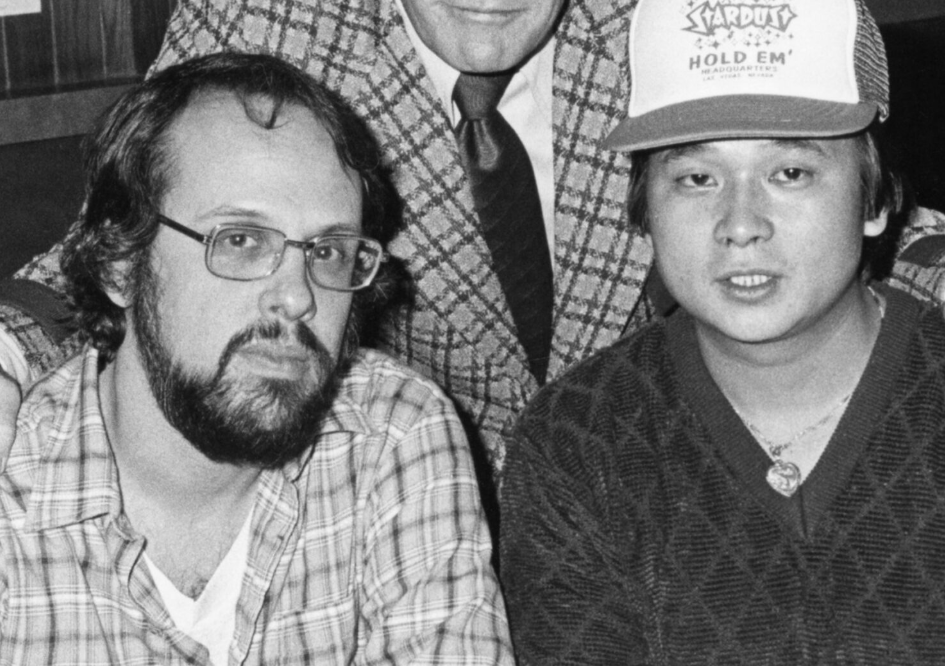
In 1983, Stu Ungar's genius was most evident in Seven-Card Stud. Ungar finished second in a smaller $1,000 event behind Ken Flaton but claimed victory in the prestigious $5,000 Seven-Card Stud event.
This victory brought him his fourth gold bracelet and a $110,000 win, making him only the second player in history, after Doyle Brunson, to surpass $1 million in total WSOP earnings. Ungar's ability to remember all the exposed cards made playing against him an insolvable puzzle in this variant.
A Marital Unique and International Records
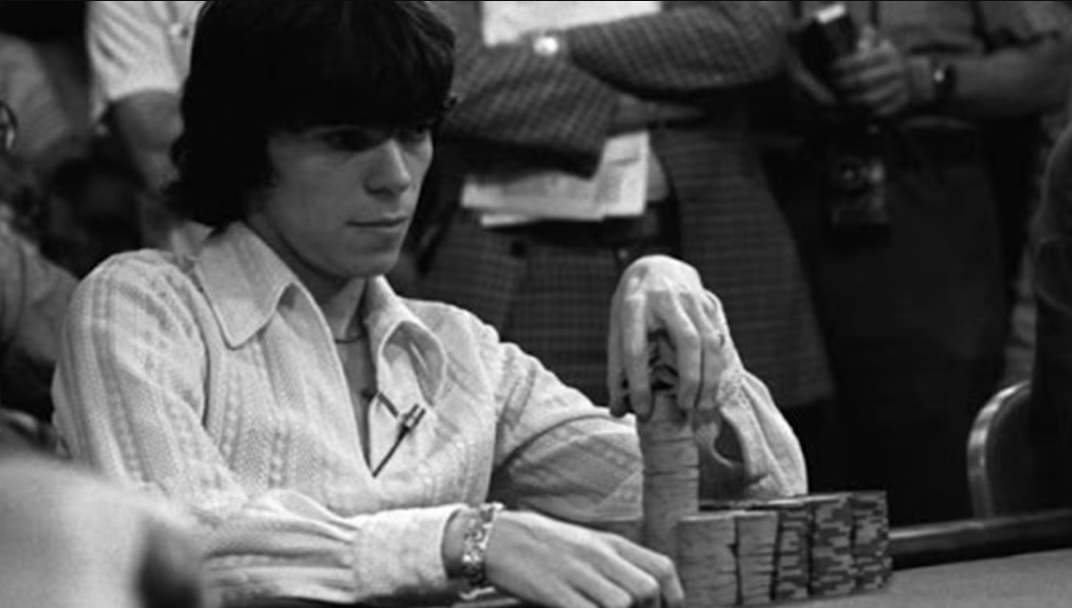
1983 also saw a romantic record. The Mixed Doubles tournament was won by Jim and Donna Doman, making them the first married couple where both held a gold bracelet.
The international scene also began making strides. Ireland's Donnacha O'Dea became the first foreigner to reach a WSOP heads-up (in the $1,000 Limit Hold'em, where he lost to McEvoy). O'Dea was also the first foreigner to cash in the Main Event, reaching the final table and finishing sixth overall.
Additional Highlights from 1983:
-
The first Casino Employees event happened at the 1983 WSOP, with the title going to Ted Binion, son of the casino owner.
-
Future legend Johnny Chan, who would win the Main Event in 1987 and 1988, recorded his first WSOP cash in 1983, finishing fourth in the $2,500 Match Play event.
-
Record participation: The $1,000 No-Limit Hold'em (Event #7) set a series record with 248 entries.
|
Event |
Entries |
Winner |
Prize |
|
Event #1: $2,500 No-Limit A-5 Lowball Draw w/ Joker |
37 |
David Angel |
$46,250 |
|
Event #2: $1,500 No-Limit Hold'em |
194 |
David Baxter |
$145,500 |
|
Event #3: $1,000 Limit Seven-Card Stud Hi-Lo |
104 |
Artie Cobb |
$52,000 |
|
Event #4: $800 Mixed Doubles (7-Card Stud) |
50 |
Jim Doman Donna Doman |
both $10,000 |
|
Event #5: $1,000 Limit Seven-Card Stud |
124 |
Ken Flaton |
$62,000 |
|
Event #6: $500 Ladies' Seven-Card Stud |
64 |
Carolyn Gardner |
$16,000 |
|
Event #7: $1,000 No-Limit Hold'em |
248 |
Buster Jackson |
$124,000 |
|
Event #8: $2,500 head-up (Match Play) |
32 |
Berry Johnston |
$40,000 |
|
Event #9: $1,000 Limit Seven-Card Razz |
86 |
John Lukas |
$43,000 |
|
Event #10: $1,000 Limit Hold'em |
234 |
Tom McEvoy |
$117,000 |
|
Event #11: $1,000 Limit Omaha |
51 |
David Sklansky |
$25,500 |
|
Event #12: $1,000 Limit A-5 Lowball Draw |
99 |
Don Todd |
$49,500 |
|
Event #13: $5,000 Limit Seven-Card Stud |
44 |
Stu Ungar |
$110,000 |
|
Event #14: $10,000 Main Event (NLH) |
108 |
Tom McEvoy |
$540,000 |
|
Event #15: $1,000 Casino Employees NLH |
10 |
Ted Binion |
$10,000 |
|
Event #16: $10,000 No-Limit 2-7 Draw Lowball |
21 |
Dick Carson |
$105,000 |
The Longest Heads-up in History
A record 108 players entered the $10,000 Main Event, creating a prizepool exceeding a million dollars. Amateurs were a significant part of the high turnout, outnumbering professionals for the first time in Main Event history.
The final table featured big names like Doyle Brunson, vying for his third title, and the first successful European, Donnacha O'Dea from Ireland. Brunson eventually finished third, not knowing it would be the last time "Texas Dolly" made a Main Event final table.
The showdown between Tom McEvoy and Rod Peate entered the annals as a marathon of patience. The heads-up lasted a record seven and a half hours (a record held until 2006). Although Peate started with the lead and even had four times the chips, McEvoy turned the tide with precise play and well-timed all-ins.
In the final hand of the tournament, Rod Peate raised with K d J d, and McEvoy replied with an all-in holding Q d Q s. Peate called, but the board 3 d 6 h 6 c J h 3 c secured McEvoy's victory. At that moment, Tom McEvoy jumped onto his chair and celebrated wildly.
The year 1983 demonstrated that poker was not just for a select group of elite professionals. Thanks to McEvoy, the world realized even a former accountant with a satellite ticket could become an immortal legend in the poker world.
More from WSOP History
The History of WSOP: 1982 – The Legendary Jack Straus and the Birth of 'A Chip and a Chair'
The History of WSOP: 1981 –Stu Ungar Reaches the Top Once Again
The History of WSOP: 1980 – The Rise of Stu 'The Kid' Ungar
The History of WSOP: 1979 – A Milestone Triumph for an Amateur and the Birth of the Hall of Fame
The History of WSOP: 1978 – The End of the 'Winner Takes All' Era
The History of WSOP: 1977 – The Miracle of 10-2 Repeats Itself
The History of WSOP: 1976 – Texas Dolly's First Triumph and the Birth of the Legendary Hand 10-2
The History of WSOP: 1974 – Johnny Moss's Return to the Throne and the Birth of Iconic Bracelets
The History of WSOP: 1973 – Puggy Pearson's Triumph and the Dawn of the Television Era
The History of WSOP: 1972 – Amarillo Slim's Controversial Win
The History of WSOP: 1971 – The First Freezeout Tournaments
The History of WSOP: 1970 - The First World Champion Elected by Vote
Sources: WSOP, Wikipedia, YouTube, PokerListings

