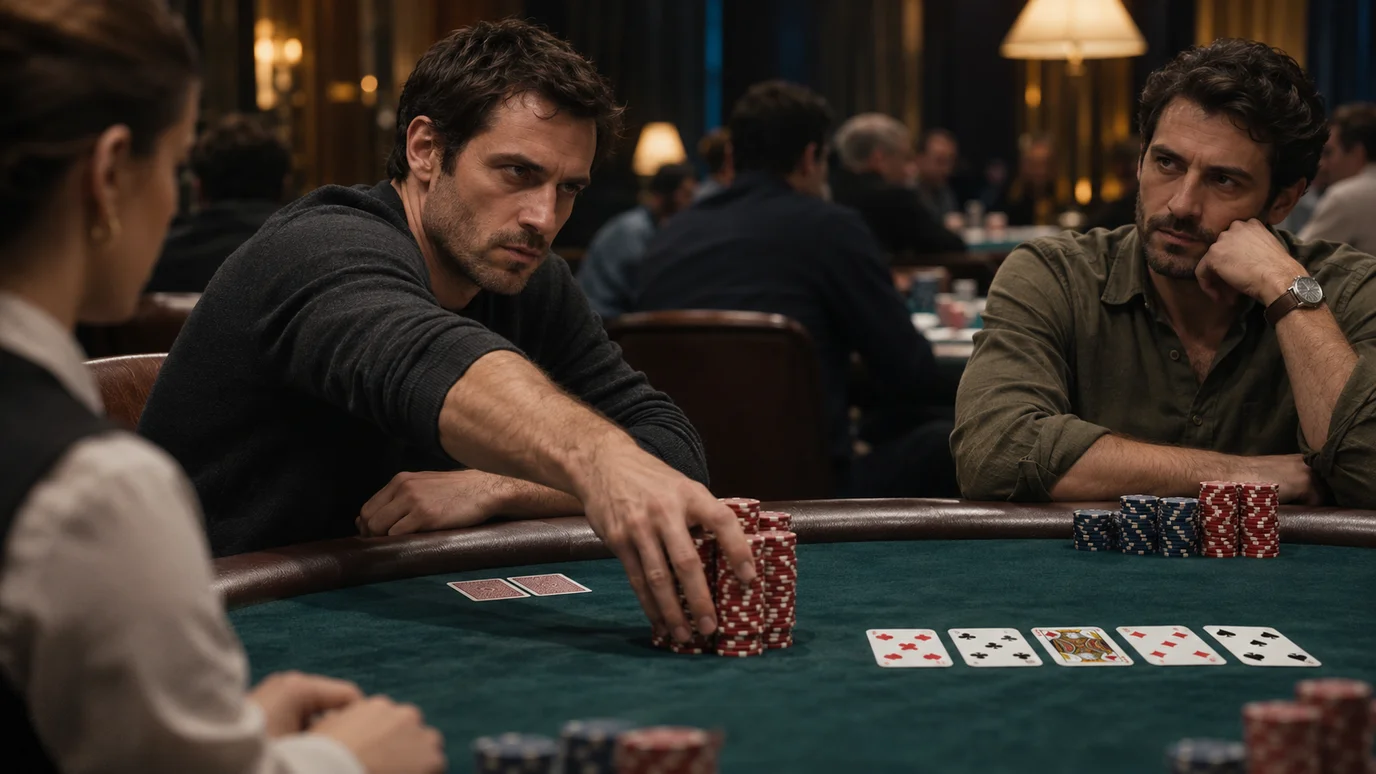
Sometimes the damage appears immediately. A cautious player suddenly becomes aggressive. Someone who spent an hour carefully selecting starting hands begins entering pots with questionable holdings. Meanwhile, observant opponents notice the change and quietly adjust their approach.
Oddly, the next five hands might have nothing in common with the first. Yet the player who suffered the loss can connect them emotionally, turning an isolated disappointment into a much longer problem.
The Hand That Refuses to End
Consider a player holding pocket aces against an opponent with pocket queens. The chips go into the middle before the flop, and a queen appears on the river. A strong starting position has ended in defeat. The mathematical explanation is straightforward. Pocket aces are favorites before the community cards arrive, but they are not unbeatable. Understanding that fact, however, does not necessarily make the experience less frustrating.
Researchers examining emotional decision-making have found that anger tends to make people less cautious about risk, a pattern that carries over easily to the poker table. The findings help explain why an unpleasant result sometimes affects decisions that should be evaluated independently. An opponent who was previously considered predictable may suddenly appear reckless or irritating. A harmless comment becomes a personal insult. Even an ordinary continuation bet can feel like a challenge. Nothing about the cards has changed. The player's interpretation of the table has.
Why Opponents Remember Your Reaction
Poker players constantly collect information about one another. They notice how frequently someone enters a pot, whether they hesitate before calling, and how their behavior changes after losing.
A revealing moment comes right after a tough defeat. Some players withdraw and become unusually selective. Others attempt to reclaim control by raising more frequently. Neither reaction guarantees anything about their next hand, but noticeable changes can influence how opponents respond. This is where table image comes into play. A player who has appeared disciplined throughout the evening may suddenly look vulnerable, encouraging opponents to challenge decisions they previously respected. Psychologists describe the habit of judging a choice by how it turned out as outcome bias, and separating the quality of a decision from its result remains a core part of poker development.
A Different Setting Changes the Experience
The surrounding environment can influence how a frustrating hand is remembered. At a physical table, conversations, pauses between deals, and visible reactions create opportunities to process what happened. Online, the next hand may begin within seconds, leaving little room to reset.
The type of game shapes that rhythm as well. Poker sets players against one another, while many other card and casino games are played against the house, each with its own tempo. Online, the setting around these games shifts again, and what players in Missouri should know first comes down to that shift: plenty of sites put a poker room next to slots and table games.
The Dangerous Urge to Rewrite the Previous Hand
One of poker's most misleading impulses is the desire to correct an earlier outcome through an unrelated decision.
A player loses with a strong hand and follows it with an ambitious bluff. Another makes a loose call, hoping to catch an opponent making a mistake. The actions may appear strategic, but their motivation comes from the previous pot. This is often associated with tilt, a state in which frustration interferes with considered decisions.
Frustration's effect on decision-making also comes through in the site's look at the psychology of bluffing. It examines how emotional reactions can lead to impulsive counter-bluffs and unnecessary risks, especially when players feel challenged by an opponent. The practical challenge is recognizing when a decision is being made for the wrong reason. A useful question is whether the same action would seem reasonable if the previous hand had never happened. If the answer changes, the earlier result may still be influencing the present.
Five Hands, Five Different Consequences
After a painful loss, the following hands can go several ways:
- Hand one: an unnecessary call against an opponent who rarely bluffs.
- Hand two: an aggressive raise meant to win back lost chips.
- Hand three: an overly cautious fold driven by frustration.
- Hand four: a perfectly ordinary hand, played while still distracted by the earlier defeat.
- Hand five: an opponent notices the changed behavior and adjusts.
None of this is an inevitable sequence, and a composed player might keep making sound decisions throughout.
What matters is that each new hand presents fresh information. Carrying emotional assumptions forward can obscure that information and make otherwise manageable situations considerably harder.
Learning to Leave a Hand Behind
Poker improvement involves more than remembering successful bluffs or studying impressive tournament victories. It also requires examining uncomfortable decisions without allowing disappointment to determine their meaning. Keeping brief notes, reviewing difficult hands after a session, and stepping away when concentration deteriorates can all support a more measured approach.
People who reframe a setback rather than replay it tend to find it easier to stay confident and move on. Players cannot control every card that appears, but they can decide whether a previous result deserves any influence over the next decision.