

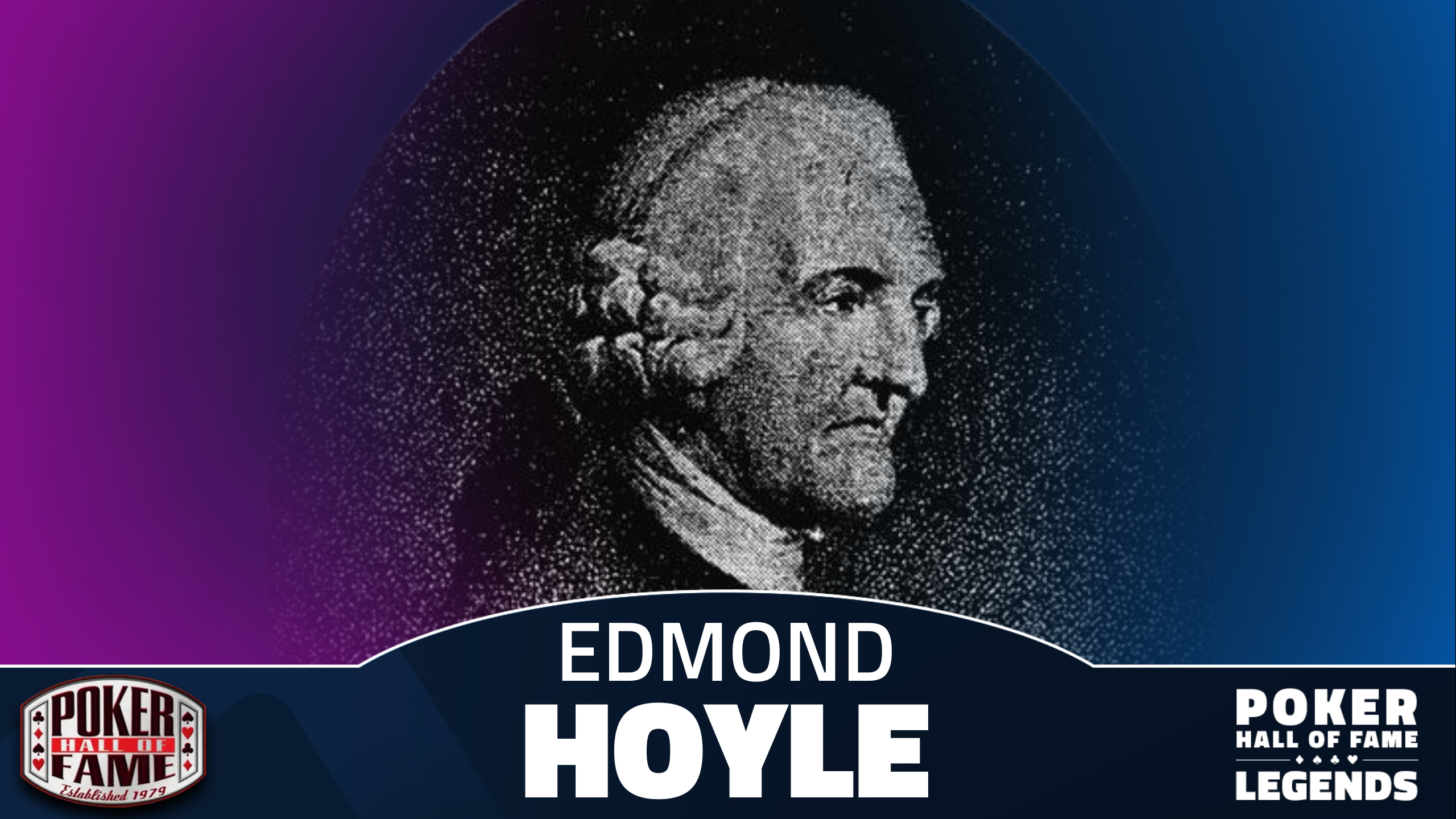
The Man Who Defined the Rules of the Game
Surprisingly little is known about the life of Edmond Hoyle. His birth year is often cited as 1672 in England, though some sources mention the year before. Regardless, he lived a long life, passing away on August 29, 1769, in London. Despite his global fame, records of his personal life, upbringing, and education are practically nonexistent.
What we do know is that Hoyle had an exceptional talent for various games, especially card games. He spent much of his life teaching these games to wealthy British aristocrats and gentlemen. It was through this work that he encountered games and rules that were often inconsistent and led to disputes.
Hoyle was exceptionally methodical and analytical for his time. He noticed how players often argued over the rules. Thus, he decided to write a comprehensive guide to bring order out of chaos and ensure games were played fairly.
Why is Hoyle So Important to Poker?
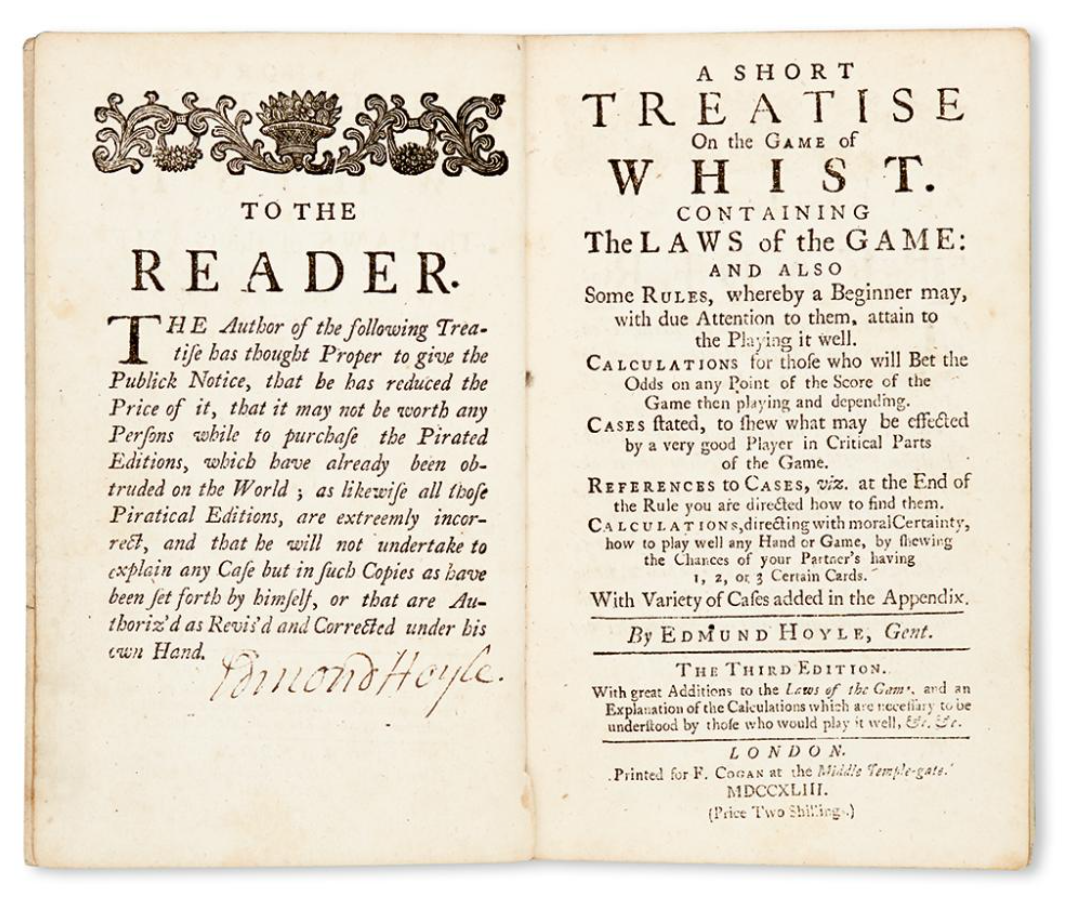
Edmond Hoyle gained fame with his first book published in 1742, “A Short Treatise on the Game of Whist.” Although not about poker, whist was the 17th and 18th-century poker due to its popularity. Like poker, whist is a game of skill, strategy, and, of course, luck. The book became an instant bestseller upon release.
Its success was such that pirated copies quickly emerged after the first edition sold out. The concept of standardized rules, strategy, and even game ethics written by Hoyle was groundbreaking.
Hoyle was an expert in other games as well, and following his successful debut, he continued publishing guides on other topics in the ensuing years. Whether it was backgammon, chess, or other card games, Hoyle laid the groundwork for the play (especially of games of chance).
His work also became a template for later guides that established rules for dozens of other games, including poker. His philosophy was simple: games should follow clear, written rules that are universally accepted. This was a radical step since at that time, many rules were passed down orally and frequently changed from one table to another.
Hoyle's impact on poker can be seen in three key aspects:
-
Standardization of Rules: Poker's first written rules appeared in the 19th century, but the authors of these guides, inspired by Hoyle, aimed to create a unified system. Thanks to this, the same rules apply worldwide, whether you're playing in a casino or with friends.
-
Ethics and Fair Play: Hoyle's work emphasized the importance of fair play and honesty. His books mentioned the necessity of adhering to the “spirit of the game,” which carried over into poker. Rules against collusion (a pre-arranged strategy between two or more players), peeking at opponents' cards, or the need to clearly state bets, are a direct legacy of his philosophy.
-
Principles of Play: Although Hoyle did not write directly about poker, his writings highlighted key principles essential to poker strategy. Hoyle's probability analyses gave players tools for rational decision-making. Understanding odds for making strong hands is fundamental to success. He also emphasized strategy and planning - evident in poker at every step, from pre-flop bets to the river. Hoyle even grasped the art of deception, laying the foundation for one of poker's most iconic elements – bluffing.
Induction into the Poker Hall of Fame
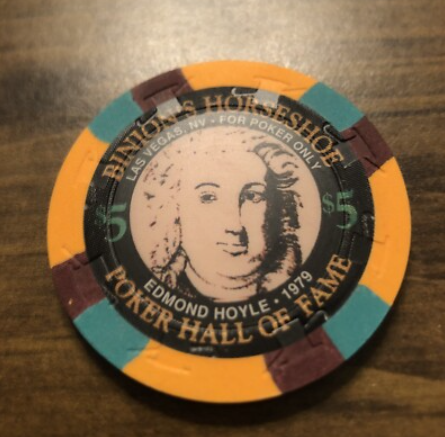
Edmond Hoyle was inducted into the Poker Hall of Fame in 1979 as one of the first seven members in history. Although he lived before the advent of poker, his contribution is undeniable.
His name became so well-known that the phrase “according to Hoyle” is still used in English-speaking countries to indicate that something is done strictly by the rules.
Hoyle's induction into the Hall of Fame symbolically acknowledges that solid and fair rules are the foundation of every good game. His legacy serves as a reminder that even in gambling, there is order and honor.
More from Legends of the PHoF
Legends of the Poker Hall of Fame III: Felton "Corky" McCorquodale
Legends of the Poker Hall of Fame II: Nick "The Greek" Dandolos
Legends of the Poker Hall of Fame I: Johnny Moss
Source: Wikipedia, WSOP, Dignity Memorial, ClubPoker
