

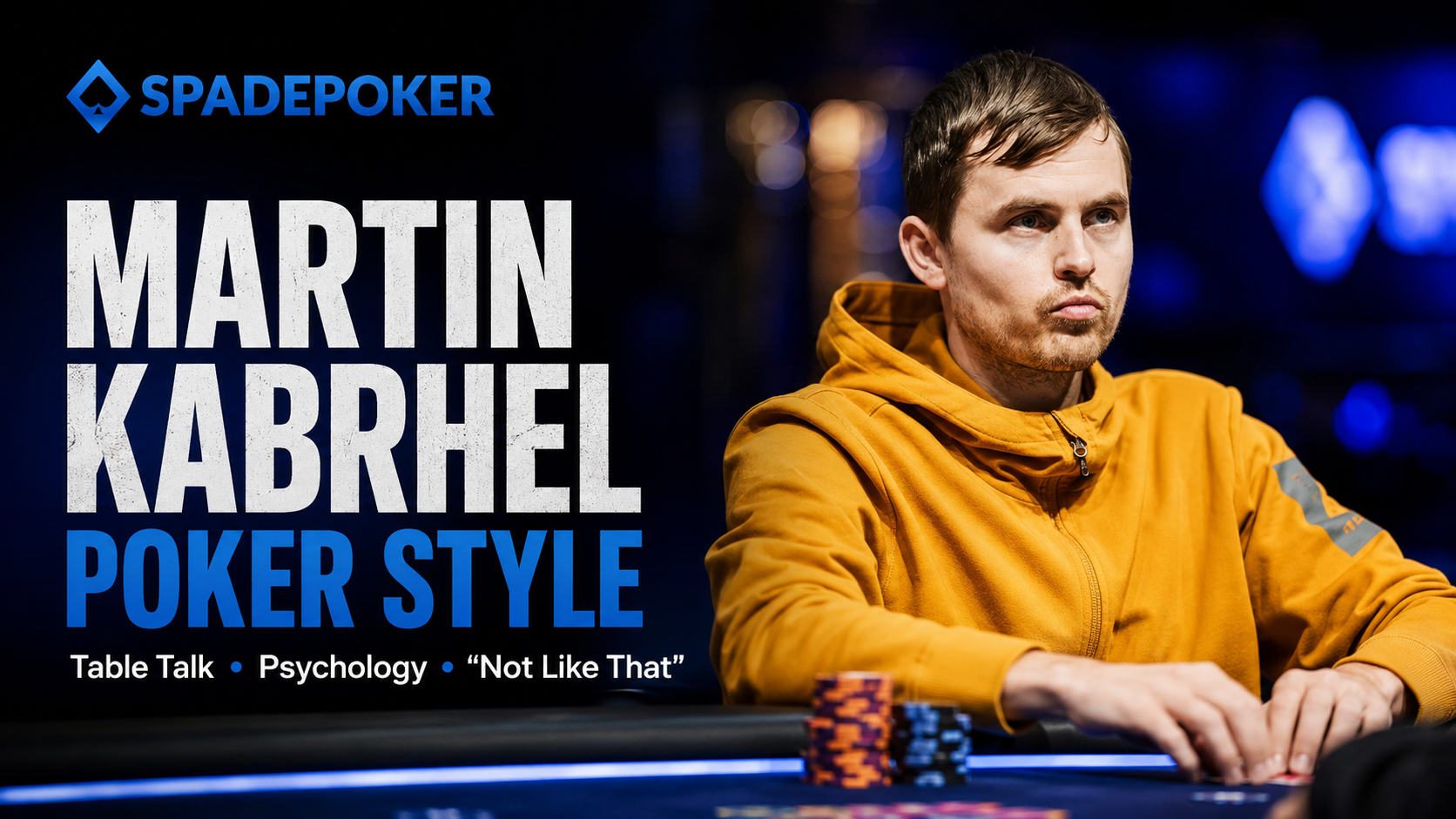
For some players, that makes him one of the most difficult opponents in live poker. For others, it makes him one of the game’s few truly memorable characters.
But Kabrhel’s table image should not be dismissed as random noise. His results are too strong for that. He has five WSOP bracelets, six WSOP Circuit rings and more than $12.8 million in WSOP earnings, according to his official WSOP profile.
For the full background on his age, poker career, WSOP bracelets, net worth and public image, read our complete Martin Kabrhel profile. The real question is not whether Martin Kabrhel is loud. Everyone already knows that.
The better question is whether his speech play, timing, table image and emotional pressure form a deliberate poker strategy — or whether they simply create disruption around a player who already has elite tournament ability.
What Is Martin Kabrhel’s Poker Style?
Martin Kabrhel’s poker style is built around pressure, unpredictability and constant table presence.
He is not the type of player who sits silently behind sunglasses and lets the cards tell the whole story. His approach is interactive. He brings opponents into conversation, reacts to their timing, watches their responses and uses the atmosphere of the table as part of the hand.
That does not mean every comment is part of a master plan. Some of it is personality. Some of it is habit. Some of it is showmanship. But the effect is consistent: when Kabrhel is in a hand, the table often feels different.
Opponents are not just calculating pot odds, ranges and stack sizes. They are also dealing with speech play, delays, reactions and the pressure of being pulled into a live psychological exchange.
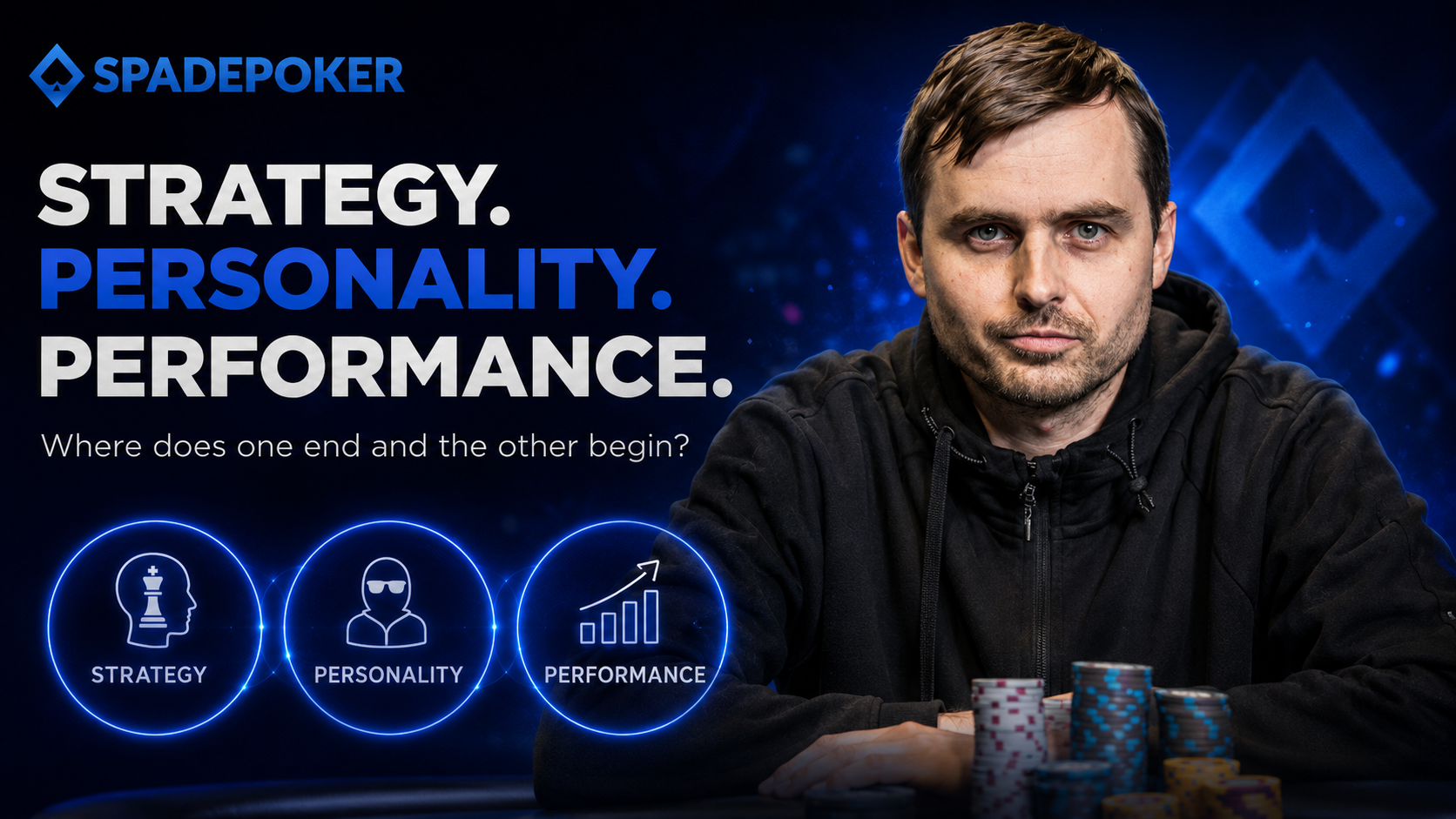
That is what makes Kabrhel such a fascinating poker figure. His style sits between strategy, performance and provocation.
Martin Kabrhel’s Table Talk: More Than Noise
Table talk has always been part of live poker.
Players ask questions, make jokes, try to get reactions and sometimes use speech play to influence decisions. A quiet table can be technically pure, but a verbal table can reveal more information. Live poker is not only about cards. It is also about timing, posture, tone, confidence, discomfort and human reaction.
Kabrhel takes that idea further than most.
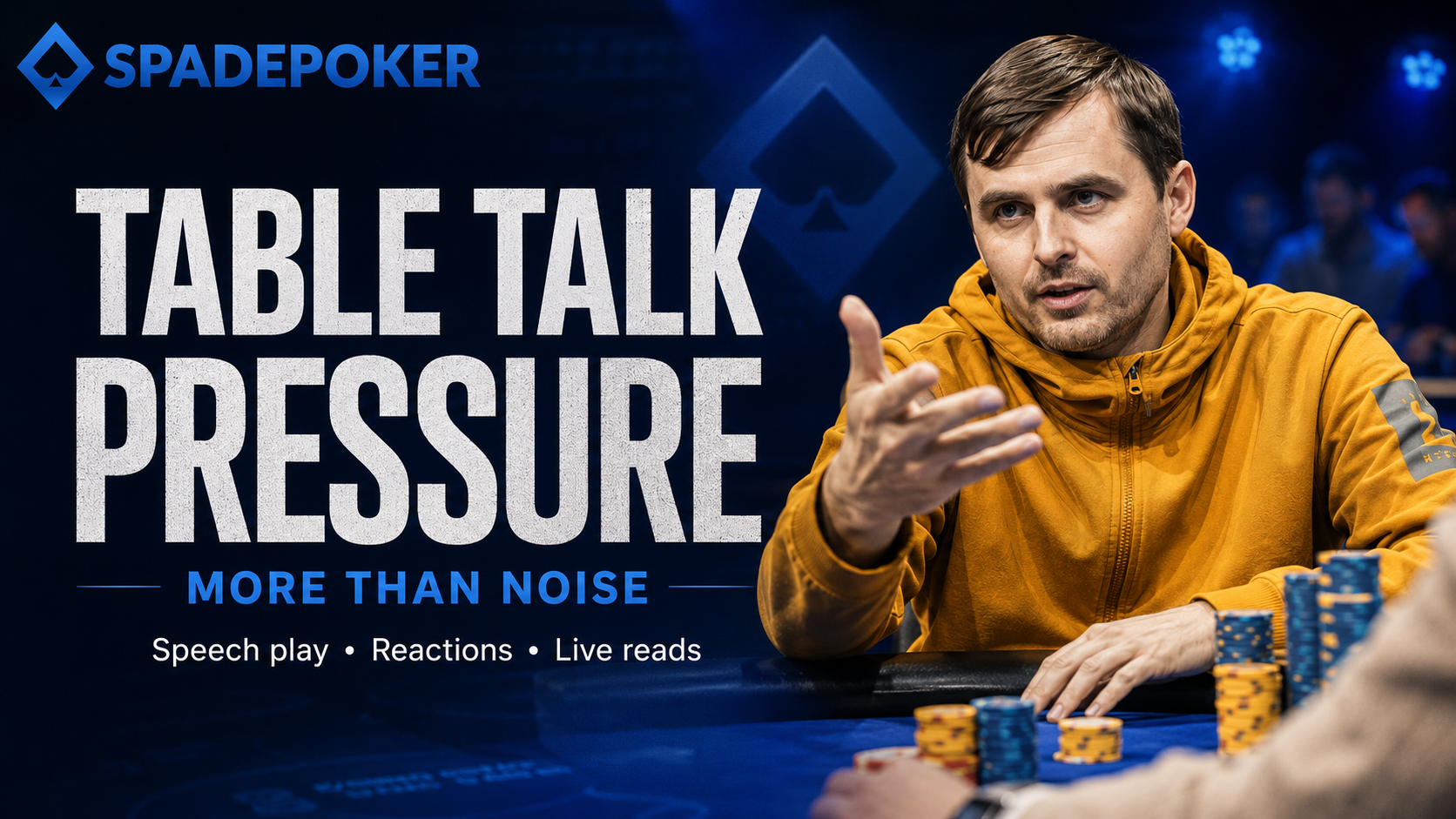
His table talk can be repetitive, theatrical and unusually persistent. He may ask a question, comment on the action, react to a board card or continue speaking while an opponent is trying to make a decision. That can make a hand feel less like a mathematical problem and more like a confrontation.
From a strategic point of view, this can matter.
When an opponent is forced to respond verbally, stay silent under pressure or manage visible irritation, they may reveal something. A change in breathing, a forced laugh, a defensive answer or a sudden silence can all become live reads.
Kabrhel’s table talk creates more opportunities for those reactions to appear.
That is why his style cannot be reduced to simple chatter. At its best, it is a live-poker pressure system. The same table talk and timing are also central to the broader debate over why Martin Kabrhel is so controversial.
Psychological Pressure and Table Image
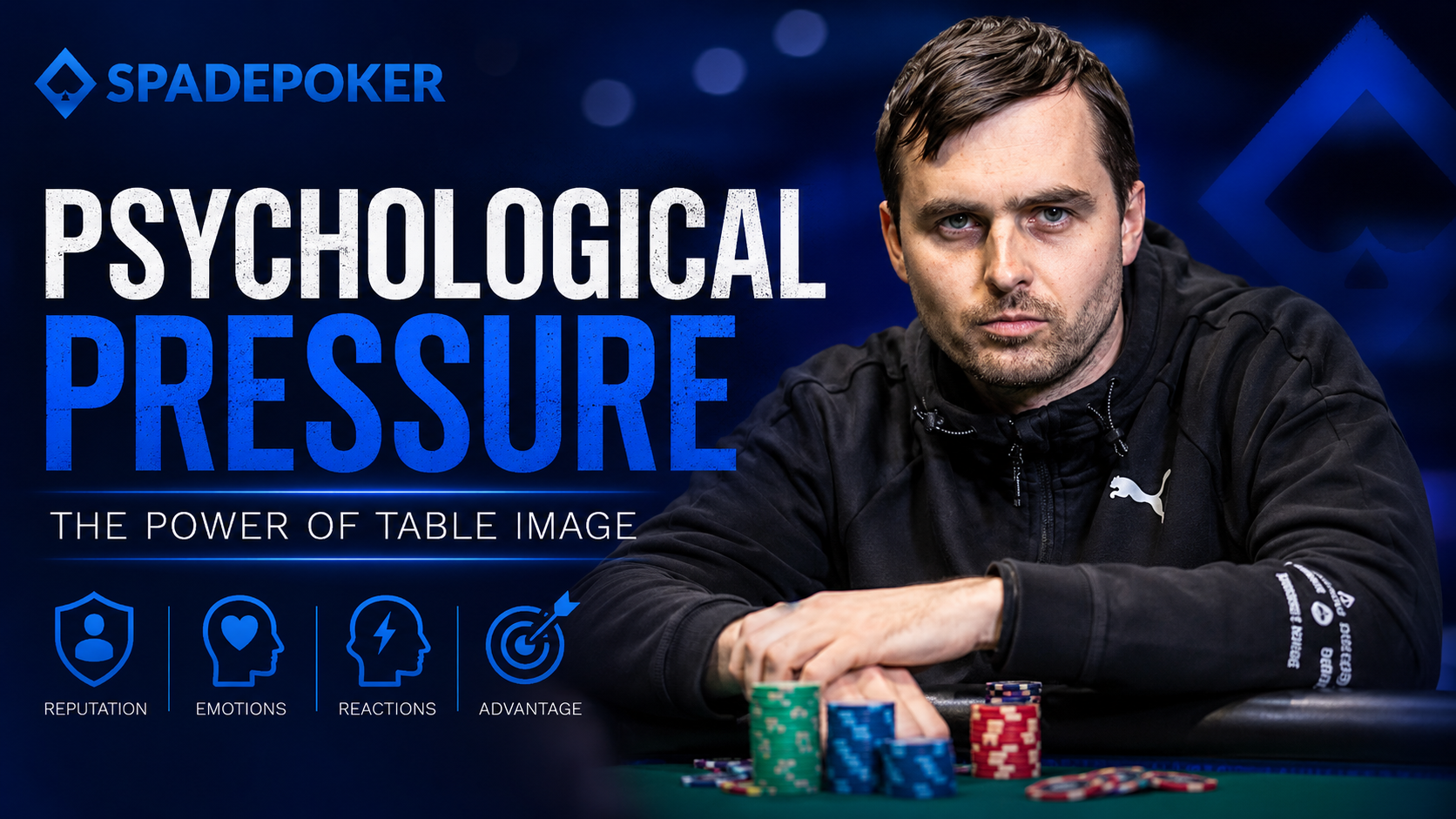
Kabrhel’s strongest weapon may be his table image.
Every opponent knows who he is before the first hand is dealt. They know he may talk. They know he may tank. They know he may react dramatically. They know the table may become slower, louder and more uncomfortable than usual.
That expectation already changes the game.
A player with a strong table image does not need to create pressure from scratch. The pressure arrives with him. Opponents may become impatient before he has even acted. They may call the clock faster. They may decide they are not going to be “pushed around.” They may over-adjust because they are playing against the idea of Martin Kabrhel, not only the cards in front of them.
That can be valuable.
In poker, opponents who become emotional are easier to move away from their best decisions. If Kabrhel can make another player annoyed, defensive or determined to prove a point, he may gain an edge without changing a single bet size.
That does not mean the strategy always works. Some elite players stay calm and benefit from the chaos around him. But the table image itself is powerful because it forces every opponent to make a decision about how they are going to handle him.
The Slow Play Debate
The most criticized part of Kabrhel’s style is not the talking. It is the time.
Kabrhel has often been associated with long tanks, repeated pauses and decisions that opponents believe take too long. During the 2025 WSOP, PokerNews reported that players were calling the clock on him frequently, including in situations where frustration with his pace had become part of the table dynamic.
This is where the poker style debate becomes more complicated.
Taking time is not automatically wrong. Tournament poker involves huge money, ICM pressure, final-table jumps, difficult river spots and complex strategic decisions. A player has the right to think.
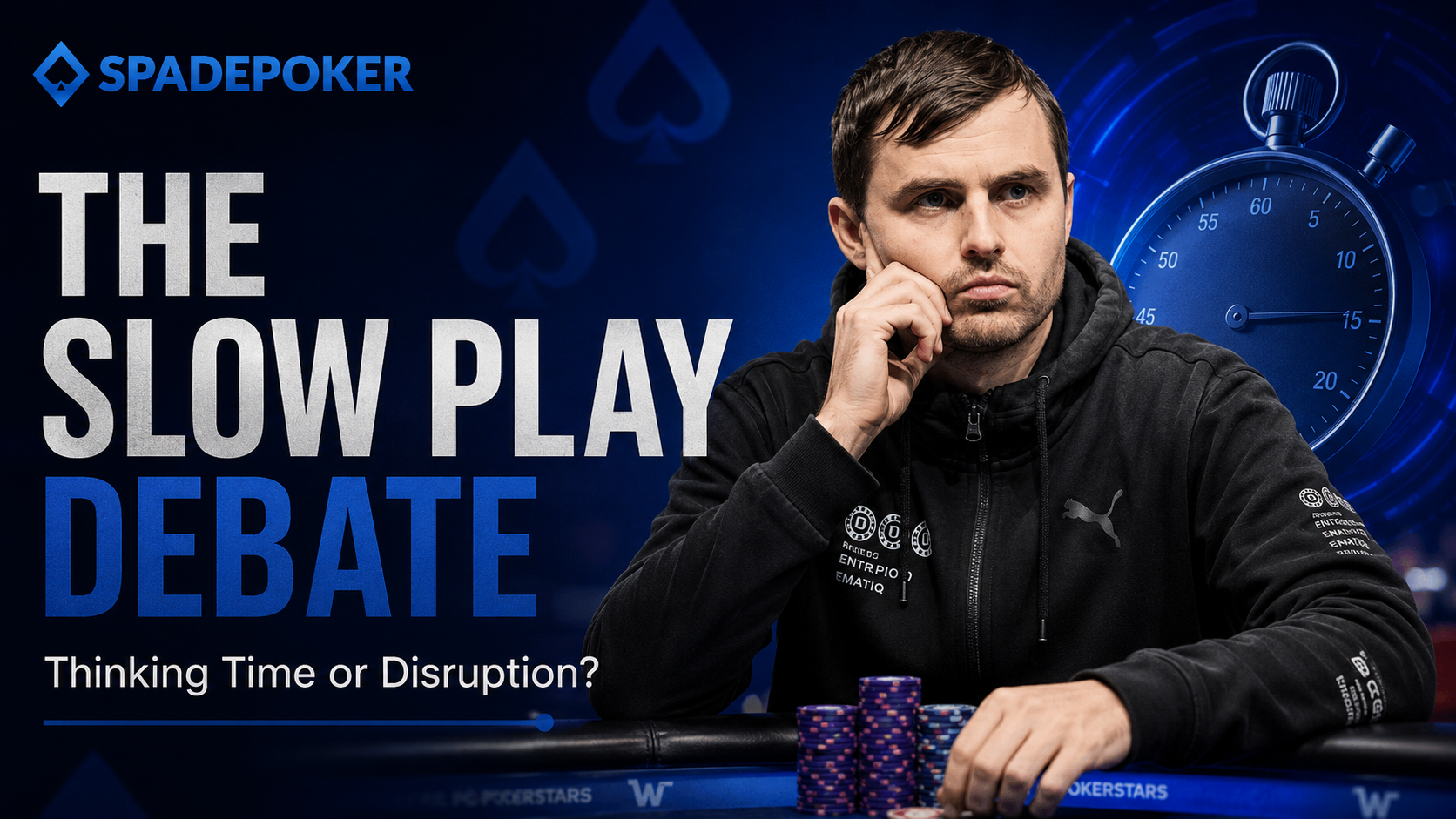
But live poker also depends on pace. When one player repeatedly uses large amounts of time, the entire table is affected. Fewer hands are played. Other players lose rhythm. Frustration builds. The game can become less about decision quality and more about endurance.
That is why Kabrhel’s slow play debate is different from ordinary table talk.
Speech play is often judged by taste. Slow play affects tournament structure. It influences everyone, not just the opponent in the hand.
For Kabrhel’s critics, this is where gamesmanship becomes disruption. For his defenders, opponents sometimes call the clock too quickly because they are already frustrated by his reputation.
Both arguments can exist at the same time.
“Not Like That”: Why the Phrase Became Part of His Style
The phrase “not like that” became closely associated with Martin Kabrhel during the 2025 WSOP. That 2025 run also added to his tournament résumé, which we break down in our guide to Martin Kabrhel’s WSOP bracelets and biggest wins.
It captured the emotional side of his table presence: dramatic reactions, frustration, humour and the sense that every major hand involving him could become a clip. WSOP coverage noted that his Mini Main Event victory gave him his fourth bracelet and briefly moved him into the 2025 WSOP Player of the Year lead, adding competitive weight to the personality-driven attention around him.
The phrase worked because it felt authentic to his image. It also gave casual fans a simple phrase through which they could recognise him, even if they did not follow every hand or tournament result.
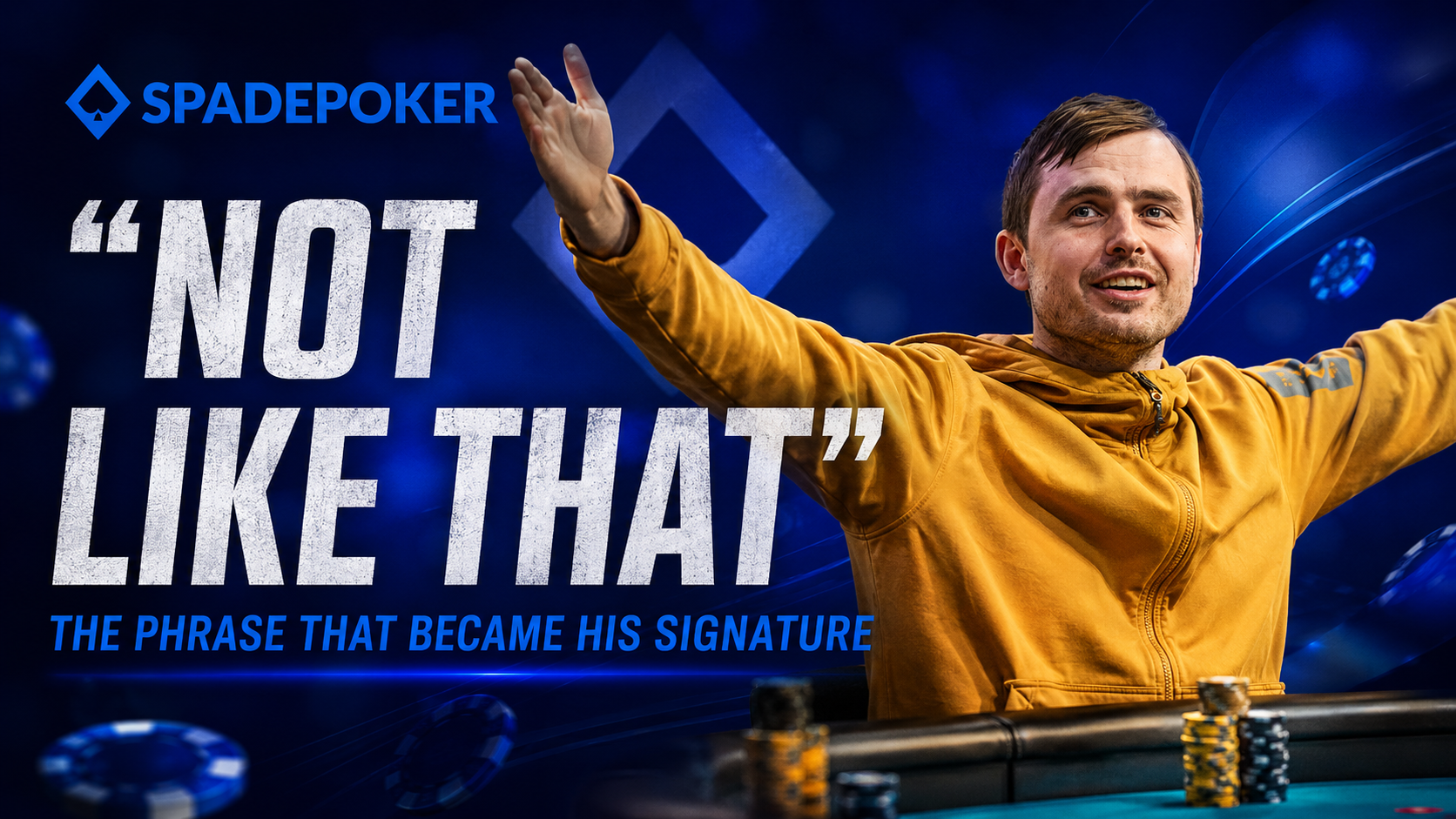
Kabrhel is not a detached, silent grinder. He reacts. He complains. He celebrates. He makes the moment bigger than the pot. “Not like that” became a shorthand for the full Kabrhel experience: theatrical, memorable and easy to repeat.
From a media perspective, that matters.
Modern poker lives through clips, social posts and short-form reactions. A player who creates a recognizable phrase has a kind of brand identity. Casual fans may not remember every hand or payout, but they remember a line.
For Kabrhel, “not like that” became part of how people understand his poker style. It is not strategy in the technical sense, but it reinforces his table image — and table image is part of live poker.
Is Kabrhel’s Style Actually Strategic?
The honest answer is probably yes, but not entirely.
There are clearly strategic elements in Kabrhel’s approach. Table talk can create live reads. Slow timing can disrupt rhythm. A polarizing image can make opponents emotional. Repetition can wear people down. A player who controls the atmosphere can sometimes control the hand before the river is dealt.
But not everything he does should be treated as calculated genius.
Some of his style appears instinctive. Some of it may be entertainment. Some of it may be personal comfort. Some of it may simply be how he likes to play.
That mixture is exactly why he is so hard to evaluate.
A purely strategic player can be analyzed through ranges and frequencies. A pure entertainer can be dismissed if the results are not there. Kabrhel is different because the performance and the results exist together.
He has the bracelets, the earnings and the high-roller wins to prove that he is not just a sideshow. But his style is so unusual that people continue to debate how much of his edge comes from poker skill and how much comes from making opponents uncomfortable.
How Opponents Can Adjust to Martin Kabrhel
The best adjustment against Kabrhel is emotional discipline.
Players who sit with him need to accept in advance that the table may be slower, louder and stranger than usual. If they enter the game expecting a calm, silent environment, they may become frustrated quickly. That frustration is exactly the kind of reaction Kabrhel’s style can exploit.
The first adjustment is to separate personality from decision-making.
A player should not call because Kabrhel is annoying. They should not bluff because they want to win a personal battle. They should not call the clock only because they dislike him, but they also should not be afraid to protect the pace of the game when his timing becomes excessive.
The second adjustment is to avoid giving away emotional information.
| Kabrhel pressure point | Best adjustment |
| Constant table talk | Give short, neutral answers |
| Long tanks | Stay patient, call the clock only when justified |
| Emotional reactions | Do not mirror the emotion |
| Strong table image | Play the spot, not the persona |
Short answers, calm body language and consistent timing can reduce the value of his speech play. Kabrhel wants reactions. The less an opponent gives him, the less useful the table talk becomes.
The third adjustment is to let tournament staff handle boundaries.
Players do not need to win a table-etiquette argument themselves. If timing, speech or conduct crosses a line, dealers and floor staff are there to manage the game.
That may sound simple, but against a player like Kabrhel, simplicity is the point.
Why Viewers Find Kabrhel Entertaining
Many poker fans enjoy Kabrhel for the same reasons some players dislike facing him.
He creates tension. He gives hands a storyline. He makes people react. A quiet high-roller table may be technically brilliant, but it can be difficult for casual viewers to follow emotionally. Kabrhel gives the audience a clear character.
PokerNews wrote during the 2025 WSOP that Kabrhel commanded more attention than anyone else at the series, not only because of his results but because of the way he embraced the villain role.
That matters for poker media.
A player like Kabrhel can make a final table easier to market. Fans may tune in because they want to see him win. Others may tune in because they want to see him lose. Either way, they are watching.
His visibility, tournament success and business background are also part of the wider discussion around Martin Kabrhel’s net worth.
That does not excuse every behaviour. Entertainment value does not remove the need for rules, pace and respect for opponents.
But it explains why Kabrhel remains valuable to the poker ecosystem. He creates emotion in a game that often struggles to show emotion clearly.
Where the Line Should Be Drawn
Kabrhel’s style raises a bigger question for poker.
How much personality should live poker allow?
The game needs speech play, confidence, pressure and characters. Remove all of that and tournament poker risks becoming too sterile. But the game also needs reasonable pace, fair conditions and space for players to make decisions without being harassed.
The line should not depend on whether a player is popular.
If table talk is within the rules, it should be allowed. If timing becomes excessive, the clock should be used. If speech becomes abusive or interferes with action, tournament staff should step in. The standard should be clear and consistent, not based on whether the player is entertaining.
That is the only way to handle players like Kabrhel fairly.
Poker can keep its characters without letting any one player control the entire environment.
Final Verdict: Martin Kabrhel’s Style Is the Point
Martin Kabrhel’s poker style is not a side detail. It is central to who he is as a player.
He combines elite tournament success with speech play, psychological pressure, long tanks, emotional reactions and a public image that opponents cannot ignore. That combination makes him one of the most difficult and memorable players in modern live poker.
His approach is partly strategy, partly personality and partly performance.
That is why he divides poker so strongly. Some see a player using every legal tool available to create pressure. Others see a player who pushes the live game too far and makes the table worse for everyone around him.
Both reactions explain why Kabrhel remains so important.
He is not just playing hands. He is shaping the atmosphere in which those hands are played.
Martin Kabrhel Poker Style FAQ
What is Martin Kabrhel’s poker style?
Martin Kabrhel’s poker style is highly verbal, psychological and table-presence driven. He uses speech play, timing, visible reactions and a polarizing image to create pressure in live tournaments.
Why does Martin Kabrhel talk so much at the table?
His table talk appears to be part personality, part entertainment and part strategy. It can create reactions from opponents and make difficult decisions feel more uncomfortable.
Is Martin Kabrhel’s table talk legal?
Table talk is generally allowed in live poker within limits, as long as it does not violate tournament rules, reveal protected information or improperly influence action. The debate around Kabrhel is less about whether talking is allowed and more about how far it should go.
Why do players call the clock on Martin Kabrhel?
Players call the clock because they believe he sometimes takes too long to act. His long tanks and slow-play reputation have become a major part of the debate around his table style.
What does “not like that” mean in relation to Martin Kabrhel?
“Not like that” became associated with Kabrhel’s dramatic reactions during the 2025 WSOP. It became a meme because it captured his theatrical and emotional table persona.
Is Martin Kabrhel good for poker?
Opinions are divided. His critics believe he slows the game and disrupts opponents, while supporters argue that he brings personality, tension and entertainment to high-stakes poker.

