

Phil Ivey’s WSOP bracelet record is one of the strongest arguments for his place among poker’s all-time greats.
Some poker legends are defined by one tournament. Others are remembered for one format, one era or one famous rivalry. Ivey is different.
His World Series of Poker record shows a player who could win across games, formats, generations and pressure levels.
Phil Ivey has 11 WSOP bracelets, the second-most all time behind Phil Hellmuth. The official WSOP profile lists Ivey as an 11-time bracelet winner and places him behind only Hellmuth’s 17 bracelets on the all-time list.
That is already historic.
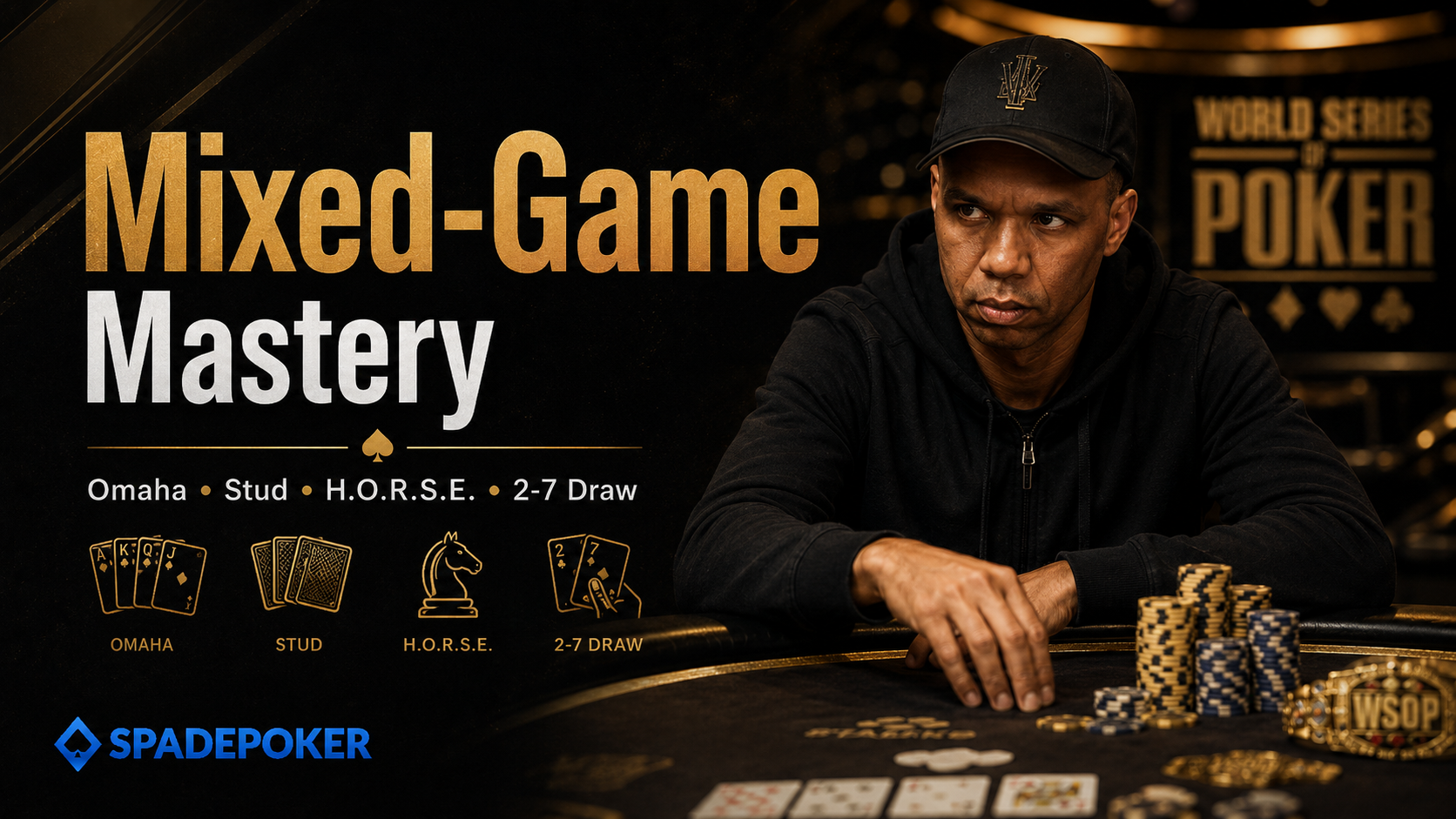
But the number alone does not fully explain why Ivey’s bracelet record is so respected. His wins are not built around one narrow version of poker. They include Pot-Limit Omaha, Seven Card Stud, Stud Hi-Lo, mixed games, H.O.R.S.E., No-Limit 2-7 Lowball Draw and Limit 2-7 Triple Draw.
That variety is the real point.
Ivey’s WSOP résumé is not just about having 11 bracelets. It is about what those bracelets say: Phil Ivey is one of the greatest all-around poker players ever. For the wider story beyond bracelets, including his net worth, poker career, playing style and controversies, read our complete Phil Ivey guide.
How Many WSOP Bracelets Does Phil Ivey Have?
Phil Ivey has 11 WSOP bracelets.
That puts him second on the all-time WSOP bracelet list behind Phil Hellmuth, who has 17 bracelets. Ivey moved into clear second place in 2024 when he won the $10.000 Limit 2-7 Triple Draw Championship for his 11th bracelet.
The win was important because Ivey had previously been tied with Doyle Brunson, Johnny Chan and Erik Seidel on 10 bracelets. His 2024 victory broke that tie and gave him sole possession of second place.
For many fans, that changed the tone of the bracelet debate.
Ivey is still far behind Hellmuth in pure bracelet count, but he is now clearly the closest name on the official list. More importantly, his bracelets carry a different kind of weight because they show strength across many forms of poker.
That is why Ivey’s 11 bracelets are often treated as one of the most respected records in the modern game.
Phil Ivey WSOP Bracelet List
Phil Ivey’s WSOP bracelet list begins in 2000 and currently runs through 2024.
His first bracelet came in Pot-Limit Omaha. His most recent came in Limit 2-7 Triple Draw. Between those two victories, he won in Stud, Stud Hi-Lo, SHOE, Omaha/Seven Card Stud Hi-Lo, No-Limit 2-7 Lowball Draw, H.O.R.S.E. and 8-Game Mix.
That is an unusually broad bracelet résumé.
| # | Year | Event | Prize |
| 1 | 2000 | $2.500 Pot-Limit Omaha | $195.000 |
| 2 | 2002 | $1.500 Limit Seven Card Stud | $132.000 |
| 3 | 2002 | $2.500 Limit Seven Card Stud Hi-Lo | $118.440 |
| 4 | 2002 | $2.000 Limit S.H.O.E. | $107.540 |
| 5 | 2005 | $5.000 Pot-Limit Omaha | $635.603 |
| 6 | 2009 | $2.500 No-Limit 2-7 Lowball Draw | $96.361 |
| 7 | 2009 | $2.500 Omaha/Seven Card Stud Hi-Lo 8 or Better | $220.538 |
| 8 | 2010 | $3.000 H.O.R.S.E. | $329.840 |
| 9 | 2013 | A$2.200 Mixed Event (8-Game), WSOP Asia Pacific | A$51.840 |
| 10 | 2014 | $1.500 8-Game Mix | $166.986 |
| 11 | 2024 | $10.000 Limit 2-7 Triple Draw Championship | $347.440 |
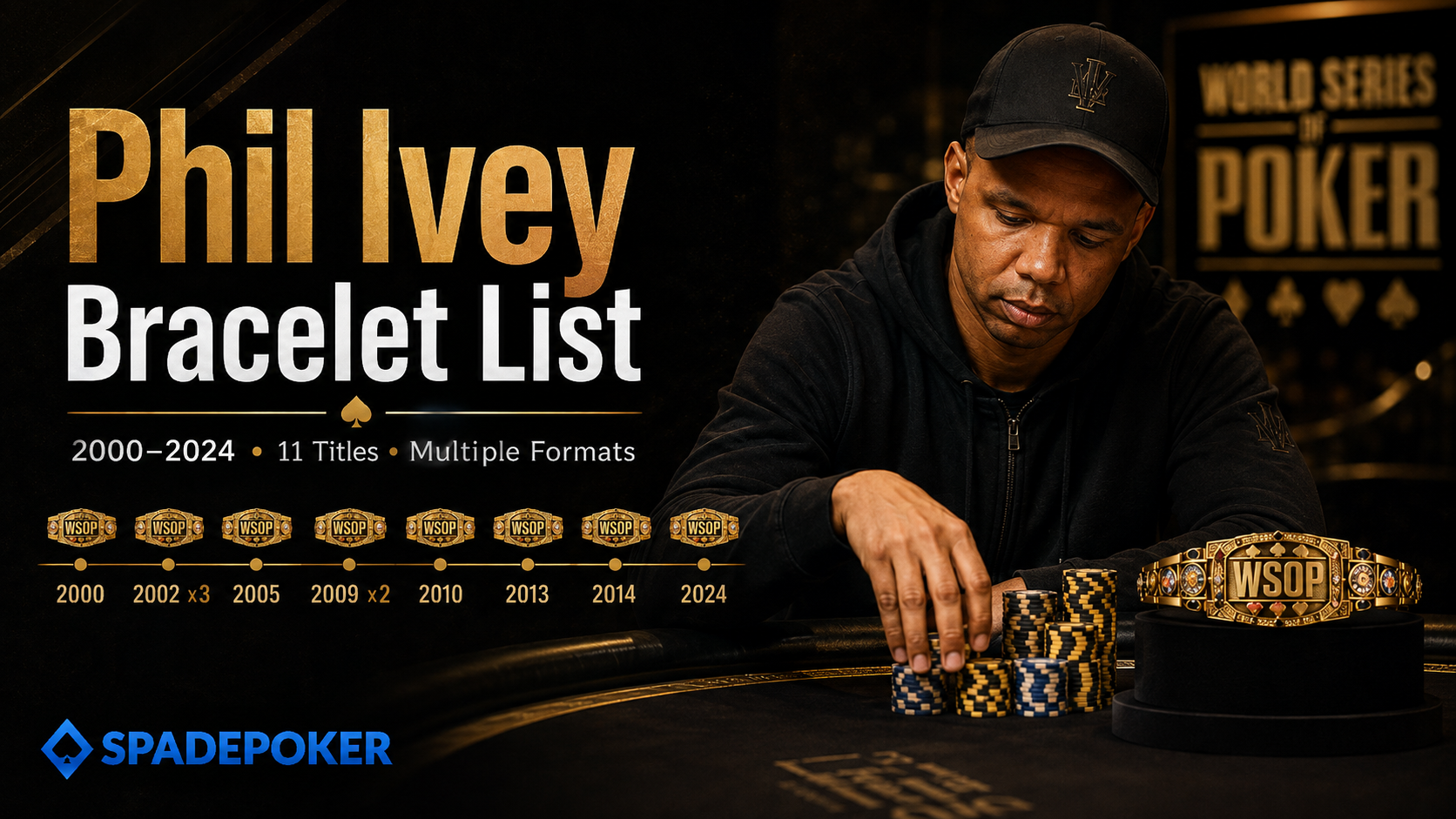
The table makes the strength of Ivey’s WSOP record obvious.
This is not a bracelet list dominated by small-field versions of one game. It is a record built through difficult poker variants, many of which require deep technical knowledge and experience across multiple disciplines.
That is why Ivey’s 11 bracelets are often discussed differently from a simple tournament total.
Ivey’s WSOP success is also a major part of his overall tournament résumé, which we cover in our breakdown of Phil Ivey’s biggest poker wins and career results.
Phil Ivey’s First WSOP Bracelet
Phil Ivey won his first WSOP bracelet in 2000.
The event was the $2.500 Pot-Limit Omaha tournament, and Ivey earned $195.000 for the victory. The official WSOP profile highlights this win as the starting point of his bracelet career.
The first bracelet mattered because it arrived early in Ivey’s rise and immediately showed that he was not just another young No-Limit Hold’em player.
Pot-Limit Omaha is a demanding game. It requires comfort with big draws, equity shifts, board texture, redraws and volatile stack movement. Winning a bracelet in that format helped establish Ivey as a player with a wider skill set.
It also gave the poker world an early clue about the kind of career he would build.
Ivey’s first bracelet did not come in the Main Event. It did not come in a simple mass-market Hold’em event. It came in a technical game that rewarded feel, calculation and aggression.
That pattern continued throughout his WSOP career.
Phil Ivey’s Three-Bracelet Summer in 2002
The 2002 World Series of Poker was one of the key summers of Phil Ivey’s career.
He won three bracelets that year: Limit Seven Card Stud, Limit Seven Card Stud Hi-Lo and Limit S.H.O.E.
Winning three bracelets in a single WSOP series is rare. Doing it across non-Hold’em formats made the achievement even more meaningful.
That summer changed Ivey’s status.

He was no longer only a rising talent. He became a player whose all-around ability could not be ignored. The 2002 run also pushed him to four career bracelets, placing him among the most successful young players of his era.
It showed the poker world that Ivey could win repeatedly, quickly and across variants that many modern fans rarely watch closely.
For serious poker players, that matters.
Mixed-game success is often viewed as a deeper test of poker ability than winning only in one format. Ivey’s 2002 WSOP performance remains one of the clearest early signs that he was becoming a complete poker player.
Why Ivey’s Bracelet Record Is So Respected
Phil Ivey’s bracelet record is respected because it is built on versatility.
Many poker fans first discovered Ivey through televised No-Limit Hold’em, but his bracelet list tells a different story. His WSOP wins are mostly in Omaha, Stud, draw games and mixed formats.
That makes his record especially valuable in GOAT debates.
A player can be dominant in No-Limit Hold’em and still struggle when the game changes. Ivey’s bracelet list shows that he could adjust across structures, betting formats and hand-value systems.
Stud is not Omaha. Omaha is not 2-7 Lowball. Triple Draw is not H.O.R.S.E. Mixed games force players to reset constantly, identify edges quickly and understand opponents across multiple disciplines.
Ivey did all of that at a championship level.
That is why many professionals treat his WSOP résumé as evidence of true all-around greatness, not only tournament success.
The same all-around skill appears in Phil Ivey’s poker style, especially his ability to adapt across formats without losing pressure.
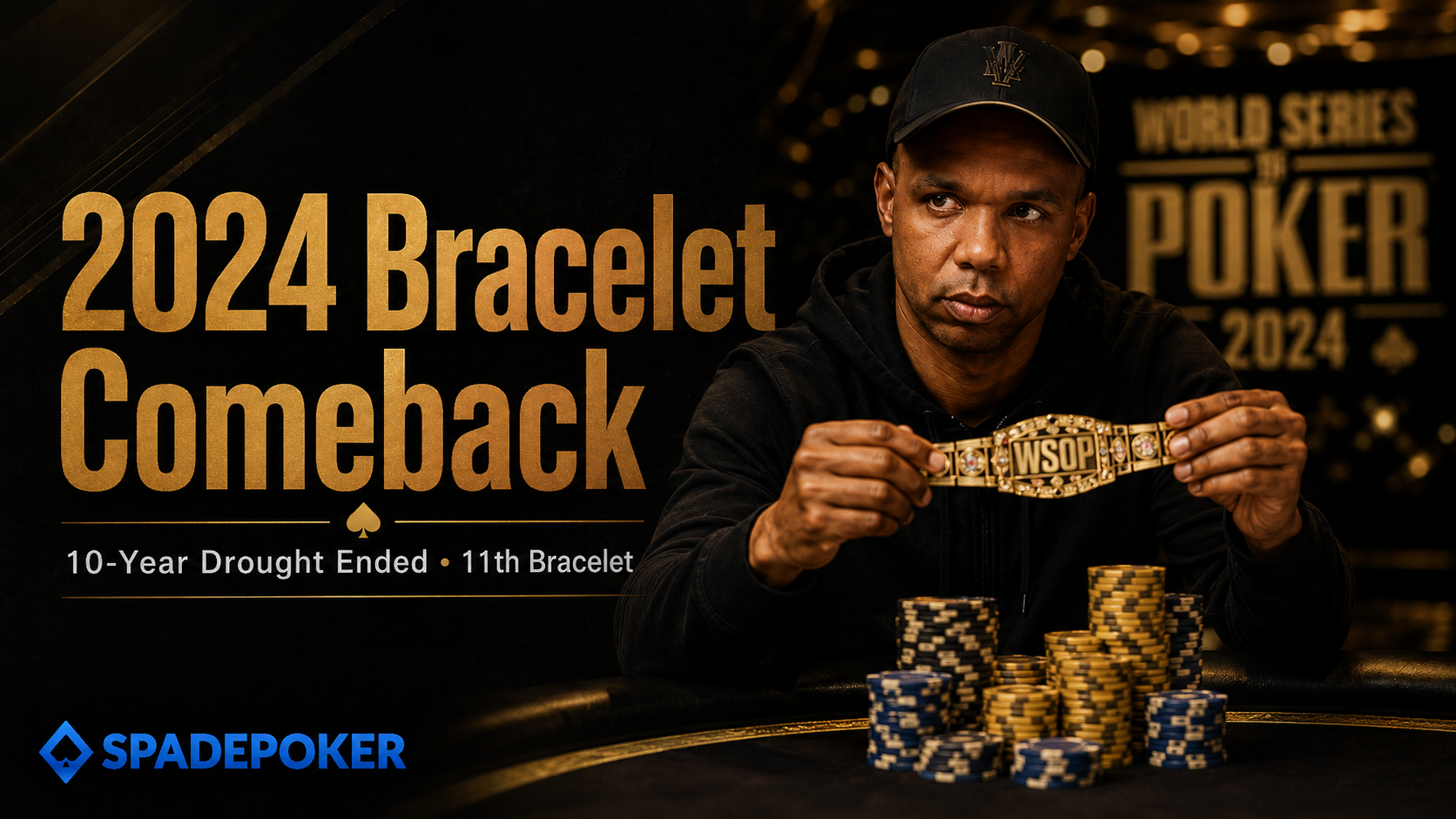
Phil Ivey’s 2024 Bracelet Comeback
Phil Ivey’s 11th WSOP bracelet came in 2024.
He won Event #29: $10.000 Limit 2-7 Triple Draw Championship, defeating a field of 149 entries and earning $347.440. The official WSOP result lists Ivey as the winner of the event, while PokerNews reported that the victory ended a ten-year bracelet drought.
The comeback win was significant for several reasons.
First, it moved Ivey into sole possession of second place on the all-time WSOP bracelet list. Second, it came in a technical mixed-game-adjacent format rather than a mass-field No-Limit Hold’em event. Third, it reminded the poker world that Ivey’s championship level had not disappeared.
That last point mattered most.
Before 2024, Ivey had not won a bracelet since 2014. In modern poker, a ten-year gap can feel like an entire lifetime. New players emerge, strategies evolve, and older legends are often pushed into nostalgia conversations.
Ivey’s 2024 win changed that conversation.
It proved that he could still close an elite WSOP event in a difficult format against serious opposition.
Phil Ivey vs Phil Hellmuth: Bracelet Record Comparison
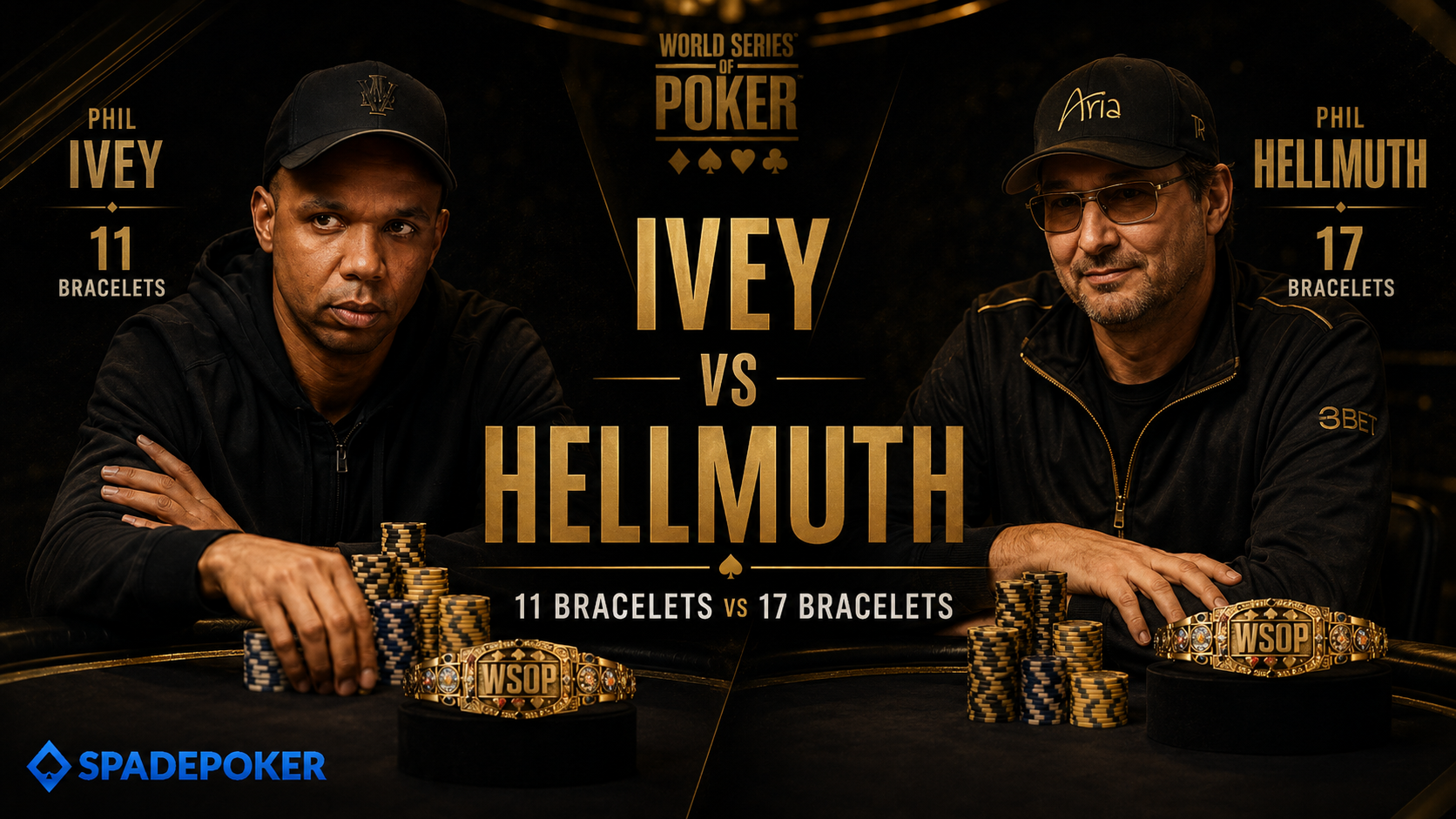
Phil Hellmuth has 17 WSOP bracelets. Phil Ivey has 11.
That makes Hellmuth the all-time bracelet leader and Ivey the clear second-place player on the current list.
| Player | WSOP Bracelets | Signature WSOP Identity |
| Phil Hellmuth | 17 | No-Limit Hold’em record-holder and Poker Brat icon |
| Phil Ivey | 11 | All-around mixed-game great and quiet high-stakes legend |
The comparison is useful, but it should not be oversimplified.
Hellmuth’s case is built around the greatest bracelet count in history, a 1989 WSOP Main Event title and incredible tournament longevity. Ivey’s case is built around versatility, mixed-game respect, high-stakes reputation and the feeling that he could beat almost anyone in almost any format.
Hellmuth is the bracelet king. Ivey is the all-around threat.
That contrast is why the debate remains interesting. They represent two very different versions of poker greatness. For the other side of the bracelet debate, see our full Phil Hellmuth WSOP bracelets guide.
Why Phil Ivey Has Never Needed the Main Event Title
Phil Ivey has never won the WSOP Main Event.
For many players, that would be the biggest missing piece in their poker legacy. For Ivey, it matters, but it does not define him.
The reason is simple: his all-around record is too strong.
Ivey has 11 bracelets, more than $22.8 million in WSOP earnings, deep tournament results, high-stakes cash game respect and bracelet wins across formats that many players never master.
A Main Event title would obviously make his résumé even stronger. It would add the most famous tournament in poker to an already legendary career.
But Ivey’s greatness is not built around needing one single event to validate it.
He is not remembered as a player who almost won the Main Event. He is remembered as one of the most feared poker players ever, with a WSOP record that proves skill across the game’s most demanding formats.
Is Phil Ivey the Greatest WSOP Player After Phil Hellmuth?
Phil Ivey has the clearest statistical case as the greatest WSOP bracelet winner after Phil Hellmuth.
He has the second-most bracelets, a record spread across multiple variants and one of the most respected all-around reputations in poker.
Other names belong in the discussion. Doyle Brunson, Johnny Chan, Erik Seidel, Johnny Moss, Daniel Negreanu and several modern mixed-game specialists all have strong WSOP claims in different ways.
But Ivey’s case is unique.
He combines bracelet count with all-around credibility. His wins did not come only in the game most fans know best. They came in games that serious poker players often use to judge deeper skill.
That is why Ivey’s WSOP résumé remains so powerful.
He may not have the most bracelets. But after Hellmuth, he is the name most naturally connected to all-around WSOP greatness.
Phil Ivey’s WSOP Legacy
Phil Ivey’s WSOP legacy is built on quiet dominance.
He does not need a loud nickname or constant table drama to make his bracelet record feel important. His results speak clearly enough.
Eleven bracelets. Second place all time. Multiple non-Hold’em titles. A ten-year gap followed by a 2024 comeback win. A reputation that stretches from tournaments to the biggest cash games in the world.
That is an extraordinary World Series of Poker story.
Ivey’s bracelet record matters because it confirms what opponents have said for years: he is not just a famous player. He is a complete player.
At the WSOP, that distinction is everything. His bracelet record is also one of the reasons searches around Phil Ivey’s net worth remain so popular, although tournament winnings and personal wealth are not the same thing.
Final Verdict: Phil Ivey’s Bracelet Legacy
Phil Ivey has 11 WSOP bracelets, the second-most all time behind Phil Hellmuth.
His bracelet list starts with Pot-Limit Omaha in 2000 and runs through the $10.000 Limit 2-7 Triple Draw Championship in 2024. Between those two wins, he added titles in Stud, Stud Hi-Lo, SHOE, Omaha/Stud Hi-Lo, No-Limit 2-7 Lowball, H.O.R.S.E. and 8-Game Mix.
That variety is what makes the record special.
Ivey’s WSOP legacy is not built on one format or one era. It is built on all-around poker skill, technical confidence and the ability to beat strong players in games that require very different forms of thinking.
Hellmuth owns the bracelet record.
Ivey owns one of the strongest all-around bracelet résumés the WSOP has ever seen.
Phil Ivey WSOP Bracelets FAQ
How many WSOP bracelets does Phil Ivey have?
Phil Ivey has 11 WSOP bracelets.
Is Phil Ivey second all time in WSOP bracelets?
Yes. Phil Ivey is second on the all-time WSOP bracelet list behind Phil Hellmuth, who has 17 bracelets.
What was Phil Ivey’s first WSOP bracelet?
Phil Ivey’s first WSOP bracelet came in 2000, when he won the $2.500 Pot-Limit Omaha event for $195.000.
What was Phil Ivey’s latest WSOP bracelet?
Phil Ivey’s latest WSOP bracelet came in 2024, when he won the $10.000 Limit 2-7 Triple Draw Championship for $347.440.
Did Phil Ivey win a WSOP bracelet in 2024?
Yes. Ivey won his 11th WSOP bracelet at the 2024 WSOP in Event #29: $10.000 Limit 2-7 Triple Draw Championship.
Has Phil Ivey won the WSOP Main Event?
No. Phil Ivey has not won the WSOP Main Event.
How many WSOP bracelets does Phil Hellmuth have compared to Phil Ivey?
Phil Hellmuth has 17 WSOP bracelets, while Phil Ivey has 11.
Why is Phil Ivey’s bracelet record so respected?
Ivey’s bracelet record is respected because his wins came across many poker variants, including Omaha, Stud, mixed games and draw games, proving his all-around ability.
What games has Phil Ivey won WSOP bracelets in?
Ivey has won WSOP bracelets in Pot-Limit Omaha, Seven Card Stud, Seven Card Stud Hi-Lo, S.H.O.E., Omaha/Seven Card Stud Hi-Lo, No-Limit 2-7 Lowball Draw, H.O.R.S.E., 8-Game Mix and Limit 2-7 Triple Draw.
More Phil Ivey Guides
- Phil Ivey: Age, Net Worth, WSOP Bracelets, Poker Career and Controversies
- Phil Ivey Net Worth 2026: Poker Earnings, Cash Games, Business and Baccarat Explained
- Phil Ivey WSOP Bracelets: All 11 Wins, Bracelet List and Poker Legacy
- Phil Ivey Poker Style Explained: Reads, Fearlessness and the Quiet Killer Image
- Phil Ivey’s Biggest Poker Wins, Career Earnings and Tournament Results

