


Phil Ivey’s poker style is one of the most respected in the history of the game.
He is not famous because he talks more than everyone else. He is famous because he usually says very little and still controls the table.
That is the core of the Phil Ivey image.
Silence. Focus. Pressure. Reads. Fearlessness.
For more than two decades, Ivey has been viewed as one of poker’s most dangerous all-around players. He has won 11 WSOP bracelets, reached the highest level of tournament poker, built a legendary cash game reputation and remained one of the few players whose name still changes the atmosphere at a table.
His official WSOP profile lists him with 11 bracelets, the second-most all time behind Phil Hellmuth. Hendon Mob lists him with more than $55.6 million in recorded live tournament earnings. Those numbers matter, but they do not fully explain why other players fear him.
The real answer is style.
Ivey has built a poker identity around quiet dominance. He rarely looks rushed, rarely looks emotional and rarely gives opponents the comfort of knowing where they stand. His game is not defined by one dramatic speech or one famous blowup. It is defined by the feeling that he is always watching, always processing and always ready to punish a mistake.
What Is Phil Ivey’s Poker Style?
Phil Ivey’s poker style is best described as quiet, fearless, observant and highly adaptable.
He is not a one-format specialist. Ivey has been successful in No-Limit Hold’em, Pot-Limit Omaha, Stud, draw games, mixed games, tournaments and high-stakes cash games. His 11 WSOP bracelets include wins across several technical formats, which is one reason serious poker players rate him so highly.
At the table, his style often looks calm from the outside.
But calm does not mean passive.
Ivey applies pressure in ways that are hard to read. He can wait patiently, attack suddenly, call down lightly, bluff in uncomfortable spots or force opponents to make decisions for large amounts of chips. The threat is not that he always plays fast or loud. The threat is that he seems comfortable in almost every type of situation.
That versatility is what makes his strategy difficult to copy.
Many players have one natural identity. Some are aggressive. Some are tight. Some are talkative. Some are mathematical. Ivey’s strength is that he can shift depending on the game, opponent, stack depth and format.
He does not need to announce the adjustment.
He simply makes it.
The Quiet Killer Image
Phil Ivey is often described as a “quiet killer” because his table presence is intense without being loud.
Some poker players use table talk to create pressure. Others use emotion, speech play or confrontation. Ivey usually does the opposite. He sits quietly, studies the action and lets opponents feel the weight of the moment.
That silence can be more intimidating than talking.
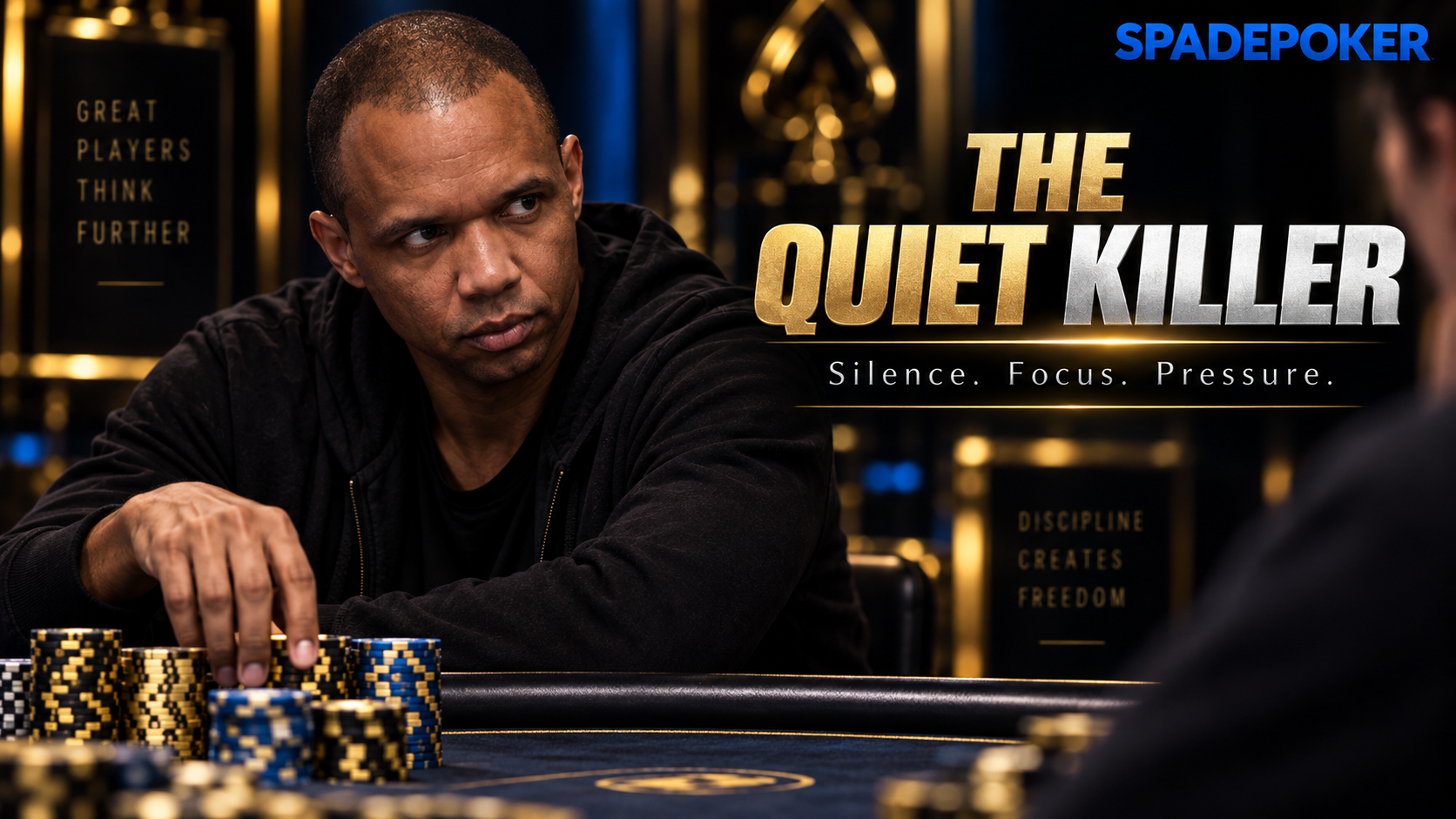
Against a loud player, opponents may know what kind of performance they are facing. Against Ivey, there is often less information to work with. His face gives away little. His posture stays controlled. His reactions are small. That forces opponents to make decisions with less emotional feedback than they might get from other players.
This is part of why his image became so powerful during the televised poker boom.
Viewers saw a player who rarely needed theatrics. Broadcasters did not need to explain that Ivey was dangerous. The table already seemed to know.
That is the quiet killer image: a player who creates fear without raising his voice.
Phil Ivey’s Poker Face
Phil Ivey’s poker face is one of the most famous in poker.
The phrase “poker face” is often used casually, but with Ivey it became part of his actual identity. He looks controlled in huge pots, small pots, winning hands and losing hands. That consistency makes him difficult to read.
A strong poker face does not mean a player feels nothing.
It means opponents cannot easily see what the player feels.
That distinction is important. Poker is full of stress. Big decisions create real pressure. Even elite players experience frustration, doubt and adrenaline. Ivey’s gift is that he rarely gives those emotions away in a simple, obvious way.
That creates problems for opponents.
If they cannot tell whether he is comfortable or uncomfortable, they have to rely more heavily on betting patterns, ranges, board texture and their own discipline. Against Ivey, that is not easy, because he is also capable of understanding how his image affects their decisions.
Live Reads and Instinct
Live reads are a major part of Phil Ivey’s reputation.
Ivey does not speak about them in the same theatrical way that Phil Hellmuth speaks about “White Magic,” but the idea is related. Both players are associated with instinct and live information. The difference is presentation.
Hellmuth often explains his confidence out loud. Ivey usually keeps it internal.
A live read can come from timing, posture, hand movement, speech, breathing, bet sizing or a pattern that has developed over hours of play. Not every live read is reliable, and the best players know that tells can be misleading. But in live poker, small details still matter.
Ivey’s edge has always seemed connected to how quickly he processes those details.
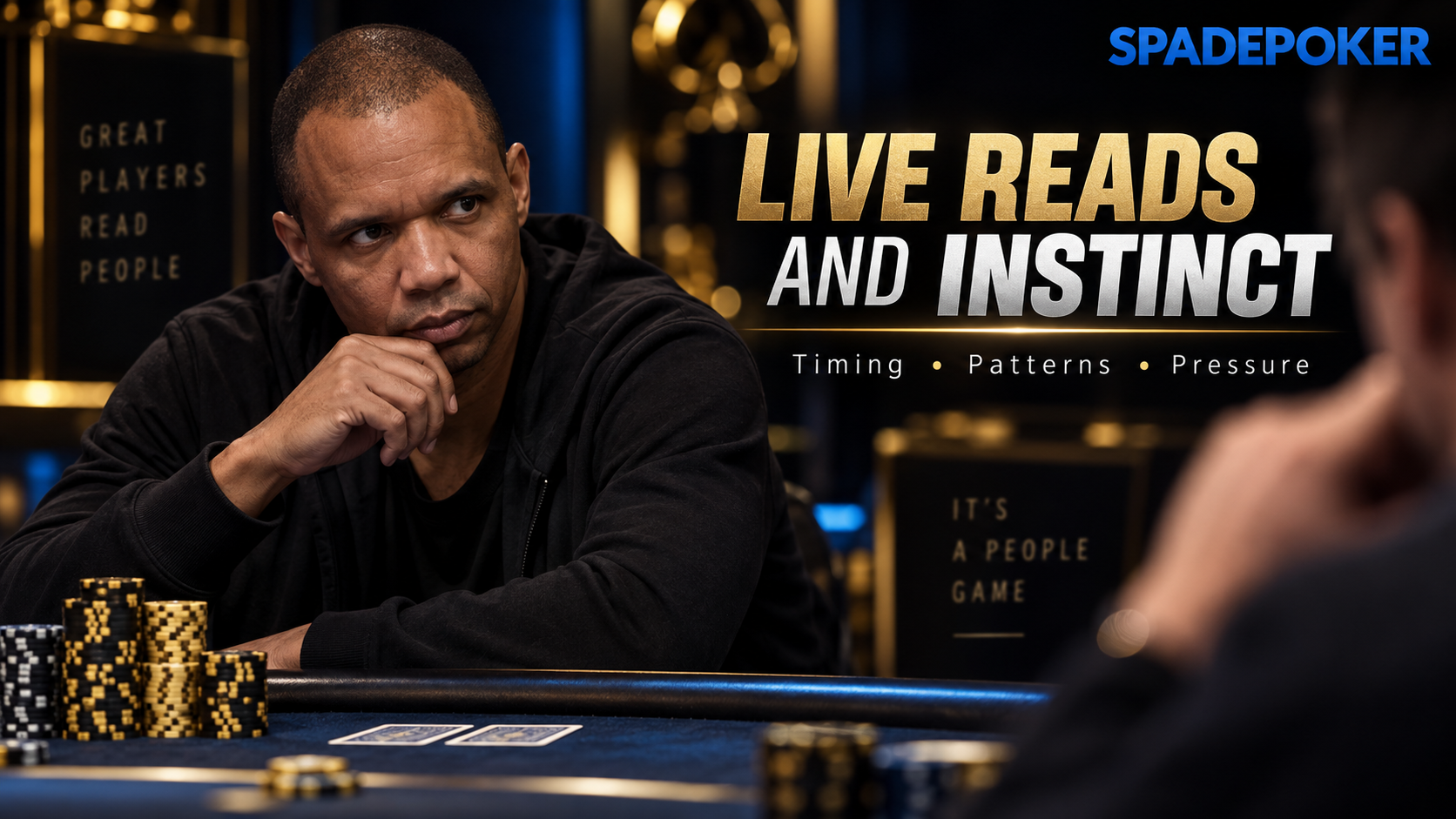
He can watch how a player handles chips, how they react to pressure, how quickly they bet, how they behave when strong and how they behave when weak. Over time, those observations become patterns.
That is one reason Ivey is so difficult to play against.
He does not need a dramatic read to make an opponent uncomfortable. He only needs to notice enough to make the next decision better.
Fearlessness in Big Pots
Fearlessness is one of the defining parts of Phil Ivey’s poker style.
That does not mean he plays every hand recklessly. In fact, his best poker is often controlled and patient. But when a big spot arrives, Ivey has long been known for making decisions without looking overwhelmed by the size of the pot.
This matters most in high-stakes poker.
Many players understand theory until the money becomes uncomfortable. Then their decisions change. They become tighter, more emotional or more afraid of looking foolish. Ivey’s reputation is built partly on the idea that he does not shrink in those moments.
He can bluff when the spot calls for it.
He can call when a line does not make sense.
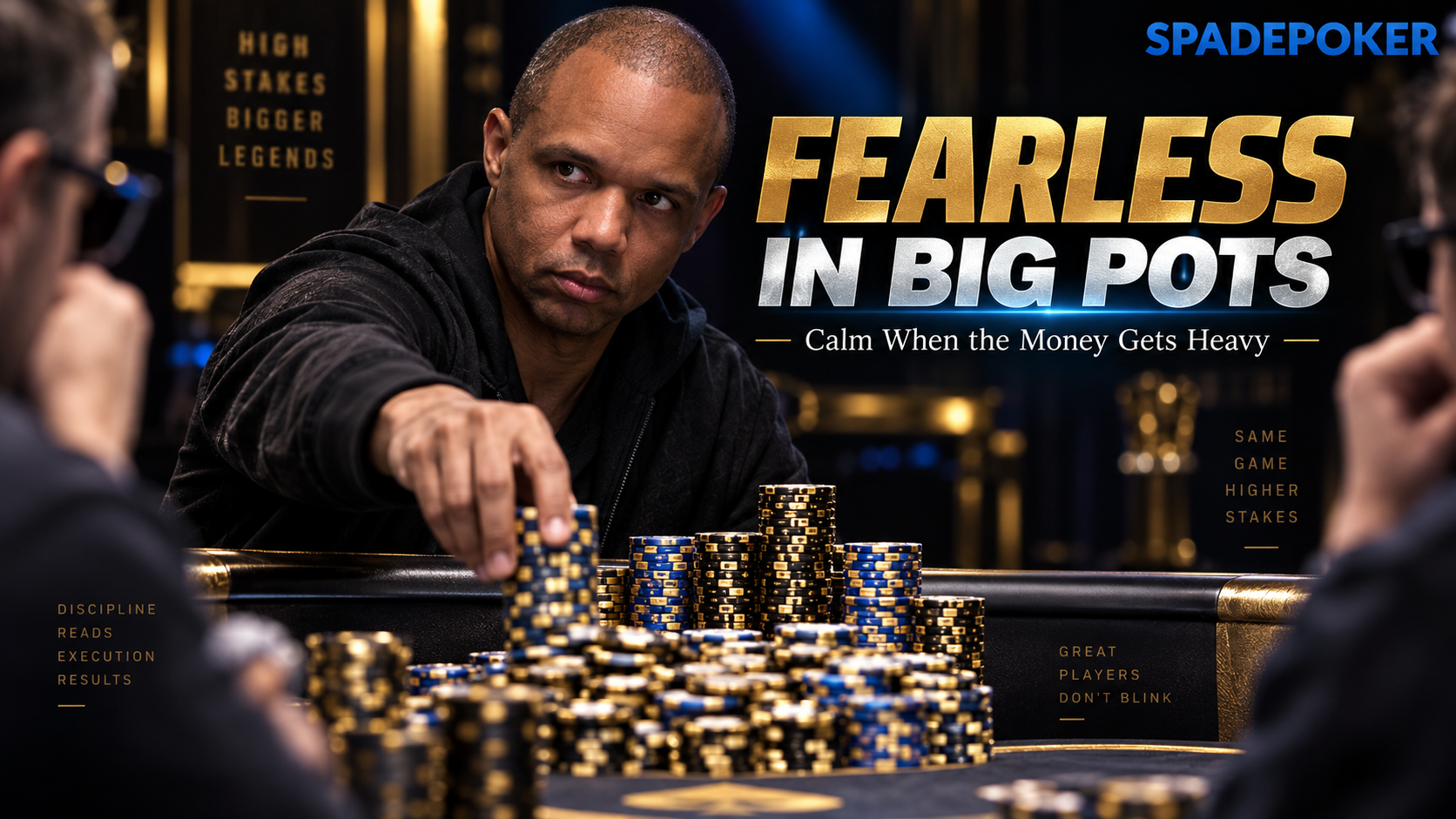
He can apply pressure when another player looks unwilling to risk everything.
That kind of fearlessness is not just about courage. It is about comfort. Ivey has spent so much time in high-pressure environments that large pots appear to affect him less visibly than they affect most opponents.
That gives him an important psychological edge.
Why Ivey Is So Strong in Mixed Games
Phil Ivey’s mixed-game strength is one of the clearest reasons his poker style is so respected.
No-Limit Hold’em made poker famous, but mixed games are often where elite all-around ability is tested most clearly. Players have to switch between different rules, betting structures, hand values and strategic priorities.
Ivey has won WSOP bracelets in several non-Hold’em formats, including Pot-Limit Omaha, Seven Card Stud, Stud Hi-Lo, H.O.R.S.E., 8-Game Mix, No-Limit 2-7 Lowball Draw and Limit 2-7 Triple Draw. His first bracelet came in $2.500 Pot-Limit Omaha in 2000, and his 11th came in the $10.000 Limit 2-7 Triple Draw Championship in 2024.
That range of victories says a lot.
It shows that Ivey’s style is not only based on one solved set of situations. He can adjust across formats. He can identify where opponents are weak in games they do not fully understand. He can move from flop games to draw games and from high-card games to lowball structures without losing his core edge.
This is why many serious players view Ivey as one of the greatest all-around poker players ever.
Mixed games expose narrow skill sets. Ivey’s record shows breadth.

Cash Game Pressure and High-Stakes Reputation
Phil Ivey’s cash game reputation is a major part of his legend.
Tournament results are public. Cash game results are not. That makes this part of his career harder to measure, but not less important.
Ivey became associated with some of the biggest games in Las Vegas, televised high-stakes poker and private games around the world. His name is often connected to the kind of poker environments where one mistake can cost more than a normal tournament buy-in.
That is where his style makes sense.
In cash games, especially deep-stacked cash games, players cannot rely only on tournament survival instincts. They need to understand pressure, implied odds, deep-stack leverage, table image and the long-term rhythm of a session.
Ivey’s calmness is valuable in that world.
He does not need to look excited when he wins a big pot. He does not need to look defeated when a bluff fails. That emotional control helps him stay difficult to read over long sessions.
It also adds to the fear factor.
Against Ivey, opponents know they are not just playing a famous tournament champion. They are playing someone with a high-stakes cash game aura that has been built over many years.
Phil Ivey vs Modern GTO Poker
Phil Ivey should not be treated as an anti-GTO player.
That would be too simple.
Modern poker is heavily shaped by solvers, range construction, balanced strategies and GTO-based study. Ivey came up before that language dominated public poker discussion, but that does not mean his game is only instinctive or old-school.
The better way to describe Ivey is this: he combines deep poker fundamentals with live feel and practical adaptability.
He may not be known for giving long public solver lectures, but his record across mixed games shows technical depth. Players do not win 11 WSOP bracelets across difficult formats by guessing. They need structure, discipline and a strong understanding of how different games work.

At the same time, Ivey’s image is not built around sounding technical.
It is built around making the right decision when the moment is uncomfortable.
That is why the GTO comparison is interesting. Some players are famous for explaining poker. Ivey is famous for playing it.
Why Opponents Fear Phil Ivey
Opponents fear Phil Ivey because there is no simple way to attack him.
If a player is too tight, he can apply pressure. If a player is too aggressive, he can trap. If a player is emotional, he can wait. If a player is technically strong, he can still challenge them through experience, timing and game selection.
That is what makes him different from many famous players.
Some opponents are dangerous only in one format or one type of lineup. Ivey has been dangerous in tournaments, cash games, mixed games, televised poker and high-stakes settings. That creates a broad kind of respect.
His presence also changes the psychology of a table.
A normal hand becomes bigger when Phil Ivey is in it. A thin value bet feels more dangerous. A bluff feels more exposed. A hero call feels like a test. Opponents know that if they make a mistake, he is the kind of player who may see it before they do.
That is why his fear factor has lasted for so long.
What Poker Players Can Learn From Phil Ivey
Most players cannot simply copy Phil Ivey’s poker style.
That is important. Ivey’s game is built on decades of experience, natural composure, elite pattern recognition and comfort in high-pressure environments. Trying to imitate his silence or fearless calls without the underlying skill can be dangerous.
But players can still learn important lessons from him.
First, emotional control matters. Ivey’s calm table image is not just a personality trait. It protects information and creates pressure.
Second, observation matters. Poker is not only about your own cards. It is also about how opponents behave, how they size bets, how they react to pressure and how their patterns change.
Third, versatility matters. Ivey’s mixed-game success shows the value of understanding poker beyond one format.
Fourth, fearlessness must be earned. Big bluffs and thin calls are powerful only when they come from strong reasoning, not ego.
Finally, reputation matters. Ivey’s image makes opponents think differently. Most players will never have that kind of aura, but everyone has a table image. Understanding it is part of live poker.
Phil Ivey’s Strategic Strengths
Phil Ivey’s biggest strategic strengths are clear.
He is difficult to read. He is comfortable under pressure. He adapts across formats. He understands live information. He has deep experience in big-money environments. He can apply pressure without needing to appear emotional or reckless.
Those strengths support each other.
His poker face makes opponents uncertain. His experience helps him interpret their uncertainty. His fearlessness allows him to act on that information. His mixed-game skill gives him more ways to find edges. His reputation makes opponents more aware of every decision they make against him.
That combination is rare.
Many players have one or two of those qualities. Ivey has built a career around all of them.
Phil Ivey’s Strategic Weaknesses
No poker style is perfect, and Phil Ivey’s game should not be romanticized as unbeatable.
Modern poker has become extremely technical. Younger elite players study solver outputs, population tendencies, ICM pressure and format-specific strategies with a level of detail that did not exist publicly during the early part of Ivey’s career.
That means every legend has to adapt.
Ivey’s style is also difficult to analyze from the outside because he explains less than many modern training-focused players. Fans may see a brilliant decision, but they may not always hear a detailed technical explanation afterward.
There is also the question of volume.
Modern tournament rankings often reward players who play huge schedules. Ivey’s legacy is not built only on constant public volume. It is built on reputation, selected appearances, high-stakes environments and long-term respect.
That can make direct comparisons difficult.
Still, the weaknesses do not erase the strengths. They simply show that Ivey’s style belongs in a broader poker evolution, not outside it.
Final Verdict: Why Phil Ivey’s Style Still Works
Phil Ivey’s poker style still works because poker is not played only on charts.
Theory matters. Solvers matter. Ranges matter. But live poker also includes pressure, fear, image, fatigue, timing, confidence and the human discomfort of making expensive decisions against someone who seems unreadable.
That is where Ivey has always been dangerous.
His style is quiet, but not passive. Patient, but not scared. Instinctive, but not random. Technical, but not performative.
He built his legend by making opponents feel that they were always being tested.
That is why Phil Ivey remains one of poker’s most respected players. He does not need to dominate the table with words.
He dominates it by making silence feel dangerous.
Phil Ivey Poker Style FAQ
What is Phil Ivey’s poker style?
Phil Ivey’s poker style is quiet, fearless, observant and adaptable. He is known for live reads, pressure, emotional control and all-around skill across many poker formats.
Why is Phil Ivey called the quiet killer?
Ivey is often viewed as a quiet killer because he creates pressure without loud table talk. His calm presence, unreadable expression and ability to punish mistakes make him intimidating.
Why is Phil Ivey so hard to read?
Ivey is hard to read because he gives away very little emotionally. His facial expressions, posture and reactions remain controlled even in big pots.
Is Phil Ivey aggressive?
Yes, but not in a reckless way. Ivey is capable of applying major pressure, bluffing in big spots and attacking weakness, but his aggression is usually tied to timing and reads.
Is Phil Ivey a GTO player?
Ivey is not usually marketed as a public GTO theorist, but he should not be dismissed as anti-GTO. His success across mixed games shows deep technical understanding combined with live feel and adaptability.
Why is Phil Ivey so good at mixed games?
Ivey is strong in mixed games because he adapts quickly across formats and understands poker beyond one variant. His WSOP bracelet record includes Omaha, Stud, H.O.R.S.E., 8-Game Mix and draw-game titles.
What can poker players learn from Phil Ivey?
Players can learn emotional control, observation, versatility, patience and the importance of table image from Phil Ivey. They should not copy big fearless plays without the skill and reasoning behind them.
Why do opponents fear Phil Ivey?
Opponents fear Ivey because he is difficult to read, comfortable in big pots and dangerous across many formats. His presence makes every decision feel more expensive.
Is Phil Ivey one of the best poker players ever?
Yes. His 11 WSOP bracelets, huge live earnings, mixed-game success and high-stakes reputation give him one of the strongest cases as one of the greatest all-around players in poker history.