Darren Rabinowitz is a player whose poker career spans the development of both the online and live scenes over the past two decades. He started during the Moneymaker boom on Party Poker, navigated underground home games, had tens of thousands locked on the defunct Lock Poker, and experienced years of relentless grinding. Although success came gradually, 2026 marked a turning point that elevated his career to a new level.
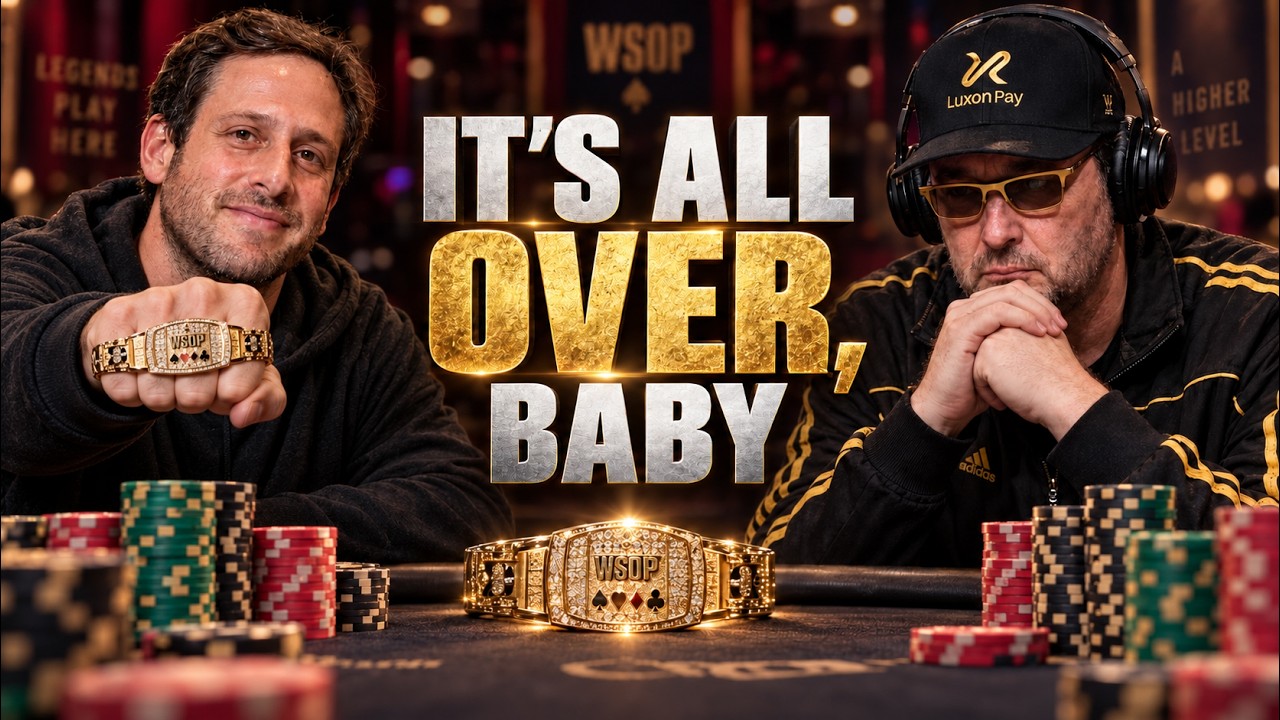
In this interview, he reflects on his teenage beginnings, acquiring his first significant bankroll, life in a cheap Vegas apartment, and the people who taught him to think about poker at a higher level. Naturally, the final stages of the last WSOP take center stage. After a painful exit from the Main Event, he returned to the final $5K No-Limit Hold'em event of the series, faced off heads-up against Phil Hellmuth, and denied him bracelet number 18.
$50 Bonuses and the First Real Grind
Rabinowitz grew up on Mercer Island near Seattle and got into poker around age sixteen. The older brothers of his friends were already successful in online games at medium stakes, so when he saw Party Poker offering a $50 no-deposit bonus for new players, he and his friends quickly found a way to take advantage repeatedly.
After school, he met with his two best friends, Mike and Carter, in Carter's basement, where they had three computers but only two chairs. The last to arrive had to play on a plastic crate. They mainly played Sit & Go tournaments, and during one session, he could spin $50 into approximately $2,500. At the time, he was unfamiliar with concepts like bankroll management, staking, or a professional career, but he knew he wanted to play more.
After high school, he went to Arizona State University, initially planning to study journalism and pursue a career in sports journalism. However, in his first year, poker and fun took priority over studies, leading his parents to inform him that he needed to finance his own education.
At one point, he was juggling studies, working at Bank of America, maintaining a relationship, enjoying the party life, and playing poker. It soon became evident that managing everything simultaneously wasn't sustainable. After a breakup and growing frustration at work, he made a decision that was meant to be a brief detour: he headed to Las Vegas for a month.
One Month Changed Everything
Rabinowitz arrived at the 2012 WSOP with a bankroll of about $20,000, without a clear vision of what a professional career should be. He started playing single-table satellites ranging from $200 to $500. His teenage experience with Sit & Gos surprisingly gave him a solid foundation in this format.
The first few weeks were successful, and the plan to return to Seattle started fading. What began as a one-month trip extended to about four months, and Rabinowitz later rented a two-bedroom apartment for about $600 a month. He recalls the roaches and the overall living standards, which didn't reflect his growing bankroll, with humor. It didn't bother him, as he spent most of his time grinding online or in the casino.
Not long after, Rabinowitz won a satellite to the Irish Open, where he struck up a conversation with a player who later became his backer for about four to five years. Backing allowed him to play more tournaments, travel, and gradually get close to players from whom he could learn.
Aussie Millions and Chip Lead Among the Final Four
A major breakthrough came in 2014 at the Aussie Millions. Rabinowitz flew to Australia with friends, originally planning to mix poker with visiting family in Sydney. However, the Main Event quickly changed all other plans.
He made it to the final four players and even held the chip lead at one point. He was playing for sums far beyond his career experience level, but he also felt that his opponents were better. In hindsight, he admits to experiencing impostor syndrome and a lack of confidence, which prevented him from discussing a potential deal.
Ultimately, he won about 450,000 Australian dollars, approximately $400,000. The win didn't change how he thought about money. Instead of seeing it as a means for a house, car, or investments, he viewed it primarily as support for more years of poker grinding without financial pressure.
Around the same period, Rabinowitz connected with a group of players including Connor Drinan, Kush Mandavia, and Pratyush Buddiga. He describes this phase as one of the most crucial for his poker development. It wasn't just about coaching in today's sense.
Before solvers became mainstream, much study happened during dinner breaks, travel, and casual conversations among players. Five quality regs would stand in the corner of the tournament room discussing hands, ranges, mindsets, and situations they’d just experienced. Rabinowitz says that being among better players allowed him to understand many concepts much faster. He often references the simple idea: a person is the average of the people they surround themselves with.
COVID and Golf as Poker 2.0
COVID turned the poker world back to online play, and Rabinowitz followed suit. During the pandemic, he played enormous hours and had people ready to automatically buy percentages for higher cash games so he could jump into action right away. He especially enjoyed early morning sessions, waking up around five, playing for a few hours, and then going back to bed after a profitable session.
The pandemic also introduced golf into his life. He previously had no interest and couldn't understand why anyone would voluntarily spend four or five hours on a course. However, during the lockdown, needing a break from his apartment, golf quickly turned into a second obsession.
He loved starting as a complete beginner again. Each week he observed tangible progress, similar to how he once followed better poker players' moves. After the pandemic, he began combining poker travel with golf trips, switching between the two whenever he needed a change. According to him, this combination keeps his motivation fresh even after years of professional grinding.
The Tournament He Hated Ended in His Victory
The year 2026 started with one of the most absurd runs of Rabinowitz's career. At the WSOP Circuit event at Planet Hollywood, he was troubled by the organization, noise, rules, and the tournament atmosphere. He decided early in Day 1 that if he busted, he'd head to a competing event at the Wynn.
From that moment, nearly everything went his way. After the dinner break, he eliminated a friend, won a crucial coinflip on the stone bubble, and advanced to the final table. He ended up winning this tournament for about $180,000 and secured a WSOPC ring. A tournament he wanted to leave as soon as possible became one of the biggest achievements of his career.
After the Main Event Came a Defining Moment
And so we come to the 2026 WSOP, where Rabinowitz hovered around break-even for weeks. He went deep in the Main Event, but his run ended after a two-outer eliminated him in 145th place. For many players, such an exit might mean days without touching poker. But Rabinowitz pressed on and immediately jumped into the final event of the series.
He saw the last $5K NLH event as one of the last good opportunities of the summer. There was also a weaker $800 event happening simultaneously, which normally would have caught his interest. This time, he committed to the $5K, a decision that proved to be one of the best of the season.
Phil Hellmuth, Dozens of Cameras, and a Player’s Nightmare
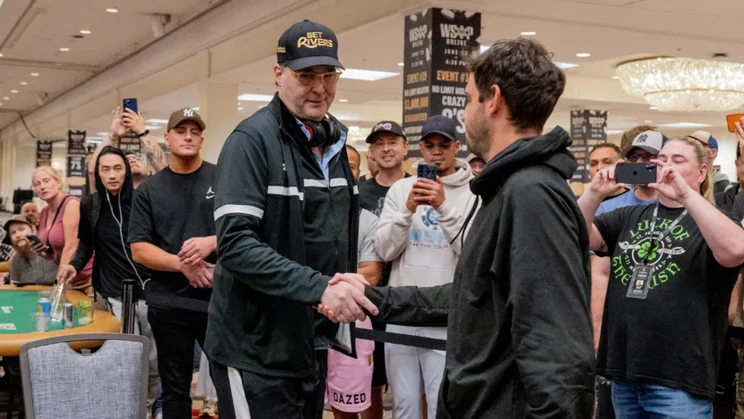
As the tournament progressed, the spotlight on the final table grew brighter. The reason was simple — Phil Hellmuth had another shot at a historic 18th WSOP bracelet. Rabinowitz was no stranger to media attention and high-stakes finals, but he described the atmosphere at this table as unlike anything he had ever experienced.
When the field narrowed to four or three players, cameras were practically glued to him, and the rail pushed closer and closer. Several times, Rabinowitz had to ask the floor to move people back, and at one point, he quipped, "I've had nightmares more pleasant than this."
The situation was exacerbated by Martin Kabrhel loudly counting his stack every time Hellmuth asked for the chip count. To escape the chaos, Rabinowitz donned headphones and focused inward on his own game.
Heads-Up Against a Lifelong Idol
Rabinowitz entered the heads-up with about a 3:1 chip lead. However, Hellmuth quickly doubled up, the stack ratio flipped, and the fight for the bracelet was back on even ground. The heads-up lasted approximately 90 minutes. Gradually, Rabinowitz regained the lead and felt he could predict Hellmuth’s moves with remarkable accuracy.
It wasn't about classic live tells. Having watched Hellmuth for decades, Rabinowitz was so familiar with his demeanor that he claimed to discern when Hellmuth was genuinely thinking versus when he was just putting on a show. "I felt like I just knew what he was holding," Rabinowitz described his state of mind during the closing stages.
In the decisive hand, Rabinowitz held 9-7 and continued his aggression on the flop of 9-8-2. Hellmuth saw it through to the river, where Rabinowitz challenged him with a decision for his tournament life. It was classic Hellmuth — standing up, thinking out loud, and a long deliberation.
Rabinowitz admitted he had the urge to say something. In his mind, he had prepared the legendary line, "If you call, it's all over, baby," but realized if it provoked Hellmuth into the right decision, he would never forgive himself. So he stayed silent. Hellmuth eventually folded, ending his quest for bracelet number 18.
The victory awarded Rabinowitz roughly $695,000 and his second WSOP bracelet. The first was won online, but this time was a completely different emotion. He conquered a massive field, handled the most media-intense table of his career, and defeated the most successful player in WSOP history heads-up. "That's when I thought I'd probably experienced the most amazing thing poker could ever offer me," he remarked.
In the following days, people he hadn’t spoken to in years reached out, and friends introduced him at tables as "the guy who beat Phil Hellmuth." Despite the significant win, Rabinowitz doesn’t see it as a reason to slow down. The next day, he was already seated in another tournament. After more than fifteen years of grinding, one thing remained unchanged. A big win still means more freedom, less stress, and the ability to play another tournament.
More from the Table One Podcast
Jennifer Shahade: Chess, Poker, Life Between Two Games, and the Courage to Take Risks
Jonathan Tamayo: Open Talk on Winning $10 Million, the Laptop Gate, and Whether Poker Is Dying
Kenny Hallaert: The Main Event Specialist Who Knows When to Toss GTO Aside
Allen “Chainsaw” Kessler: From Poker Weekends to 350 Days a Year in the Casino
Jeff Gross: Poker, Business, Six-Figure Prop Bets, and a New World of Poker Entrepreneurship
Matt Savage: The Man Who Helped Organize Poker Chaos from WSOP to WPT
Mike Matusow: Million-Dollar Falls, Old-School Charm, and the Comeback of a Player Who Never Gave Up
Justin Saliba: Moved to Vegas, Aspired to Win Millions, and Quickly Realized He Hated It
John Bornstein: Underground Clubs, Robberies, Total Collapse, and a Poker Miracle
Nikki Limo: From YouTube and Stand-Up to a $130,000 Poker Run
Joe McKeehen: He Stopped Looking at His Cards and Won the WSOP Main Event
Andrew Moreno: From $3 Sit & Go to High Roller Champion
Yukon Brad Booth: Return to High Stakes Poker and the Ultimate Bluff Against Phil Ivey
Landon Tice: When Talent Outpaces Maturity and Poker Forces You to Grow Up
Jeremy Ausmus: From Dusty Games in Colorado to the Pinnacle of World Poker
Cary Katz: Why High Stakes Environment Attracts Extremely Analytical Personalities
Source: YouTube, WSOP, Flickr/WorldPokerTour, X, PokerNews