

Record Participation
The 1984 schedule featured 14 events, with only the Ladies Event having a buy-in under $1,000. Thanks to increasingly popular satellites, more amateurs found their way to the tables, boosting participation across the tournaments.
The opening $1K NLH tournament set the tone for the year, with registrations hitting 234. A true record, however, came in Event #9: $1K Limit Hold'em, which with 270 entries became the largest tournament in the series' history at that time.
The star of the side events was Dewey Tomko, a former kindergarten teacher who pulled off an incredible feat by winning two bracelets in two days. Tomko triumphed in the $10K 2-7 Lowball and the $5K Pot-Limit Omaha. Interestingly, the PLO event was not in the original schedule, added as a 'special event' after the success of the $1K Omaha.
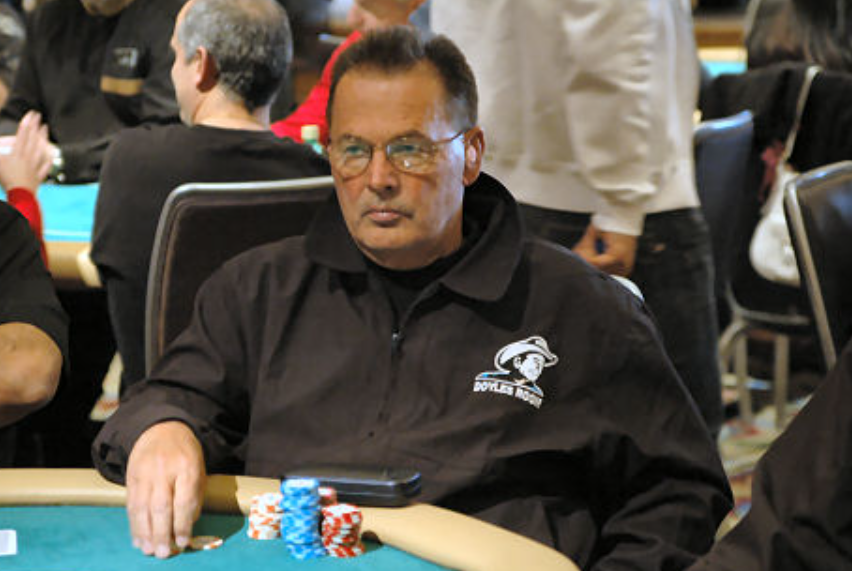
Sandy Stupak, wife of casino owner Bob Stupak, also had her moment of fame, winning the inaugural casino employees' tournament. Her husband Bob would win his own bracelet five years later.
Official Results of the 1984 WSOP Tournaments
|
Tournament |
Entries |
Winner |
Prize |
|
Event #1: $1,000 No-Limit Hold'em |
234 |
Dick Albano |
$117,000 |
|
Event #2: $1,500 No-Limit Hold'em |
178 |
Todd Baur |
$133,500 |
|
Event #3: $1,000 Pot-Limit Omaha (Rebuy) |
108 |
William Bennett |
$84,000 |
|
Event #4: $1,000 Limit Seven-Card Stud Hi-Lo |
120 |
Norman Berliner |
$50,000 |
|
Event #5: $1,000 Limit A-5 Lowball Draw |
109 |
Paul Fontaine |
$54,500 |
|
Event #6: $1,000 Limit Razz |
80 |
Mike Hart |
$40,000 |
|
Event #7: $5,000 Limit Seven-Card Stud |
55 |
Jack Keller |
$137,500 |
|
Event #8: $1,000 Casino Employees NLH |
14 |
Sandy Stupak |
$14,000 |
|
Event #9: $1,000 Limit Hold'em |
270 |
Bob Martinez |
$135,000 |
|
Event #10: $1,000 Limit Seven-Card Stud |
132 |
Mike Schneiberg |
$65,000 |
|
Event #11: $10,000 No-Limit 2-7 Draw Lowball |
21 |
Dewey Tomko |
$105,000 |
|
Event #12: $5,000 Pot-Limit Omaha |
22 |
Dewey Tomko |
$135,000 |
|
Event #13: $500 Ladies Seven-Card Stud |
62 |
Karen Wolfson |
$15,500 |
|
Event #14: $10,000 Main Event (NLH) |
132 |
Jack Keller |
$660,000 |
Cash Experiment in the Main Event
The Main Event attracted a record 132 players, with the top nine splitting a prizepool of $1,320,000, literally laid out on the table. Jack Binion opted for a visually striking experiment in the Main Event. When three players remained, he replaced the plastic chips with wads of real cash.
He thought the sight of stacks of money would encourage aggressive play and make the final more thrilling for spectators. This move aimed to avoid a similar lengthy conclusion as the previous year, where the heads-up lasted over seven hours.
The final three featured standout players: professional Jesse Alto, former rodeo champion Byron 'Cowboy' Wolford, and the talented Jack Keller. Jesse Alto, who narrowly lost a heads-up to Doyle Brunson in 1976, was on his fifth final table of the Main Event and determined to win.
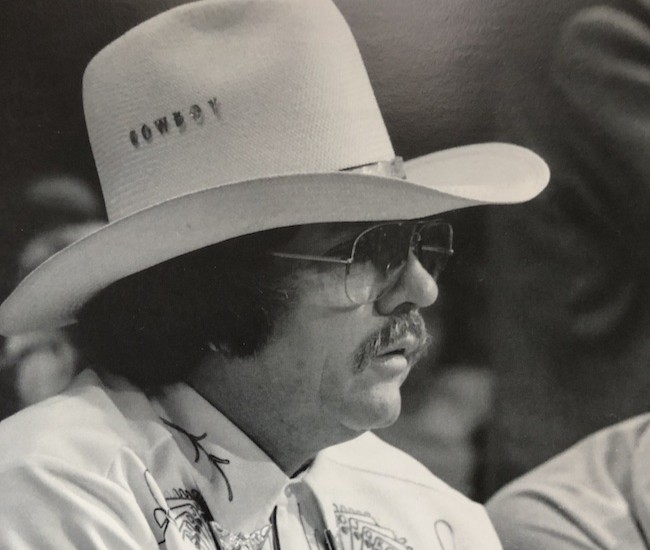
Alto entered the final three as the chipleader, but then came a hand that went down in history. On the board A c K d 9 c K h 2 s, Wolford declared all-in, completely baffling Alto, who took five minutes to make a decision. He folded, only to watch Wolford reveal a pure bluff with 5-3.
This moment broke Jesse Alto. In a tilt, he blindly went all-in over the next two hands, which Jack Keller capitalized on to double his stack twice. Then Alto pushed all-in again and finished third. The once-mighty chipleader's loss of composure reshaped the surprising lineup for the heads-up.
The closing battle between Keller and Wolford didn't last long. Known as the 'Gentleman' for his demeanor, Keller was anything but gentle at the table, giving Wolford no chance at a comeback. In the final hand, Wolford went all-in with 6 h 4 h on a flop of 9 c 6 s 5 d, and Keller called with T h T s.
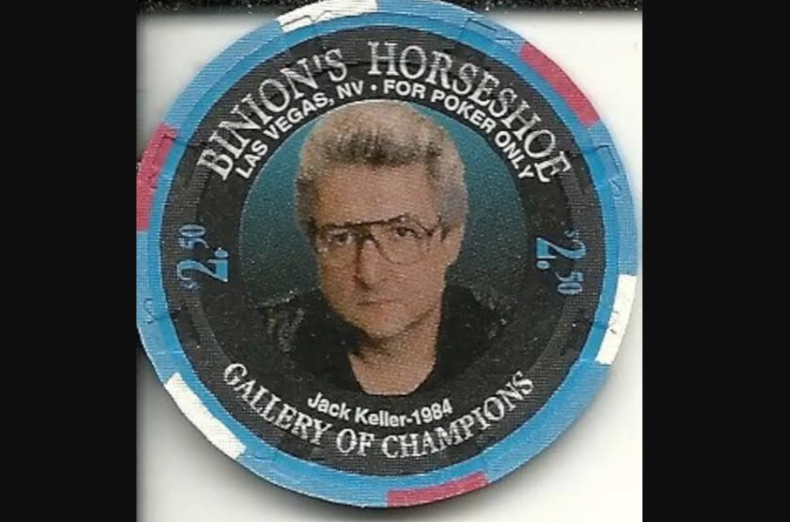
The turn 8 s or river J d provided no help for Wolford. Jack Keller secured his second bracelet of the year (having also won Event #7: $5K Limit Seven-Card Stud) and a then-record victory of $660,000.
After his Main Event win, Keller traveled to Europe, where he helped popularize Pot-Limit Omaha, and in 1994, he was rightfully inducted into the Poker Hall of Fame. By that time, he had three gold bracelets to his name, adding a win at the WSOP 1993 to his two titles from 1984.
More from WSOP History
History of the WSOP: 1983 – The Satellite Revolution and the Triumph of the 'Accountant' Tom McEvoy
History of the WSOP: 1982 – The Legendary Jack Straus and the Birth of 'A Chip and a Chair'
History of the WSOP: 1981 – Stu Ungar Reaches the Summit Once Again
History of the WSOP: 1980 – The Rise of Stu 'The Kid' Ungar
History of the WSOP: 1979 – A Milestone Triumph for an Amateur and the Birth of the Hall of Fame
History of the WSOP: 1978 – The End of the 'Winner Takes All' Era
History of the WSOP: 1977 – The Miracle of 10-2 Repeats Itself
History of the WSOP: 1976 – Texas Dolly's First Triumph and the Birth of the Legendary Hand 10-2
History of the WSOP: 1975 – Triumph of the 'Sailor,' a Secret Deal, and the Era of Golden Bracelets
History of the WSOP: 1974 – Johnny Moss's Return to the Throne and the Birth of Iconic Bracelets
History of the WSOP: 1973 – Triumph of Puggy Pearson and the Dawn of the Television Era
History of the WSOP: 1972 – Amarillo Slim's Controversial Win
History of the WSOP: 1971 – The First Freezeout Tournaments
History of the WSOP: 1970 - The First World Champion Elected by Vote
Sources: WSOP, Wikipedia, YouTube, PokerListings