

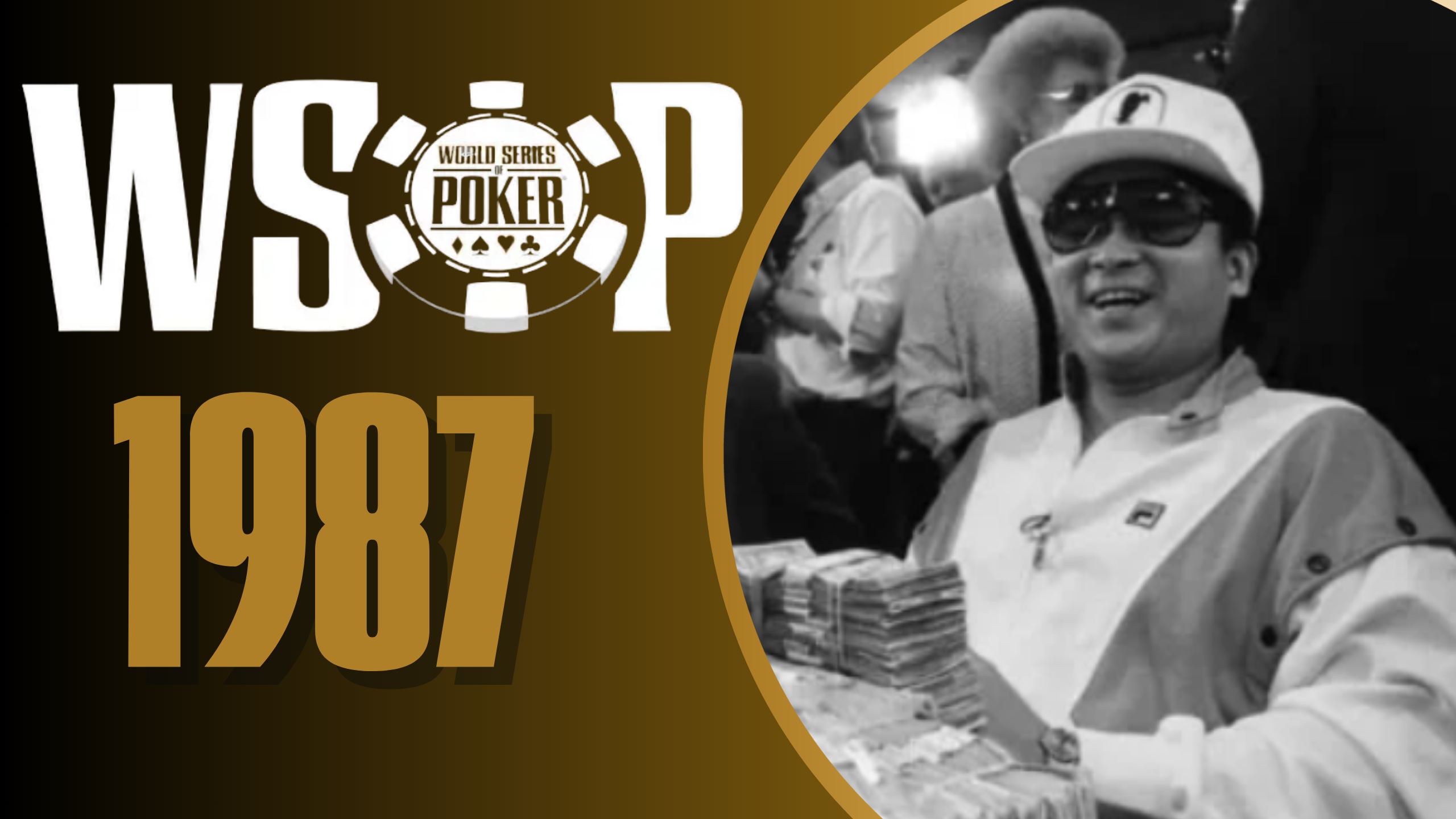
The Birth of Televised Poker
It all began on February 24, 1987, when Los Angeles PR agent Henri Bollinger sent a letter to ESPN's program manager David Ogrean. On behalf of Binion’s Horseshoe Casino, he proposed broadcasting a documentary of the upcoming Main Event with a straightforward offer: the casino would cover production costs and the network would gain captivating content. ESPN, then an emerging cable channel, accepted the proposal.
The documentary, hosted by Ted Robinson, wasn’t just about the cards. It featured light-hearted segments on player fitness and various interviews with poker personalities.
For the first time, the Poker Hall of Fame induction was filmed. During this festival, Puggy Pearson, the 1973 world champion, became the 15th inductee.
Filming wasn’t without incident. A camera propped on a chair fell on a casino patron’s foot, leading to a lawsuit and eventual settlement.
First Bracelet for T.J. Cloutier and the Legends' Success
The 1987 events were rich with stories. The legendary Billy Baxter showcased his dominance in Lowball by winning Event #2: $5K No-Limit 2-7 Draw Lowball, securing his fifth bracelet. Johnny Chan, finishing third in this event, marked his third WSOP cash at the time.
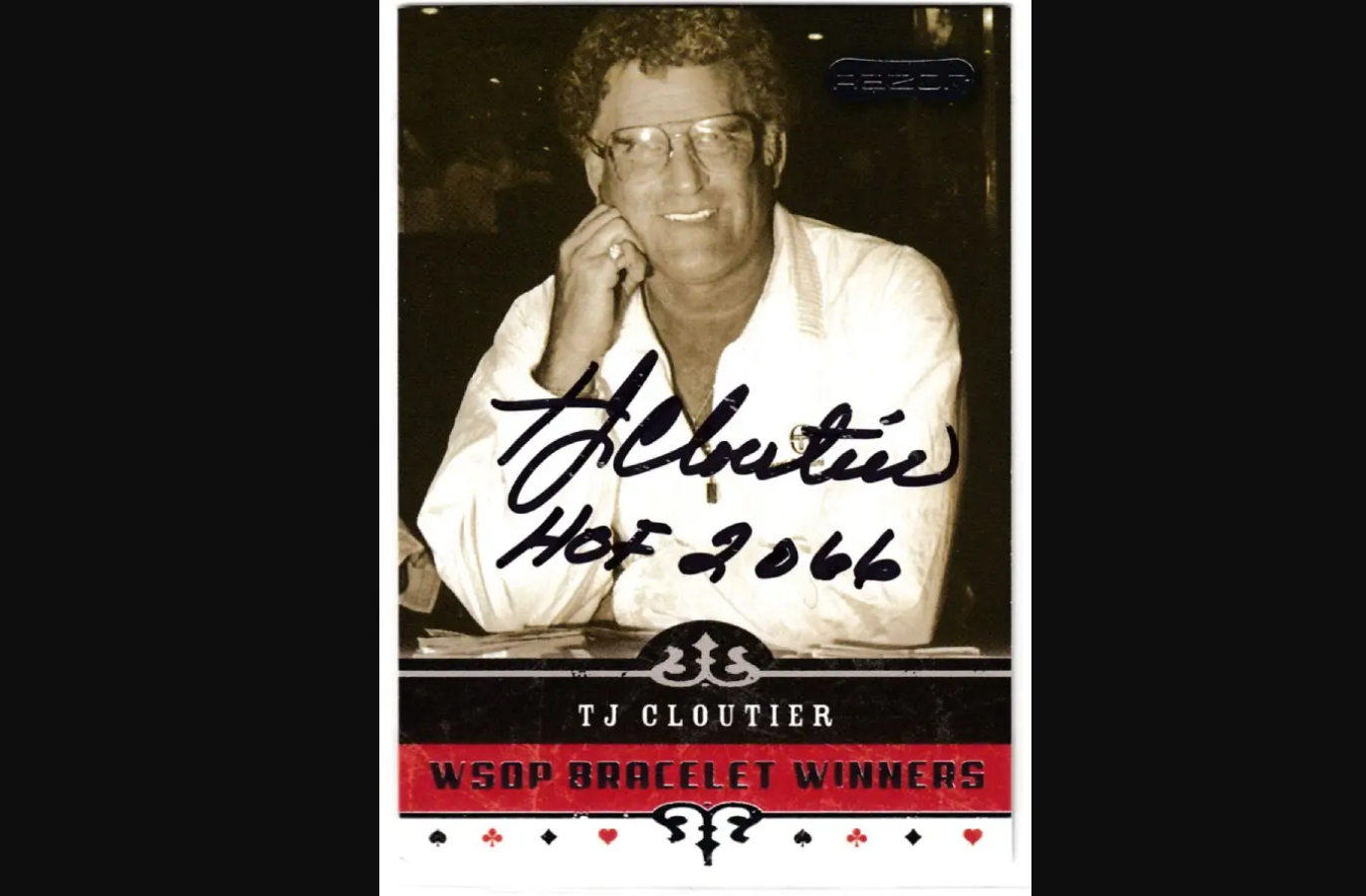
Texan pro T.J. Cloutier won his first gold bracelet in Event #3: $1K Limit Omaha, eventually amassing six in his career.
In Event #7: $1,500 Limit Hold'em, the entry count reached 342, matching the record for a WSOP event set in 1985. While Johnny Chan had won the record-setting tournament two years prior, this time Ralph Morton conquered the largest field in history.
WSOP 1987 Tournament Results:
|
Tournament |
Entries |
Winner |
Prize |
|
Event #1: $1,000 Limit A-5 Draw Lowball |
216 |
Bob Addison |
$86,400 |
|
Event #2: $5,000 No-Limit 2-7 Draw Lowball |
37 |
Billy Baxter |
$153,000 |
|
Event #3: $1,000 Limit Omaha |
180 |
T.J. Cloutier |
$72,000 |
|
Event #4: $5,000 Limit Seven Card Stud |
71 |
Artie Cobb |
$142,000 |
|
Event #5: $1,000 Limit Seven Card Stud |
259 |
Jim Craig |
$103,600 |
|
Event #6: $2,500 Pot-Limit Omaha |
91 |
Hal Kant |
$174,000 |
|
Event #7: $1,500 Limit Hold'em |
342 |
Ralph Morton |
$189,000 |
|
Event #8: $1,000 Limit Seven Card Stud Hi-Lo |
233 |
Joe Petro |
$93,200 |
|
Event #9: $1,000 Limit Razz |
163 |
Carl Rouss |
$65,200 |
|
Event #10: $500 Ladies Limit Seven Card Stud |
84 |
Linda Ryke-Drucker |
$16,800 |
|
Event #11: $1,500 No-Limit Hold'em |
313 |
Hilbert Shirey |
$171,600 |
|
Event #12: $10,000 No-Limit Hold'em Main Event |
152 |
Johnny Chan |
$625,000 |
The International Expansion of the Main Event
The Main Event saw a record-breaking turnout with 152 players. The increased number of paid positions (36) brought notable international participation among successful players. Placed positions included Jose Rosenkrantz from Costa Rica (36th), George McKeever (30th) and Mickey Finn (25th) from Ireland, Hugh Todd from South Africa (20th), Humberto Brenes from Costa Rica (14th), and Hamid Dastmalchi from Iran (12th).
Former champion Bobby Baldwin observed that from a small Southern group, the WSOP had evolved into a truly international event.
A rising trend was the influx of players from New York’s Mayfair Club. The top eleven featured three representatives from the club: Jay Heimowitz (11th), Dan Harrington (6th), and Howard Lederer (5th).
At just 23, former chess player Howard Lederer became the youngest player at the Main Event's final table, breaking the record set by 24-year-old Stu Ungar in 1980.
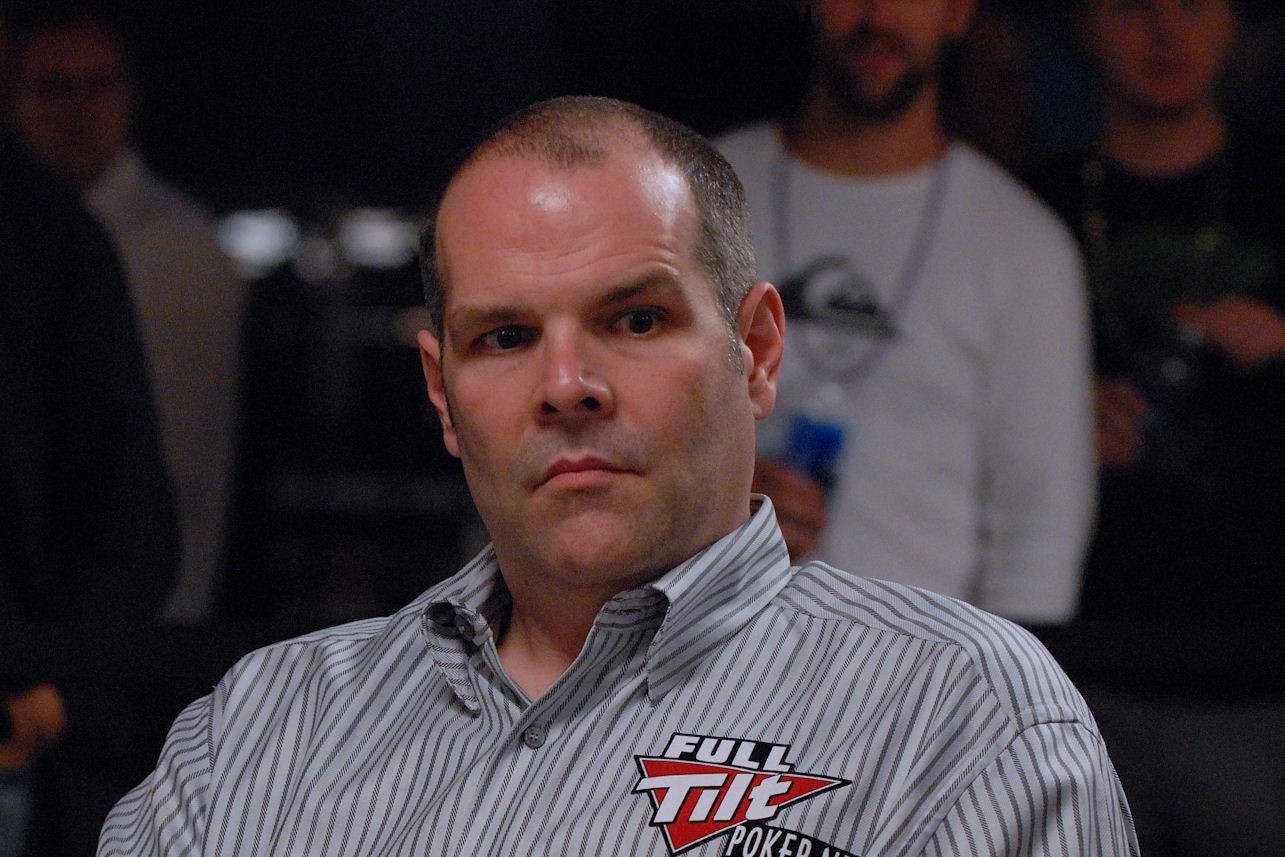
A pivotal moment in the Main Event unfolded between Bob Ciaffone and Johnny Chan among the final three players. On a flop of J s 7 c 6 s, Bob Ciaffone went all-in with 7 s 5 s, up against Johnny Chan’s A d J d. The turn 5 h gave Ciaffone the lead, but the river A c gave Chan the higher two pair. Ciaffone finished third, propelling Chan to a commanding position.
Entering heads-up play, Johnny Chan held a 4:1 lead over Houston engineer Frank Henderson. Henderson had been the “miracle man,” starting the third day with the smallest stack among 24 players. However, his luck ran out in heads-up.
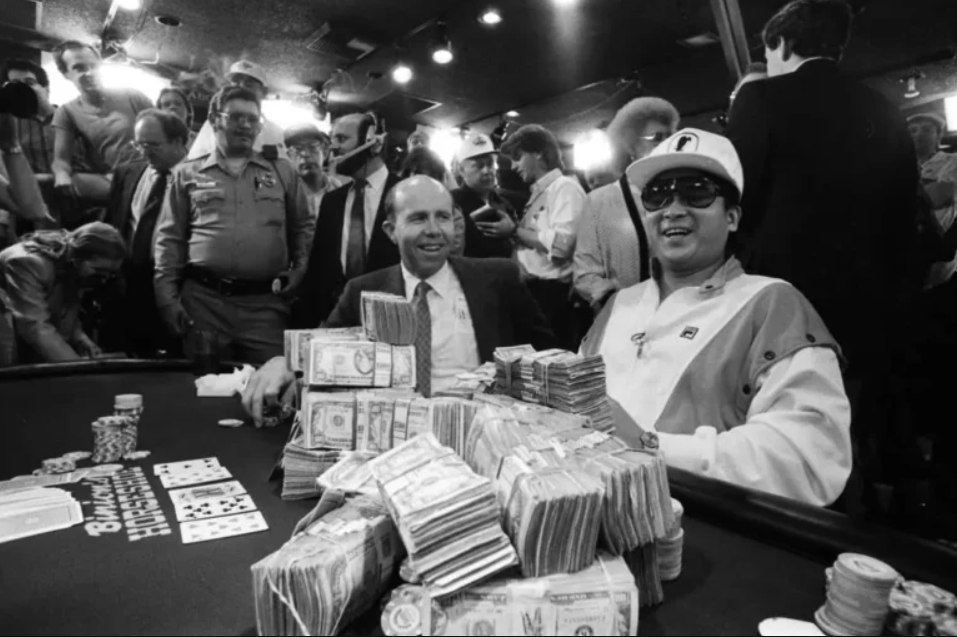
The decisive hand came swiftly. Henderson went all-in with 4 c 4 d, and Chan called with A s 9 c. The flop 5 c 8 h K d and the turn T c suggested Henderson might double up, but the river 9 h changed everything. Johnny Chan claimed the world champion title, a $625,000 prize, and his second career bracelet.
Champion's Profile
Johnny Chan was born in Guangzhou, China, in 1957. As a child, he moved with his family to Hong Kong, then Phoenix, and in 1973 to Houston, Texas, where his parents ran a Chinese restaurant. It was in this restaurant that he began playing cards with the staff, kickstarting his career.
At the age of 21, he left his hotel management studies at the University of Houston and headed to Las Vegas to become a professional player. He earned the nickname "Orient Express" in 1981 from Bob Stupak after he knocked out all opponents at the final table of the American Cup in under an hour.
Chan was also known for bringing a fresh orange to the table, which can be seen in footage from the 1987 WSOP Main Event. As he was quitting smoking and the casinos were filled with cigarette smoke, the citrus scent helped him focus. The orange later became his personal good luck charm.
In 1987, Johnny Chan became the first WSOP Main Event winner born outside the USA. It was just the beginning of a three-year winning streak unlike any in modern poker history.
More from WSOP History
WSOP History: 1986 – Berry Johnston's Sweet Revenge and the Women's Revolution
WSOP History: 1985 – The Genius of a Champion Under the Influence
WSOP History: 1984 – The Aggressive "Gentleman" and Stacks of Cash on the Table
WSOP History: 1983 – The Satellite Revolution and the Triumph of "Accountant" Tom McEvoy
WSOP History: 1982 – The Legendary Jack Straus and the Birth of a Chip and a Chair
WSOP History: 1981 – Stu Ungar Reaches the Summit Once Again
WSOP History: 1980 – The Rise of Stu "The Kid" Ungar
WSOP History: 1979 – A Milestone Triumph for an Amateur and the Birth of the Hall of Fame
WSOP History: 1978 – The End of the Winner Takes All Era
WSOP History: 1977 – The Miracle of 10-2 Repeats Itself
WSOP History: 1976 – Texas Dolly's First Triumph and the Birth of the Legendary Hand 10-2
WSOP History: 1975 – The Triumph of "The Sailor," a Secret Deal, and the Era of Golden Bracelets
WSOP History: 1974 – Johnny Moss's Return to the Throne and the Birth of Iconic Bracelets
WSOP History: 1973 – Puggy Pearson's Triumph and the Dawn of the Television Era
WSOP History: 1972 – Amarillo Slim's Controversial Win
WSOP History: 1971 – The First Freezeout Tournaments
WSOP History: 1970 - The First World Champion Elected by Vote
Sources: WSOP, Wikipedia, PokerListings, YouTube

