Anna Marquez grew up in the Spanish city of Malaga as an exceptionally competitive child. Her family gradually stopped playing card and board games with her because she won too often. Nevertheless, it was at home where she received her first poker lesson—her mother taught her five-card draw when she was about ten, which they played with chickpeas. A few years later, she moved to Washington, D.C., where she began studying history and economics, initially planning a path towards military strategy or diplomacy.
Then poker came along. Initially seen as mere gambling, it transformed into a fascinating strategic challenge and eventually became her profession, guiding her through the online poker boom, EPT, WSOP, Black Friday, and the solver era. In this interview, Marquez shares her story candidly, including moments when she had to sell a handbag to rebuild her bankroll and the year her personal life nearly halted her career just as poker technology was rapidly evolving.
Father Found Money, Feared Drugs and Prostitution
Poker entered her life through friends during her studies in the USA. Until then, Marquez didn't quite grasp the concept of gambling—the idea of knowingly putting money at risk without an edge seemed illogical. But during a home game, she watched a player with a large stack, sat next to him, and began to understand what was really happening at the table. The revelation that it wasn't just about luck, but strategy, precisely aligned with her interest in competitiveness, history, and tactical decision-making.
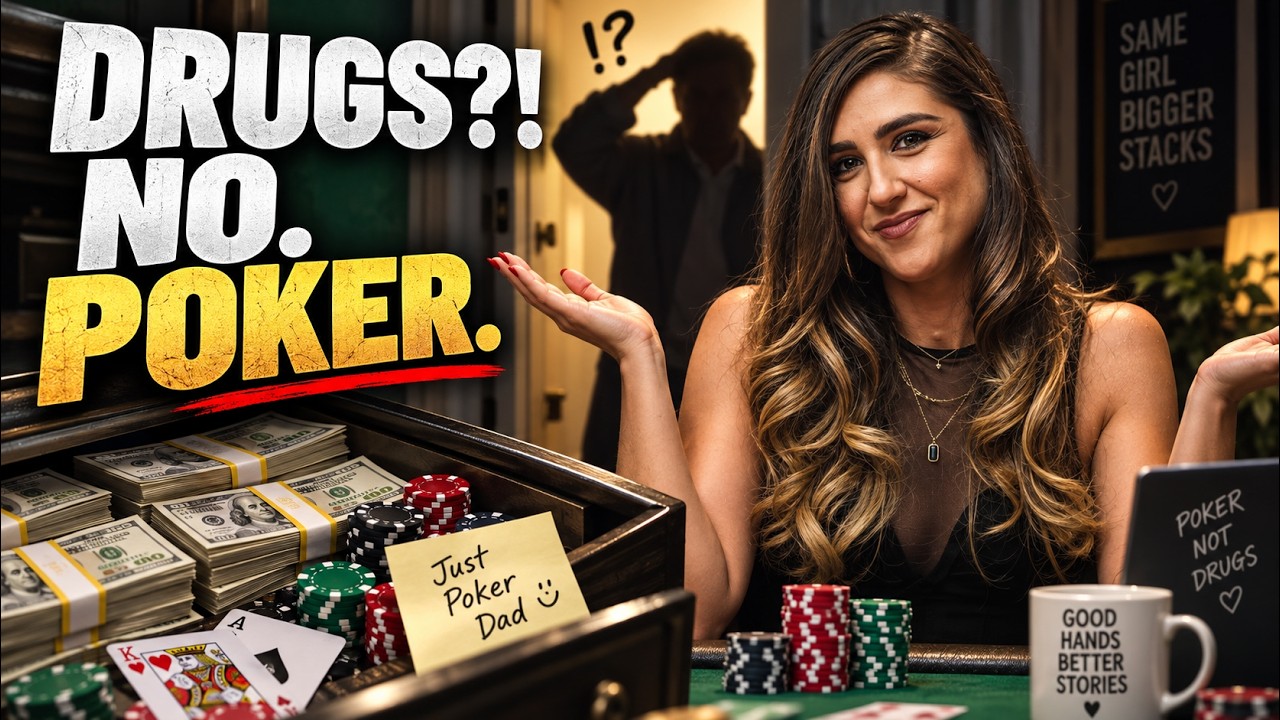
Books followed, then her first trip to Borgata, and thirteen hours observing a cash game over a friend's shoulder. Underground games in Maryland and Atlantic City came next, gradually leading to online poker. During this period, her father began noticing odd things—her car had suspiciously high mileage and he found a bundle of cash at home he had never seen before.
His first reaction wasn't that his daughter was beating poker cash games. He thought about drugs or prostitution. Marquez had to explain bankroll management to him. Once he understood that the cash was the result of systematic play, not a different nightlife, his initial anger turned into support.
Saved by a Fake Chanel Handbag
The beginnings were no heater. Marquez admits poker was a grind and she managed to lose her first small bankroll of about $2,000. To re-enter the game, she started earning by promoting clubs again.
She also benefitted from an unusual transaction. A friend fancied a Chanel handbag Marquez had received from a former boyfriend. The problem was, it was fake—as Anna openly shared. Her friend didn't mind and offered $400 for it.
By this time, she was part of the emerging Maryland crew alongside players like Greg Merson, Christian Harder, and Tony Gregg. The group began with cash games and online poker, eventually getting drawn into large tournaments. One of her first trips to the EPT in Monte Carlo and San Remo revealed a world completely different from the underground games in College Park.
Thesis on How WSOP Changed the Perception of Poker
Poker even infiltrated her academic life. During her final year, Marquez took a break from school and needed to complete her history thesis upon returning. When her professor advised choosing a topic she had a personal connection with, the answer was simple: poker.
Her thesis ultimately explored how tournament poker, especially the WSOP, transformed the American public's view of the game. From the image of underground tables, cowboy hats, and gambling, poker shifted towards a televised competition where skill became increasingly visible. Chris Moneymaker and the poker boom naturally fit into the narrative. Ironically, during this time, she was undergoing the exact transformation she was writing about.
From Chipleader to Reality Check
One of her first truly significant moments came at the PCA Main Event. Before the tournament, Marquez had an agreement with her father—she would have one year to pursue poker fully. If it didn't work out, she would return to academia and her master's studies, for which she already had applications underway. Then she went deep at the PCA.
As a relatively unknown online grinder, she found herself among the last players standing, even holding the chip lead at one point. She ultimately finished tenth. The result brought her about $150,000, but given the millions at the top, her initial reaction after busting was frustration. When she called her mom, she received another surprise—the family had been following her entire run through Spanish media. A month later, she added another major online success approximately worth $250,000. The deal about returning to school was practically settled.
Survived Black Friday Thanks to One Piece of Advice from Her Father
Then came 2011 and Black Friday. For American online grinders, it meant shock, blocked accounts, and in some cases, huge sums of money stuck on poker sites. Marquez was fortunate, or rather had very good advice. After her major results, she held a significant portion of her bankroll online, but her father told her to get the money off the computer. She listened and withdrew a large portion of her online funds before Black Friday hit.
When the sites eventually froze, her father's response was simple: “I told you so.” An even more absurd situation arose later. Upon returning to Europe, Marquez made it to the final table of an FTOPS series and had about $70,000 in her account. Wanting to cash out quickly, she sold it to another high-stakes player. According to her memory, he lost it the next day. Shortly after, the site went down.
Eight Years Practically Without a Break
After Black Friday, her life shifted to the European poker circuit. PokerStars, EPT, online sessions, and live tournaments began blending into an almost uninterrupted grind. Marquez recalls times when she'd play EPT live while running Super Tuesday on her laptop. The pace was extreme.
“I was a sick grinder,” she says in retrospect. She didn't skip tournaments, traveled from one series to another, and viewed playing as a vacation in itself. Her father even pointed out that she was probably the only person working almost every day while claiming she had no vacation.
More results followed. Online winnings around $250,000, a victory in the Hollywood Poker Open for another $300,000, and additional deep runs cemented her among established tournament pros. However, it also revealed a fundamental truth about MTT poker—even elite players might not win a live tournament for years.
Best Results Came When She Didn’t Want to See Anyone During Breaks
Marquez has a clear idea of what state she plays her best poker in. When she goes deep in a tournament, she doesn’t want a big rail or discussions during breaks. Ideally, she wants to be completely alone. During one high roller, she even hid in the bathroom during breaks to avoid talking about hands. She didn’t want to change her mood, analyze previous decisions, or be pulled from what she describes as her personal bubble.
That's why she disliked the old November Nine concept when the WSOP Main Event final table was paused for several months. She believes that a player who goes that deep is in a unique flow, and a long break, coaching, and endless analyses can completely change the dynamics that initially brought them there.
A Year Full of Bad Play and Personal Issues
The toughest part of her career came at a time when she was, by her own account, at one of her poker peaks. The problem wasn't poker itself. It was her personal life. Marquez describes 2015 as a period when long-term grinding, combined with personal issues, gradually affected her physical health. She started feeling unwell, her results declined, and she knew she wasn’t playing quality poker. After a year of losses, she decided to take a month off.
The month eventually stretched to about a year. In hindsight, she considers this decision one of the worst she could have made from a poker perspective. During that time, solvers were becoming integral to the game, and top professionals were building a completely new strategic edge.
However, she doesn't entirely regret the break. Instead of focusing on poker, she obsessively delved into health, nutrition, performance, and understanding her own body. Although she lost time in poker development, she gained knowledge that she now considers one of the most important aspects of her life and performance at the table.
Quarantine Offered Space for Further Development
Ironically, the pandemic helped her make a complete strategic comeback. After moving to Brighton, she was practically alone in a new city during the lockdown with nowhere to go. So she returned to the online realm. She began working more intensively with solvers, studying courses, analyzing heads-up spots, and developing her own system of work. After years of relying mainly on books, videos, and discussions with other professionals, modern study opportunities thrilled her.
However, after the pandemic online grind, the tournament variance fatigue set in again. A weak WCOOP reminded her of how brutal MTT poker can be, even when a player knows they're doing most things right. Thus, Marquez began returning to cash games.
Being accustomed to high rollers, she didn't want to start at the lowest stakes, so her return was around $50/$100. Her long-term dream was to play high stakes heads-up cash, and cash games offered a different form of adrenaline compared to tournaments.
Today, She Strives to Combine What Once Didn't Mix
After years of complete tournament grinding, Marquez now operates differently. Poker still demands her intensive study, and Triton or other high stakes series remain part of her plans, but health, recovery, and physical performance hold equal priority.
She admits that she used to subordinate virtually everything else to poker. Today, she doesn't want to repeat this approach. Yet, she hasn't lost the competitive edge that once propelled her from Maryland to be among the best tournament players of her generation.
Perhaps this is why her current career feels like a return to the beginning, albeit in a completely different context. She still wants to study. She still wants to play big games. She still wants to find out if she can beat the players on the other side of the table. The difference now is she understands that bankroll, results, and endless grinding can’t be the only things to protect in the process.
More from Table One Podcast
Ben Heath: From $3 Tournaments to Losing Half His Net Worth to Super High Rollers
Jennifer Shahade: Chess, Poker, Life Between Two Games and the Courage to Take Risks
Jonathan Tamayo: Candid Talk on Winning $10 Million, the Laptop Gate, and the State of Poker
Kenny Hallaert: The Main Event Specialist Who Knows When to Toss GTO Aside
Allen "Chainsaw" Kessler: From Poker Weekends to 350 Days a Year in the Casino
Jeff Gross: Poker, Business, Six-Figure Prop Bets, and the New World of Poker Entrepreneurship
Matt Savage: The Man Who Helped Organize Poker Chaos from WSOP to WPT
Mike Matusow: Million Dollar Falls, Old School Charm, and the Comeback of a Player Who Never Gave Up
Justin Saliba: Moved to Vegas, Aspired to Win Millions, and Quickly Realized He Hated It
John Bornstein: Underground Clubs, Robberies, Total Collapse, and a Poker Miracle
Nikki Limo: From YouTube and Stand-Up to a $130,000 Poker Run
Joe McKeehen: Stopped Looking at His Cards and Won the WSOP Main Event
Andrew Moreno: From $3 Sit & Go to High Roller Champion
Yukon Brad Booth: Return to High Stakes Poker and the Ultimate Bluff Against Phil Ivey
Landon Tice: When Talent Outpaces Maturity and Poker Forces You to Grow Up
Jeremy Ausmus: From Dusty Games in Colorado to the Top of the Poker World
Cary Katz: Why High Stakes Attracts Extremely Analytical Personalities
Source: YouTube, Flickr/PokerNews