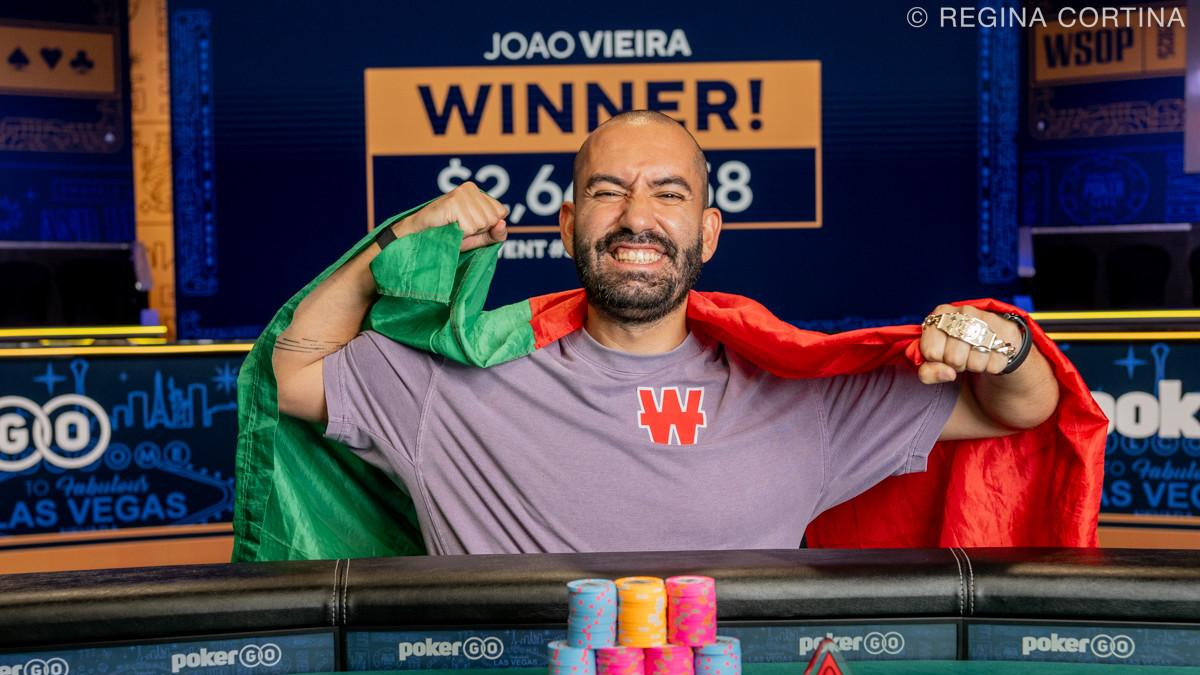
João Vieira has been a longstanding figure in the global high-stakes poker scene, but his journey to the top didn’t start with solvers. From sixteen to about twenty-two, he played basketball at a high level and gradually discovered poker alongside his athletic career. He never completed his business studies and, after ending his basketball career, fully transitioned to poker.
Today, he's among the players who blend a strong technical foundation with a significant emphasis on psychology, emotional intelligence, and a live-ready approach. Vieira dismisses the notion that a top high roller player must be a perfectly optimized robot. In his view, poker is still a game of people, and that's where the edge forms that a solver can't fully capture.
“Good for poker” is not a straightforward question
A major theme of the interview centers on Martin Kabrhel and William Kassouf and their noticeable behavior at the table. Vieira points out that the question of whether someone is “good for poker” doesn’t have a universal answer. What works for television and social media may not be beneficial for players sitting at the same table.
Expressive personalities, speech play, and conflicts create content and attract a non-poker audience. However, if the foundation of a strategy is deliberately making the game unpleasant for others, Vieira sees a problem. Recreational players pay the same buy-in, and their experience at the table is one of the pillars on which the entire poker ecosystem rests.
Emotional intelligence may be a bigger edge than a solver
Juan Pardo has described Vieira as a player with extraordinarily strong EQ, a skill that repeatedly surfaces in his approach to live poker. When assessing opponents, Vieira isn't just interested in their technical level. He wants to know who they are, what they value, how they think, and what influences their decisions.
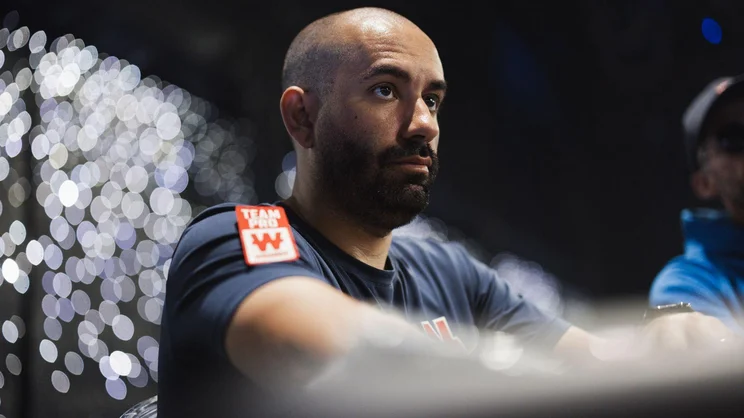
According to Vieira, a person’s preferences inevitably seep into their poker strategy. Some people naturally avoid big bluffs; others enjoy proving they can make unorthodox plays. The better he knows a player, the easier it is to interpret some of their decisions. Thus, Vieira listens to conversations that, at first glance, may seem unrelated to poker. Information about how someone thinks about risk, reputation, or personal success can later manifest in their poker decisions.
High stakes players aren't robots. They just play for millions
A large portion of the poker audience knows high roller players mainly from streamed final tables. Vieira argues that this creates a distorted picture of the scene. A player sitting expressionless at the table during a $100K final table might be one of the most entertaining people in the room off-camera.
At the side tables, he says, the atmosphere is often very relaxed. Players chat, joke around, and despite the high level of play, it's a social environment. Naturally, the dynamics change when only a few players remain and the differences between places are hundreds of thousands or millions of dollars. According to Vieira, it’s unfair to label the entire high roller generation as solver robots. Behind many quiet faces are completely different personalities that viewers simply don’t get to know over a few hours of streaming.
It takes more than a good study group to reach the top
Host Jaffe repeatedly mentions that for successful progress, having a social circle of like-minded and skilled players might be the most crucial factor. Vieira agrees that quality poker friends and study partners can dramatically accelerate development, but he still prioritizes talent and work ethic above them. However, this doesn’t necessarily mean spending fifteen hours a day in the GTO Wizard. Some learn through intensive study, others through massive volume, and some can quickly absorb information from conversations with top players.
Vieira himself gained a significant advantage in the mental game early on. When his bankroll was around $5,000, he invested about $2,900 in coaching with Jared Tendler. His sister had pointed out that his reactions to poker swings were becoming problematic, and Vieira realized that if he wanted to take the game professionally, he had to get his emotions under control.
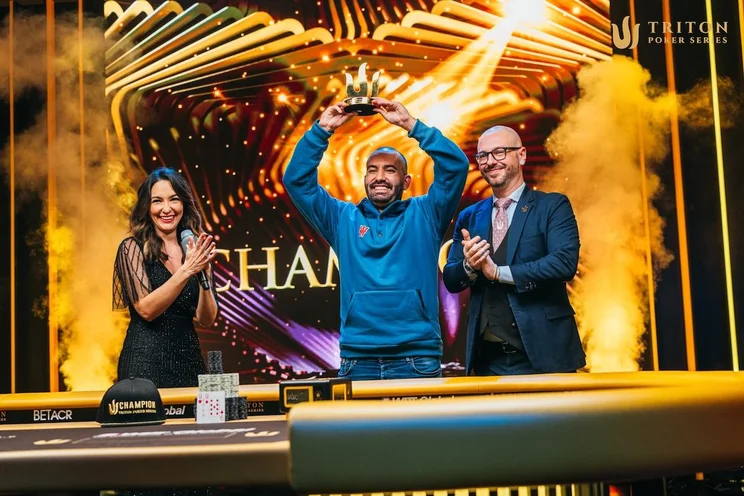
After several sessions, he found he was gaining an edge over much of the field simply by better managing his tilts. According to him, Tendler taught him not just to handle emotions, but also “how to learn,” which Vieira later applied in his game. The ability to learn and properly weigh information is considered a hallmark of elite players.
Poker is a zero-sum game. Life shouldn’t be
The most intriguing part of the interview comes when Jaffe raises the question of whether years spent in a zero-sum game environment can corrupt how professional players think outside the poker table. In every pot, simple math applies—the money one player wins, another must lose. However, Vieira claims he sees the opposite in many top players.
In the high stakes scene, he encounters many people who support their communities, help others, and don’t view poker solely as a means to maximize personal wealth. If poker vanished tomorrow, Vieira himself would want to work on a community project from where he comes from.
His perspective on his career isn’t romantic. Poker compelled him to live outside of Portugal for roughly a decade, moving between countries like the Czech Republic, the Netherlands, the UK, and others for online play. He cites not the hours spent studying—since he enjoys learning—but birthdays, evenings with friends, and years of family life he missed as the biggest sacrifices.
The most poignant image is of his young niece drawing her family, with “Uncle João” depicted on a plane. Therefore, Vieira often uses a somewhat peculiar piece of advice: “Think about death.” He doesn’t mean anything morbid by it. It's a reminder that time is the only resource that can’t be regained. One can aspire to be the best player in the world, but should also understand why that goal is worth the sacrifices made.
More from GTO Lab Podcast
Daniel Dvoress: Why Knowing the Right Strategy Isn’t Enough – You Need to Execute It
Nate Silver: Why Poker is a Controlled Addiction and Intuition Can Be Stronger Than a Solver
Artur Martirosyan: WSOP as a Vacation and the Quiet Path of One of the World's Best Players
David Yan: Why Empathy and Sleep Can Provide a Greater Edge Than a Solver
Juan Pardo: GTO Without Ego and a Player's Journey to Being the Best
Dan Smith: Depression, Battling Inner Demons, and Finding Balance Beyond Poker
Samuel Mullur: From His Mom's Basement to the Pinnacle of High Stakes
Ben Tollerene: The Story of an Online Legend and Triton Champion Who Paid a High Price for Success
Brian Rast: Poker, Solvers, Bitcoin, and the Life of the Most Versatile Player of the Modern Era
Kevin Rabichow: Why Poker Growth Is Hindered by Bad Habits, Not Bad Cards
Kayhan Mokri: If Everyone Uses the Same Tools, Find Your Edge Elsewhere
Seth Davies: Poker Teaches You a Lot, But You Have to Grow Up Away from the Table
Dan "Jungleman" Cates: Why Raw Genius Isn't Enough and the Game Will Eventually Catch Up
Stephen Chidwick: Why Results Are Deceptive and Decisions Matter More
Ike Haxton: Precise Sizing Doesn't Matter, the Real Edge Is a Calm Mind
Alex Kulev: What You Need to Change in Your Mindset to Handle the Leap to High Stakes
Leon Sturm: How to Think Independently in a High Roller Environment
Orpen Kisacikoglu: Solvers Provide Quick Answers, But Take Away the Thought Process
Alex Ponakovs: Why Independent Thinking Is More Important Than Blindly Following Solvers
Nick Petrangelo: There Are No Weak Players in $100k Tournaments, So Persistent Work Is Essential
Daniel Negreanu: Staying at the Top of Poker for Years Requires Hard Work, Not Luck
Fedor Holz: I Once Wanted Wins, Titles, and Money. Today, I Seek Happiness
Sources: YouTube, Triton SHRS, WSOP, PokerNews